






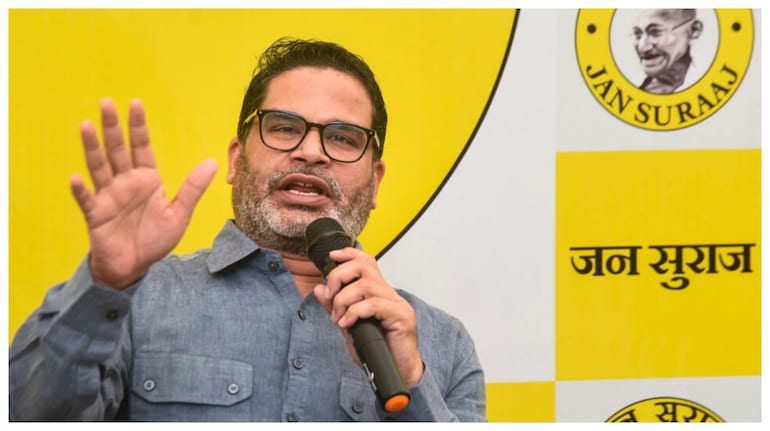

The Supreme Court on Friday declined to entertain a petition filed by poll strategist-turned-politician Prashant Kishor’s party, Jan Suraaj, challenging the outcome of the 2025 Bihar Assembly elections and seeking fresh polls.
The bench instead asked the party to approach the Bihar High Court, underlining that the matter did not warrant the apex court’s direct intervention.
What the court said
A bench led by Chief Justice Surya Kant and Justice Joymalya Bagchi questioned both the maintainability and intent of the petition. The Chief Justice remarked, “How many votes did your party get? The people rejected you, and you use this judicial platform to gain publicity?”
Justice Bagchi also expressed scepticism over the sweeping nature of the challenge, observing that political parties often adopt similar measures once in power. The bench stressed that the appropriate remedy lay before the state High Court, not the Supreme Court. “It is not a pan-India issue. There is a High Court in the state… avail that remedy,” the Chief Justice said.
Why the plea was filed
Jan Suraaj had moved the Supreme Court under Article 32 of the Constitution, alleging that direct cash transfers of Rs 10,000 to women beneficiaries during the enforcement of the Model Code of Conduct amounted to “corrupt practices” and vitiated the level playing field.
The party sought to have the entire election declared null and void, arguing that the scheme benefited 25–35 lakh women voters and influenced the outcome.
However, the court noted that election results cannot be set aside through an omnibus petition without constituency-specific allegations. “It has to be shown in an election that a particular candidate has benefited… and that amounts to corrupt practice,” the bench observed.
Jurisdiction and legal reasoning
The Supreme Court made it clear that challenging an entire state election requires a different legal route and specific evidence. The judges pointed out that election petitions are ordinarily filed constituency-wise before the High Court under the Representation of the People Act, rather than through a blanket writ petition before the apex court.
When senior advocate Chander Uday Singh, appearing for the party, argued that the larger issue of freebies and Model Code violations required urgent scrutiny, the bench responded that while the freebies debate is indeed under examination in other pending matters, this particular petition was not the appropriate vehicle.
Court’s stance on freebies debate
The bench reiterated that it is already seized of broader questions surrounding election freebies in separate petitions. “We are very serious about this issue… but would rather hear petitioners who are public-spirited rather than a party that lost everything,” the Chief Justice said, signalling that the court did not wish to examine the systemic issue through a politically motivated challenge.
Political backdrop
Jan Suraaj had contested 238 seats in its electoral debut but failed to secure a single win, ending with a vote share of under four per cent. Prashant Kishor had alleged that cash transfers influenced voter behaviour and accused the ruling alliance of effectively “buying” votes.
Despite these claims, the Supreme Court maintained that electoral grievances must follow established statutory mechanisms and that broad allegations, without candidate-specific proof, are insufficient to invalidate an entire election.
Discover the latest Business News, Sensex, and Nifty updates. Obtain Personal Finance insights, tax queries, and expert opinions on Moneycontrol or download the Moneycontrol App to stay updated!
Find the best of Al News in one place, specially curated for you every weekend.
Stay on top of the latest tech trends and biggest startup news.










