



The probe into the death of actor Sushant Singh Rajput has reignited the debate over the legal status of cannabis as the Hindi film industry and its alleged drug abuse is thrust into the spotlight yet again.
The Narcotics Control Bureau (NCB) has arrested Rajput’s girlfriend Rhea Chakraborty and several others, including drug suppliers, for either using, possessing, buying or selling marijuana.
The drug abuse charge has divided the film industry and the probe into Rajput’s death has assumed political overtones.
The home ministry has told Parliament that NCB hasn’t come across “actionable intelligence” that suggests a link between Bollywood stars and drug traffickers but a probe is on.
Legally speaking
Cannabis is a wide-ranging term used for several preparations derived from Cannabis Sativa, one of the three well-known varieties of the plant—there is a dispute over how many are there.
Cannabis has been known to India since ancient times. Religious and medical texts have numerous references to cannabis. Believed to relieve pain and have a calming effect, it is used in ayurvedic medicines.
Its medicinal use has been gaining ground. Several countries, including the US, have approved the use of Cannabidiol (CBD), a medicinal compound derived from cannabis, to treat rare forms of childhood epilepsy or seizures.
As reported by Moneycontrol, Akseera Pharma, a Canadian startup, is planning to begin clinical trials and manufacturing of CBD in India. CBD, which is not intoxicating, will be used in a potential therapy for cardiac arrhythmias, or irregular heartbeat, with a possible link to COVID-19.
In India, the Opium Act regulated drugs from 1852. In 1893, the British instituted a study to understand the social and psychological impact of consuming cannabis.
The Indian Hemp Drug Commission concluded that moderate cannabis use caused no physical harm, mental injuries or impair moral judgment.
But in 1961, India joined the United Nations' Convention on Narcotic Drugs treaty and in 1985 the Narcotic Drugs and Psychotropic Substances (NDPS) Act classified cannabis as a "drug". It though spared, bhang, a byproduct, on social and cultural grounds.
As per the NDPS Act, possession of fewer than 1,000 grams of marijuana can invite a fine of Rs 10,000 or a six-month jail term.
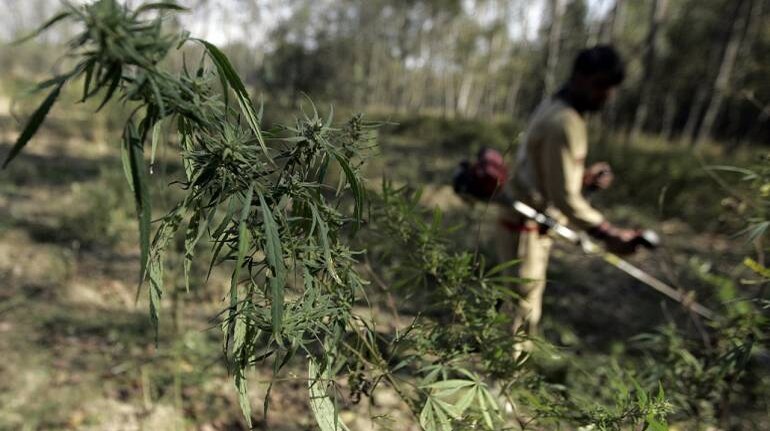
The NDPS Act prescribes rigorous imprisonment for possessing, selling, consuming or cultivating cannabis. It can vary from one to 20 years, depending to the gravity of the offence.
Also Read: Amid crude crash, smooth sailing for oil flotillas, for now
A thriving industry but no GST
The global cannabis industry is expected to be worth $ 15 billion by 2027 but India's contribution is only 0.001 percent.
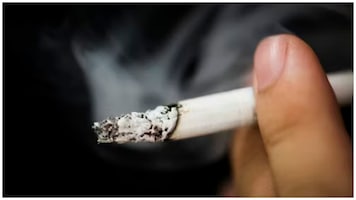
Though treated on a par with synthetic drugs like ecstasy, meth, and acid paper, cannabis is widely consumed in India. More than 30 million people consume cannabis in the country, the Vidhi Centre for Legal Policy has said in a paper, building a case for decriminalising cannabis.
A study found that in 2018, New Delhi and Mumbai consumed 38.26 metric tonnes and 32.38 metric tonnes of cannabis respectively, the paper says.
If cannabis were to be legalised and taxed, it could earn Rs 725 crore for Delhi and Rs 641 crore for Mumbai, the study said. The two cities consume more cannabis than Toronto, where it's legal.
Many developed countries, including the US, Canada, Australia, Italy and the Netherlands, have legalised or decriminalised medicinal and recreational consumption of cannabis.
In the US, 33 states allow medicinal use and 11 permit recreational use. Recreational use has generated a lot of heat, with critics questioning how its misuse among the young can be prevented.
Criminalisation of cannabis has done little to curb its use in India and has only pushed the thriving industry underground.
Cannabis is easy and cheap to get. There is always a friend’s friend who has a “contact”, who can be called for a “handover”. Payments are made in cash or through UPI or Paytm. Technology is integral to the trade.
In Mumbai, a 5 gm pack of ganja costs around Rs 100. Fifty grams of good quality weed is available for between Rs 2,500 and Rs 6,000. Delhi leans towards hashish and it costs Rs 3,000-8,000 a tola (11gm).
A few days ago, Yash and his friend Ayush were caught smoking cannabis on a deserted Mumbai road by two policemen and threatened with an FIR for drug possession.
"We pleaded and asked them to let us go. The cops demanded Rs 25,000. We're students and don't have that kind of money, so they agreed to Rs 5,000. We withdrew the amount from a nearby ATM and paid them and that was the end of it," Yash, who didn’t share his second name to protect his identity, told Moneycontrol.
The street price is decided in grams but the annual turnover is in tonnes.
Mumbai’s supply of cannabis comes from neighbouring areas, the Western Ghats, northeast India as well as the Himalayan regions of the country. Imported strains from California and Amsterdam are also available.
Despite stringent laws and multiple agencies, marijuana and other cannabis products are easily available and trade in the contraband goes on uninterrupted. The network is well-oiled and largely works on trust.
Even the lockdown didn’t stop the business. While alcohol and cigarettes were hard to come by, cannabis was available by the end of April, the first complete month of the lockdown, though at a premium.
Insiders say unlike other drugs, the cannabis trade is not controlled by a cartel or a drug lord. There are multiple players, from college kids looking to make easy money to hardcore traffickers—there is space for everyone, so to speak.
Is India ready for a change?
In India, there is a stigma attached to drug consumption but increasingly people are speaking out in favour of legalising cannabis and questioning its criminalisation, which they say was a copy-cat move removed from India’s reality.
Others call for caution.
“Just like alcohol and cigarettes, consumption of cannabis is not suitable for restless and impulsive people and any such substances should be consumed with the utmost knowledge of one’s personality traits and knowledge of the difference between recreational consumption versus addiction to consuming,” Suruchi Kothari, a Mumbai-based psychologist, said.
Activists and political leaders, including Congress’ Shashi Tharoor, have called for decriminialising cannabis. In 2017, BJP leader and women and child development minister Maneka Gandhi had spoken in favour of legalising marijuana for medical purposes. Former Biju Janata Dal MP Tathagata Satpathy has been vocal in his support for legalising cannabis.
Former Member of Parliament Dharamvir Gandhi, who is a doctor by training, even proposed a bill to legalise and regulate the supply of traditional intoxicants such as opium and marijuana.
There is a class dimension to it as well. Several studies have found that it is the underprivileged or people who are economically weak who suffer the most. They don’t have the money to pay a bribe or hire lawyers to defend them.
Cannabis and its complicated relationship with India has come under scrutiny in unfortunate circumstances but it is as good a time as any to revisit it.
(Shivam Vahia writes on technology, aviation, and mobility.)Discover the latest Business News, Sensex, and Nifty updates. Obtain Personal Finance insights, tax queries, and expert opinions on Moneycontrol or download the Moneycontrol App to stay updated!
Find the best of Al News in one place, specially curated for you every weekend.
Stay on top of the latest tech trends and biggest startup news.