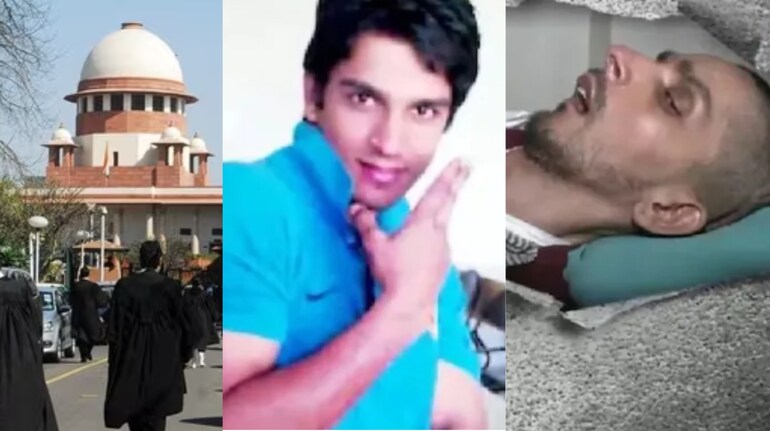

The Supreme Court on Thursday reserved its judgment on a plea filed by the family of Harish Rana, a 31-year-old man who has been in a permanent vegetative state for over 13 years, seeking permission to withdraw life-sustaining treatment. The case has once again brought the debate on end-of-life care and dignity into sharp focus.
A Bench of Justices JB Pardiwala and KV Viswanathan heard arguments for nearly an hour from Additional Solicitor General Aishwarya Bhati, representing the Union government, and advocate Rashmi Nandakumar, who appeared for the Rana family.
During the hearing, the judges repeatedly underlined that any decision by the family must be stable, deliberate and not driven by momentary emotion.
Justice KV Viswanathan posed a hypothetical situation to test this concern, asking what would happen if a family later reversed its decision in conflict with medical opinion. Justice Pardiwala responded by indicating that the medical board’s role would arise only after the family’s consent to withdraw life support was formally recorded in writing.
The discussion, the court noted, showed why the family’s choice had to be “consistent and well-considered”.
Nandakumar also raised practical issues in handling such cases. She suggested that hospitals should have pre-nominated doctors for medical boards dealing with requests to withdraw treatment, so that Chief Medical Officers are not required to appoint doctors afresh each time.
This, she argued, would ensure that “no time is lost” in already sensitive situations.
Another key point raised before the Bench was the language used in judicial orders. The family’s counsel urged the court to avoid the term “passive euthanasia” and instead refer to the process as “withdrawing/withholding life-sustaining treatment”.
Justice Pardiwala remarked that this concern had been in the judges’ minds “from the very first day”.
The court has already had direct interaction with Rana’s immediate family. In a detailed order released earlier this week, the judges recorded their meeting with his parents and younger brother.
“All the three, i.e., the father, mother and younger brother, in one voice and with a lot of pain in their hearts, made a fervent appeal before us to take necessary steps to ensure that Harish does not suffer any more,” the order noted.
The family conveyed that if medical intervention was no longer helping, continuing treatment only prolonged suffering “for no good reason”.
The Bench also placed on record the government’s submission that both the primary and secondary medical boards which examined Rana had reached the same conclusion. According to the doctors, treatment could be discontinued and “nature should be allowed to take its own course”. The court further noted the medical opinion that Rana would remain in a permanent vegetative state for years, “with the tubes inserted all over his body”, with no chance of recovery or a normal life.
Who is Harish Rana?
Harish Rana’s condition dates back to August 20, 2013. At the time, he was a civil engineering student staying in a paying guest accommodation in Chandigarh. He suffered a devastating fall from a fourth-floor balcony, resulting in severe head injuries and 100% quadriplegic disability.
Since then, he has been bedridden, unable to speak, hear, see or recognise anyone, and fully dependent on artificial life support.
A joint report submitted to the court quoted his father describing his son’s condition in stark terms: he “cannot speak, hear, see, recognise anyone, or eat on his own; Is entirely dependent on artificial life support, including a feeding tube...”.
The father also expressed anxiety about the future, noting that both parents were ageing and asking who would care for Harish if anything were to happen to them.
The family’s legal battle has been long and emotionally draining. Their plea was earlier rejected by the Delhi High Court, which held that withdrawing the feeding tube would amount to active euthanasia, something prohibited by law.
With the Supreme Court now reserving its verdict, the Rana family waits for a decision that could shape not only their son’s fate, but also broader principles governing end-of-life care in India.
Discover the latest Business News, Sensex, and Nifty updates. Obtain Personal Finance insights, tax queries, and expert opinions on Moneycontrol or download the Moneycontrol App to stay updated!
Find the best of Al News in one place, specially curated for you every weekend.
Stay on top of the latest tech trends and biggest startup news.