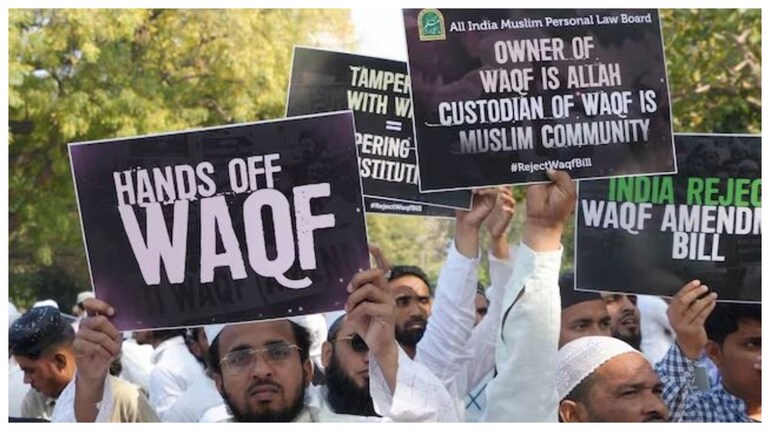
Parliament is witnessing a tense faceoff over the Waqf (Amendment) Bill on Wednesday with the government and opposition locking horns during an eight-hour-long debate.
Though the BJP-led NDA has the requisite numbers to see the Bill through Lok Sabha and Rajya Sabha, the stand of crucial allies like Nitish Kumar's JD(U) and Chandrababu Naidu's TDP will be closely watched.
Both the parties, who have traditionally relied on minority voters, are expected to do some tricky balancing act over the bill to safeguard their political interests.
According to sources, JD(U) and TDP are likely to back the Bill when it goes for a vote in the House. However, the allies are pushing for minor changes in the Bill.
Sources told The Indian Express that TDP wants to change provisions stating that non-Muslims can become members of the Waqf boards. Meanwhile, JD(U) is strongly against the retrospective implementation of the Bill, once it becomes the law.
What is the retrospective impact?
A key provision in the existing Waqf Act, 1995, is the concept of “Waqf by user.”
This means that properties that have been long used for religious or charitable purposes—such as mosques or graveyards—are automatically classified as Waqf, even in the absence of formal documentation.
The proposed amendment seeks to remove this provision, raising concerns that long-established Waqf properties could face legal uncertainty or be subject to claims by other parties.
Notably, Waqf boards are India's third-largest landowners after the Army and Railways.
A key concern is whether the new law will apply prospectively, affecting only future cases, or retrospectively, impacting properties already classified as Waqf by user.
A retrospective implementation could potentially lead to disputes over properties that have been considered Waqf for decades.
JD(U) leaders have argued that any retrospective effect could create legal complications and stoke tensions, particularly in states like Bihar.
Speaking to News18, a senior JD(U) leader said, “The first step Nitish Kumar took was convincing the BJP’s central leadership to agree on the JPC. Sending a Bill to the JPC immediately implies that the government is open for scrutiny. The JPC included members from all political parties, so the onus is on everyone. Nitish-ji also instructed our MPs to be vocal about the retrospective effect and the government agreed on that."
However, sources said that Centre has assured allies that the provisions of the bill will not apply retrospectively.
What is the Waqf (Amendment) Bill?
According to the government, the Amendment Bill seeks to improve the administration and management of Waqf properties in India. “It aims to overcome the shortcomings of the previous Act and enhance the efficiency of Waqf boards by introducing changes such as renaming the Act, updating the definition of Waqf, improving the registration process, and increasing the role of technology in managing Waqf records,” a statement issued by it in September last year said.
What are the proposed changes?
Discover the latest Business News, Sensex, and Nifty updates. Obtain Personal Finance insights, tax queries, and expert opinions on Moneycontrol or download the Moneycontrol App to stay updated!
Find the best of Al News in one place, specially curated for you every weekend.
Stay on top of the latest tech trends and biggest startup news.