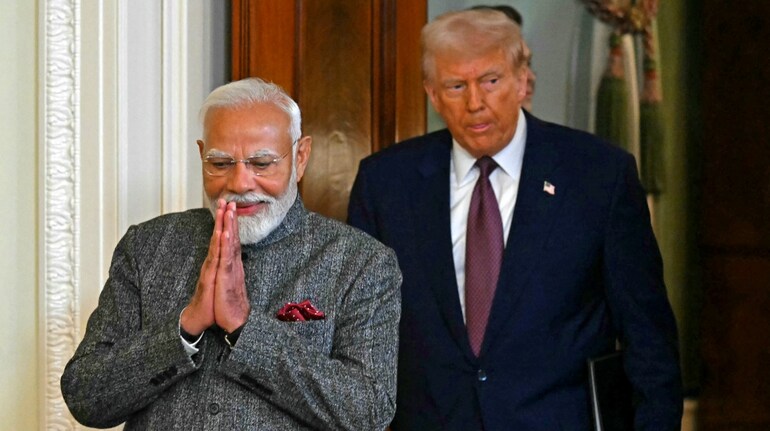
Ties between India and the US are facing strong headwinds after President Donald Trump imposed steep tariffs on New Delhi amid disputes over trade and Russian energy purchases. With India resisting pressure to halt its imports of Russian oil, Trump’s 50% tariffs on Indian goods took effect as scheduled on Wednesday.
US officials, however, have suggested that the ongoing trade friction is more of a temporary phase than a permanent rupture. “I think at the end of the day we (India and the US) will come together,” US Treasury Secretary Scott Bessent said recently, describing the relationship as “complicated.”
This is not the first time that bilateral ties have run into rough waters. While the US-India partnership has grown stronger in recent decades, it has also been marked by recurring challenges that continue to test the resilience of the relationship. Here are some of the past instances when India-US ties saw temporary setbacks:
Pokhran II nuclear test
One of the biggest setbacks in ties occurred when India, under then Prime Minister Atal Bihari Vajpayee, conducted Pokhran II nuclear tests in 1998. US slapped various sanctions on India, including restrictions on technology transfers and economic aid. US saw India’s nuclear ambitions as a challenge to non-proliferation.
"Sanctions cannot and will not hurt us. India will not be cowed down by any such threats and punitive steps. India has the sanction of her own past glory and future vision to become strong-in every sense of the term," Vajpayee had told India Today in 1998.
Vajpayee, however, pursued deeper ties with Washington. The Kargil 1999 incursion by Pakistan dramatically altered the India-US dynamic. Vajpayee's restraint in not expanding the conflict beyond the Line of Control convinced then US president Bill Clinton to get Pakistan to withdraw. In his address to Parliament, Clinton said while India was to settle its disputes bilaterally, America could occasionally intervene to persuade Pakistan to pull back.
Following the events of 9/11, the US shifted its focus towards India. The pivotal 123 Agreement in 2005 ended India's nuclear isolation as then Prime Minister Manmohan Singh and then US President George W Bush announced an agreement to enter a civilian nuclear deal.
Here are a few other instances when India and US ties weathered hard times.
Early days of Independence
In the early days following India's independence, the United States held a favourable view of India. Prime Minister Jawaharlal Nehru even visited the US in 1949. However, Nehru's decision to adopt a neutral stance in the Cold War led to a covert struggle for influence in India between the US and the Soviet Union. This also led to creation of amity between New Delhi and Moscow.
During the 1962 Sino-India war, Nehru wrote to the then US President John F Kennedy to provide India fighter jets to stem the Chinese aggression. Kennedy responded by recognising the McMahon Line as the border and providing military assistance.
The assassination of Kennedy and subsequent events, such as the 1965 Indo-Pak war and Nixon's support for Pakistan during the 1971 Bangladesh Liberation War, however, marked a downturn in relations. During this period. India also became also strategic partnership with the Soviet Union.
1971 Bangladesh Liberation War
During the 1971 Bangladesh Liberation War, India–US ties took a big blow as Washington openly sided with Pakistan.
The then Nixon administration not only provided military and diplomatic backing to Islamabad but also sent the US 7th Fleet into the Bay of Bengal, a move seen in New Delhi as a direct show of intimidation.
America's alignment with Pakistan, at a time when India was supporting Bangladesh’s liberation, created some distrust and marked a sharp downturns in bilateral relations.
Smiling Buddha
In 1974, India conducted its landmark first nuclear tests in Pokhran, Rajasthan, as part of the 'Smiling Buddha' operation. The nuclear test was named 'Smiling Buddha' because the test was conducted on the date that coincided with the Buddha Purnima festival that year. However, this upset the US. In response, it imposed sanctions and rallied international support to restrict India's nuclear programme.
Discover the latest Business News, Sensex, and Nifty updates. Obtain Personal Finance insights, tax queries, and expert opinions on Moneycontrol or download the Moneycontrol App to stay updated!





Find the best of Al News in one place, specially curated for you every weekend.
Stay on top of the latest tech trends and biggest startup news.