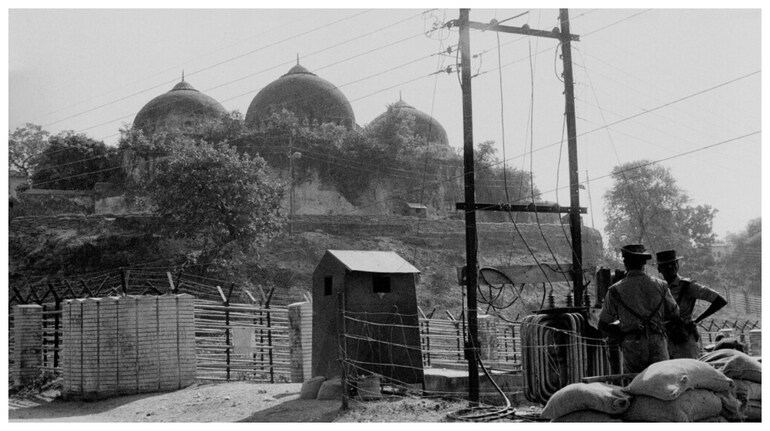
The demolition of the Babri Masjid on December 6, 1992 was the single most consequential moment in independent India’s communal and political history. In its aftermath, the central government set up the Liberhan Commission, expecting a rapid inquiry. Instead, it became India’s longest-running fact-finding exercise, taking seventeen years to submit its report. Over nearly two decades, it reconstructed not only the events of the demolition but also the layered political, administrative and organisational currents that produced it.
The commission’s findings cannot be understood without recognising the dramatic escalation that preceded the demolition, particularly the confrontations of 1990, which altered the movement’s emotional and political character. Those earlier events reshaped the mobilisation that followed, and their evidence repeatedly surfaced in testimonies before the commission.
The origins of the inquiry
The Liberhan Commission was constituted on December 16, 1992, ten days after the demolition. Its mandate was simple: Identify the causes of the events in Ayodhya, determine responsibility, and examine the failures of the state in preventing the destruction of the disputed structure. What began as a three-month assignment expanded as the commission confronted a complex reality. Tens of thousands of documents, hundreds of witnesses, and shifting political contexts pushed the inquiry deeper into India’s administrative and ideological fault lines.
The early sittings made one thing clear: the demolition was not an uncontrollable mob eruption, but the culmination of a mobilisation that had grown in intensity through the late 1980s and peaked after the confrontations in October–November 1990, which many witnesses identified as the emotional watershed of the movement. Testimonies repeatedly returned to those two firing incidents as the point at which the dispute acquired an irreversible momentum.
The timeline that shaped the inquiry
To reconstruct the run-up to December 6, 1992, the commission pieced together a timeline spanning more than six years. Witnesses included politicians from across the spectrum, senior police and intelligence officers, kar sevaks, journalists and civil servants. The testimony established that the tensions did not surge suddenly in 1992 but had been steadily building, particularly after the 1990 kar seva confrontations.
The 1990 episode, as contemporary reports and later depositions described, created three irreversible shifts: the sense of martyrdom among kar sevaks, the BJP’s rapid electoral rise in Uttar Pradesh, and the sharpening of street mobilisation strategies. Political leaders and police officers told the commission that these shifts fundamentally changed the landscape in which the 1992 mobilisation unfolded.
Administrative failures under scrutiny
One of the central questions before the commission was why, despite intelligence warnings, the Babri Masjid was not protected on the day of demolition. The inquiry found that the Kalyan Singh government in Uttar Pradesh systematically weakened security arrangements. Senior police officers testified that barriers were removed, the force was allowed to be thinly deployed, and reinforcements were discouraged from engaging aggressively once crowds breached the perimeter.
The commission noted that similar breaches had occurred in 1990—when kar sevaks had climbed the structure—but on that occasion the Mulayam Singh Yadav government had ordered firm action, including police firing, to prevent damage. In contrast, by late 1992, there appeared to be a political reluctance to repeat the 1990 response, especially after the backlash to the firing. Witness after witness stated that the events of 1990 cast a long shadow on the state’s willingness to intervene forcefully in 1992.
The chain of events on December 6, 1992
Through hundreds of testimonies, the commission reconstructed the minute-by-minute progression of December 6. By late morning, kar sevaks began dismantling the outer walls of the structure as senior leaders addressed gatherings from the dais. Officials posted at the scene described an abrupt shift from sloganeering to coordinated attempts to climb the domes. Despite repeated alerts from the district administration, state-level political instructions emphasised non-interference.
Police officers told the commission that the force received no clear directives to use coercive measures despite the obvious risk to the structure. Many testified that by the time they were permitted to intervene, the demolition was already under way. This breakdown, the commission concluded, was not a failure of capacity but of intent: the state government had signalled that aggressive law-and-order enforcement was neither expected nor desired.
Political responsibility and organisational roles
The commission’s most controversial conclusions centred on political and organisational responsibility. It held that several senior leaders of the BJP, VHP, and allied groups were directly or indirectly responsible for mobilising kar sevaks and creating an atmosphere primed for demolition. While many leaders argued that the demolition had been spontaneous, the commission countered that years of mobilisation, emotional appeals, and systematic organisation made spontaneity unlikely.
The report drew a contrast between the strict preventive measures of 1990, which—despite violence—protected the structure, and the permissive environment of 1992, which enabled its destruction. It also highlighted the evolution of mobilisation between the two years: the kar sevaks of 1992 were more organised, more prepared to confront barricades, and more emboldened by the narrative of sacrifice that had emerged after the 1990 firing.
The evidence trail: Testimonies, documents and contradictions
Over seventeen years, the commission accumulated an archive of conflicting narratives. Senior officials described being sidelined or overruled. Political leaders distanced themselves from operational decisions. Organisers of the kar seva offered idealistic accounts of symbolic worship, while journalists presented photographs and videos that showed a systematic assault on the structure.
One recurring theme was the gap between public statements and private actions. Leaders assured the central government that the structure would be protected, even as mobilisation continued at scale. Intelligence assessments warned of a likely demolition, but state authorities rejected them as exaggerated. Through cross-examination, the commission identified patterns of deliberate underestimation of risk.
The long tail of the investigation
That the inquiry lasted nearly two decades became a symbol of its complexity. Governments changed repeatedly, witnesses became unavailable, and political incentives shifted. Yet the prolonged duration also meant the commission could trace how the dispute and its memory continued to influence politics long after the demolition.
The commission observed that the 1990 firing episode became a defining symbol in the mobilisation leading up to 1992. Speeches, pamphlets, rallies and testimonies described those who died in the firing as martyrs whose sacrifice demanded fulfilment. This sentiment deepened the emotional investment in the 1992 mobilisation and was repeatedly cited by witnesses to explain the charged atmosphere.
Legacy and relevance today
The Liberhan Commission Report, tabled in Parliament in 2009, marked the official end of the inquiry but not the end of its relevance. Its findings continue to inform scholarship, political debates and legal discourse around the Ayodhya dispute. The commission’s reconstruction of events created the most exhaustive documentary record of the mobilisation, political motivations and administrative decisions that shaped one of India’s most polarising moments.
In tracing the roots of the demolition back to the confrontations, mobilisations and administrative choices of earlier years, including the pivotal events of 1990, the commission situates 6 December 1992 not as an isolated explosion but as the final step in a long, deliberate trajectory. Its significance lies not only in assigning responsibility but also in revealing how movements gather emotional force, how states sometimes fail to act, and how historical memory influences political action.
Discover the latest Business News, Sensex, and Nifty updates. Obtain Personal Finance insights, tax queries, and expert opinions on Moneycontrol or download the Moneycontrol App to stay updated!
Find the best of Al News in one place, specially curated for you every weekend.
Stay on top of the latest tech trends and biggest startup news.