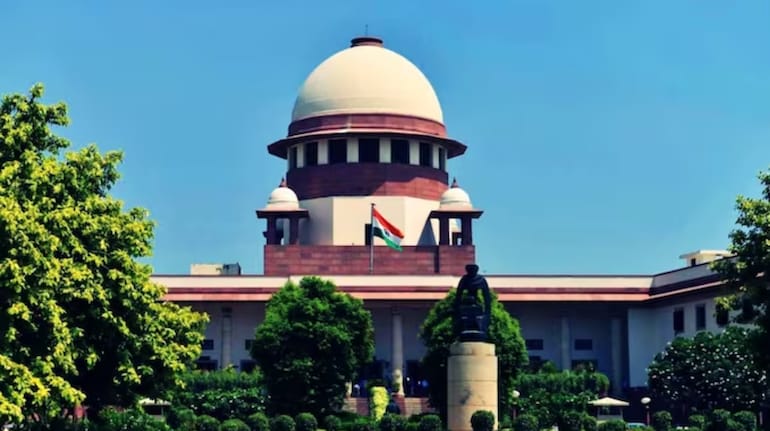
The Supreme Court on Wednesday issued a fresh circular laying down detailed and stricter guidelines for seeking adjournments in cases, emphasising that such requests will be considered only in exceptional circumstances.
The apex court also made disclosure of reasons mandatory for seeking adjournments.
In 2023, it was then Chief Justice DY Chandrachud who urged lawyers not to seek adjournment unless necessary as he did not want the Supreme Court to become a "tareekh pe tareekh court".
As per a new circular dated March 18, which supersedes two earlier circulars issued in November and December 2025, "specific reason for seeking adjournment and number of adjournments already sought in the case shall be mentioned".
Adjournments, the circular said, will not be considered routinely.
Under the revised framework, advocates-on-record and parties appearing in person are permitted to circulate adjournment letters in both fresh and after-notice matters. However, the process has been formalised with mandatory pre-service requirements. A copy of the adjournment request must be served in advance on the opposing side or caveator, and the request must be submitted with proof of such service before 11:00 a.m. on the previous working day, according to a report by Live Law.
Furthermore, the opposing side has been granted the right to object to the adjournment request by submitting a response via email before 12:00 noon. Any such objection will also be placed before the Court for consideration.
Adjournments will be granted only in “exceptional circumstances”, such as bereavement in the family, medical or health conditions of the advocate or party, or any other genuine reason that satisfies the Court.
In a move aimed at curbing delays, the Court has imposed further restrictions. Adjournment letters in fresh cases will be permitted to be circulated only once. Additionally, two consecutive adjournments will not be allowed without the matter being listed before the Court, irrespective of which party seeks the adjournment.
All adjournment requests are required to be submitted in a prescribed format via a designated email ID.
And most importantly, the circular draws a clear distinction for regular matters. It categorically states that no adjournment letters will be permitted in cases listed as regular matters before the Court, Live Law reported.
Discover the latest Business News, Sensex, and Nifty updates. Obtain Personal Finance insights, tax queries, and expert opinions on Moneycontrol or download the Moneycontrol App to stay updated!
Find the best of Al News in one place, specially curated for you every weekend.
Stay on top of the latest tech trends and biggest startup news.