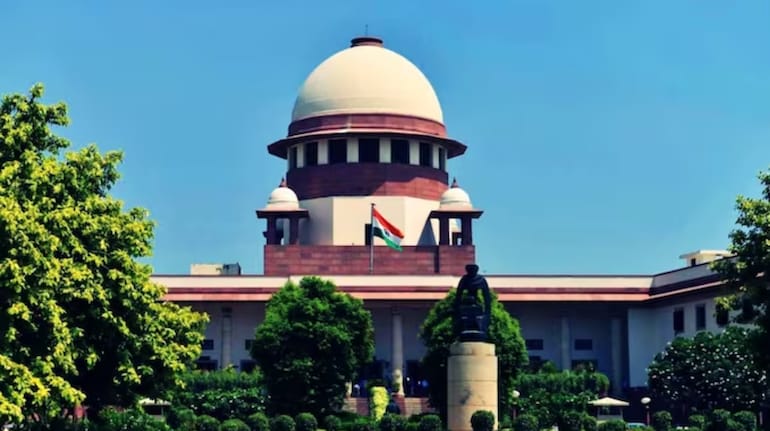
The Supreme Court delivered a major ruling on Wednesday (November 19) striking down the Tribunal Reforms Act, 2021, after sharply criticising the Central government for what the bench described as its unwillingness to implement earlier judicial directions regarding the appointment and service conditions of tribunal members.
The matter was decided by a bench of Chief Justice of India BR Gavai and Justice K Vinod Chandran, which noted that Parliament had re-enacted the very provisions earlier struck down, without addressing the defects identified in a series of previous decisions.
"The provisions of the impugned Act cannot be sustained as they violates separation of powers and judicial independence principles. It amounts to legislative overwrite without curing any defects and the binding judgment. It falls foul. Thus it is struck down as unconstitutional," the Court said.
The petition before the Court had been filed in 2021 by the Madras Bar Association, arguing that the statute was inconsistent with earlier judgments -- specifically the Madras Bar Association cases -- which had laid down clear requirements: tribunal members must receive at least a five-year tenure, and advocates with a minimum of ten years’ experience should be eligible for consideration.
In contrast, the 2021 law reduced tenure to four years, introduced a minimum age bar of 50 for appointments, and altered the functioning of the search-cum-selection committee by allowing it to propose two names for the post of Chairperson. These deviations, the Court said, violated binding precedent.
According to the bench, the Act amounted to an impermissible “legislative overruling” of judgments without curing underlying issues, thereby infringing the "principles of separation of powers and judicial independence."
Since the statute could not be sustained, the Court held that the framework laid down in the earlier Madras Bar Association 4 and 5 rulings would continue to apply until Parliament enacts a fresh law that conforms to those directions.
The bench also highlighted past warnings to the Government, observing that prior directions had not been given effect to. It underscored that the continuity and independence of tribunals could not be compromised.
As part of the operative directions, the Court instructed the Central government to set up a National Tribunal Commission within four months.
The judgment also clarified the age and tenure protections for existing members. It stated that members of the ITAT shall serve until 62 years of age, with the Chairperson entitled to continue until 65.
A similar arrangement was mandated for CESTAT, with members remaining until 62 and the President until 65. All appointments made before the 2021 enactment would be governed by earlier precedent rather than the curtailed terms introduced by the impugned legislation.

Discover the latest Business News, Sensex, and Nifty updates. Obtain Personal Finance insights, tax queries, and expert opinions on Moneycontrol or download the Moneycontrol App to stay updated!
Find the best of Al News in one place, specially curated for you every weekend.
Stay on top of the latest tech trends and biggest startup news.