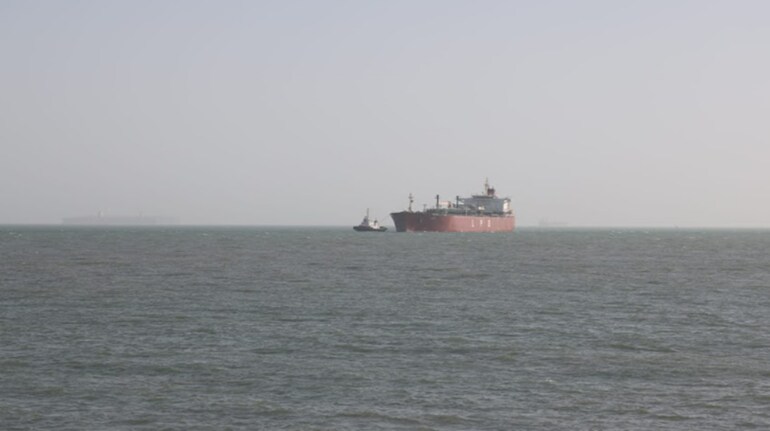

The ongoing conflict in West Asia has pushed India toward a long-term strategy to cut its dependence on the Gulf region for liquefied natural gas (LNG) supplies.
According to government sources quoted by CNN-News18, New Delhi has decided to fast-track a strategic energy pivot after supply disruptions in Qatar, India’s largest supplier of LNG, contributing around 40 to 47 % of annual imports, and with the Strait of Hormuz effectively turning into a warzone.
The government sources said the Centre has launched an aggressive overhaul of its national energy strategy aimed at reducing reliance on transit points in West Asia for power generation and industrial needs.
They said the shift was triggered by production halts at the Ras Laffan Industrial City in Qatar and escalating instability around the Strait of Hormuz.
For decades, the Gulf region has been central to India’s energy imports, with Qatar alone supplying nearly half of the country’s LNG requirements. However, recent disruptions have exposed this dependence as a “major strategic risk”.
Qatar suspended LNG production on March 2 after Iranian strikes hit Gulf energy facilities, pushing global prices higher.
Government sources said the crisis is now “pushing India to speed up plans for a more balanced LNG portfolio”.
As part of this shift, India is expanding supply chains toward the United States, Australia and African producers. To bypass the volatile Strait of Hormuz, the United States is being considered via routes such as the Panama Canal, while Australia is being prioritised as a “safer and shorter” shipping alternative.
Other countries being brought into this strategy include Russia, Norway, Canada, Peru and West African producers such as Angola and Nigeria.
Sources said the transition will come at a financial cost. Indian importers including GAIL, Petronet LNG and Indian Oil Corporation, have been forced to turn to the expensive spot market.
Prices have surged to around $24–25 per MMBtu but authorities are “prioritising supply security over cost in the short term” to maintain essential services.
Sources added that domestic gas and imported LNG are being redirected toward critical sectors including household piped natural gas (PNG), CNG transport and fertiliser production to ensure food security and transport operations continue even during supply disruptions.
“We are engaging with global suppliers and examining options such as safer shipping routes and possible naval protection for LNG vessels in sensitive regions,” a source said.
The government is also deepening engagements with major energy traders such as TotalEnergies, Vitol and Trafigura, along with state-backed firms including Sonatrach and Abu Dhabi National Oil Company.
Discover the latest Business News, Sensex, and Nifty updates. Obtain Personal Finance insights, tax queries, and expert opinions on Moneycontrol or download the Moneycontrol App to stay updated!
Find the best of Al News in one place, specially curated for you every weekend.
Stay on top of the latest tech trends and biggest startup news.