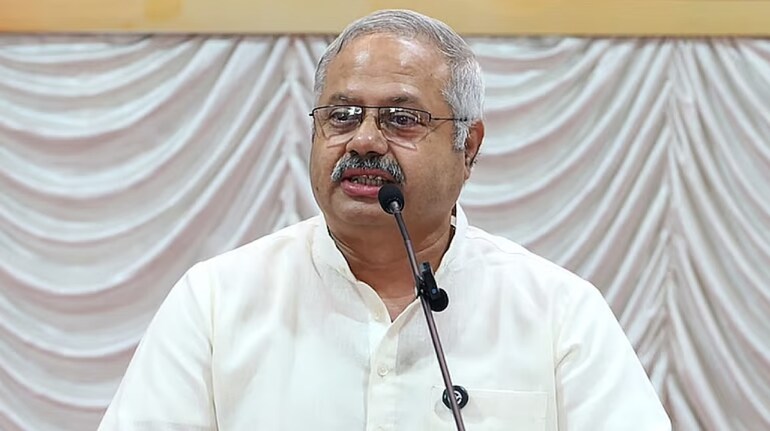
The Rashtriya Swayamsevak Sangh (RSS) has backed the idea of a caste census for welfare purposes but cautioned against its political use to "divide society," according to its national publicity head Sunil Ambekar.
Ambekar, in an interaction with The Times of India, drew a clear line between governance and politics, arguing that caste data can aid targeted welfare but should not become a tool for electoral polarisation. "Democracy requires representation, but politics should not pit one community against another," he remarked.
Framing the organisation’s stance, Ambekar said the RSS approaches caste issues through social cohesion rather than confrontation. “If mutual affection grows and discrimination disappears, even large issues can be resolved. Without harmony, even small issues become major conflicts,” he said.
He stressed that equal access to temples, cremation grounds, water sources and public spaces remains essential, adding that RSS volunteers are working locally to address such gaps.
Ambekar highlighted outreach efforts through institutions such as Vidya Bharati, Vanvasi Kalyan Ashram, Ekal Vidyalaya and Seva Bharati, saying these initiatives are helping broaden participation from marginalised communities, including women.
On the role of women, Ambekar defended the parallel structure of the Rashtriya Sevika Samiti, saying it reflects the RSS’s organisational model. He also acknowledged the need to expand women’s participation in leadership and outreach.
He pointed to a coordination initiative, “Mahila Sambandh,” and the centenary theme “Kutumb Prabodhan,” which encourages families to support women’s engagement in public life.
Speaking on the RSS’ relationship with the Bharatiya Janata Party (BJP), Ambekar reiterated that the Sangh is a social organisation focused on “building individuals,” even as its volunteers contribute across sectors, including politics.
He said institutions function independently, describing India’s model as “society-centric” in contrast to Western state-centric systems. While political parties operate within electoral timelines, the RSS works on a longer civilisational horizon through “Lokmat Jagran.”
Responding to criticism that links Hindu nationalism with democratic backsliding, Ambekar dismissed such claims, calling Hindu culture inherently “unifying.”
He cited the idea of “Vasudhaiva Kutumbakam” to argue that India’s civilisational ethos fosters coexistence. “On the ground, we see unity,” he said, pointing to events like the Kumbh and the Ram Mandir consecration.
On concerns about discrimination against people from the northeast, Ambekar said the term “racial discrimination” was misplaced, attributing past tensions to limited interaction and historical distortions. He added that exchange programmes have helped bridge gaps and called for sensitive handling of such issues.
On international conflicts, Ambekar said India should be guided by peace and principles, with the government taking decisions based on strategic considerations.
Discover the latest Business News, Sensex, and Nifty updates. Obtain Personal Finance insights, tax queries, and expert opinions on Moneycontrol or download the Moneycontrol App to stay updated!
Find the best of Al News in one place, specially curated for you every weekend.
Stay on top of the latest tech trends and biggest startup news.