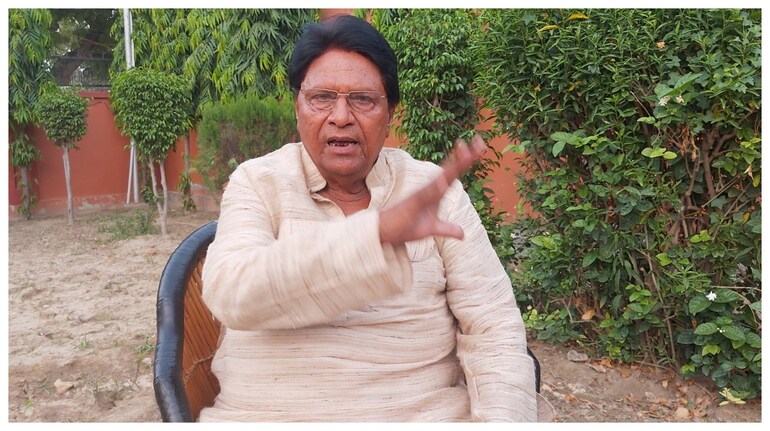
What began as a controversial remark by Samajwadi Party MP Ramjilal Suman in the Rajya Sabha has snowballed into a full-blown political and caste conflict in Uttar Pradesh. The standoff between Karni Sena and the SP's Dalit leadership over historical icon Rana Sanga has now morphed into an Agda (upper caste) vs Dalit confrontation, stirring anxieties across the political spectrum—especially within the BJP.
With the shadow of the 2027 Assembly elections looming large, the BJP finds itself caught between its traditional Kshatriya vote bank and the growing assertiveness of Dalit voices, many of whom shifted away from the party in the 2024 Lok Sabha elections. The Sangh Parivar's long-standing effort to unify Hindus under one cultural identity faces a new strain as caste divisions resurface.
A calculated provocation or a strategic gamble?
Ramjilal Suman's statement—alleging that Rana Sanga had invited Babur to India and calling him a "traitor"—has drawn sharp reactions from the Karni Sena, a powerful Kshatriya pressure group. Threats, street protests, and shows of strength followed, turning the controversy into a caste flashpoint.
In response, the SP has doubled down rather than backtracking. Party president Akhilesh Yadav deployed Dalit leaders like Indrajit Saroj and Awadhesh Prasad to frame the issue as one of historical truth and Dalit pride, not insult. Prasad’s visit to Ramlala on Ram Navami was seen as an effort to blend religiosity with Ambedkarite assertion—a clear message that SP’s PDA (Pichhda, Dalit, Alpsankhyak) formula is flexible enough to embrace both Ram and Bhimrao Ambedkar.
For the BJP, the controversy presents a classic political conundrum. Supporting Karni Sena, even indirectly, risks alienating Dalits. But distancing the party from the outrage of Kshatriya groups could fracture its traditional social base.
The BJP’s damage control strategy is now in motion. A 12-day Dalit outreach coinciding with Ambedkar Jayanti has been launched. Chief Minister Yogi Adityanath, Deputy CMs Keshav Prasad Maurya and Brajesh Pathak, along with BJP state president Bhupendra Chaudhary, have been tasked with reaching out to Dalit communities through meetings and rallies.
Further, senior Dalit leaders from within the BJP—such as Women Welfare Minister Baby Rani Maurya, Rajya Sabha MP Brajlal, and SC Commission Chairman Vaidyanath Rawat—have been mobilized to contain the fallout and reaffirm the BJP’s commitment to Dalit welfare.
Yet, the silence of the BJP top brass on the inflammatory actions of Karni Sena has not gone unnoticed. Political analysts argue that the optics of sword-wielding Kshatriya protesters and street threats may reinforce the perception among Dalits that the BJP is siding with upper-caste muscle.
According to senior journalist RN Bajpayee, SP initially appeared to have scored a “self-goal” with Suman's remark. But the aggressive reaction of the Karni Sena shifted the tide. “The moment swords were brandished, it was no longer about history. It became a question of caste pride and Dalit dignity,” Bajpayee says. "That handed SP a chance to consolidate a fractured Dalit base post-BSP’s decline."
The shift is being closely watched by BSP supremo Mayawati, who now faces the dual threat of losing Dalit support to both SP and BJP. Political observers believe that if the SP manages to position itself as the primary defender of Dalit interests, especially against upper-caste aggression, it could significantly weaken BSP’s already shrinking vote base.
Other political analysts, believe the controversy could also rattle the ideological foundations of the Rashtriya Swayamsevak Sangh (RSS). “The RSS has long worked to build Hindu unity beyond caste lines. But this episode shows how fragile that project remains,” she says.
With CM Yogi Adityanath himself a prominent Kshatriya and Karni Sena representing the Thakur voice, the optics complicate the Sangh’s Dalit outreach. Agra—long a hotbed of Dalit politics—has become the epicenter of the controversy, sending ripples across the state.
The BJP remains publicly confident. BJP vice-presdent Vijay Bahadur Pathak said the issue is one of national pride, not caste conflict. "Rana Sanga, Shivaji, Maharana Pratap—they belong to all Indians, not one caste," he said.
However, the underlying anxieties are real. BJP knows that even a small Dalit shift away from its fold could reshape UP’s political arithmetic in 2027. The party is now in a race to reassure its Dalit base that it remains committed to social justice, even as it manages upper-caste unrest.
“The Rana Sanga controversy is no longer just about history—it has become a caste and identity war, threatening to redraw UP’s political map. Whether the BJP can navigate this minefield without alienating either side, or whether SP can use this moment to cement its Dalit pitch, will define the road to 2027,” Manoj Bhadra, a political analyst, said.
Discover the latest Business News, Sensex, and Nifty updates. Obtain Personal Finance insights, tax queries, and expert opinions on Moneycontrol or download the Moneycontrol App to stay updated!
Find the best of Al News in one place, specially curated for you every weekend.
Stay on top of the latest tech trends and biggest startup news.