In a dramatic turn that could cost him a royal legacy, actor Saif Ali Khan is staring down the possibility of losing ancestral properties in Bhopal valued at a staggering Rs 15,000 crore.
The Madhya Pradesh High Court, on June 30, dismissed a plea filed by Khan and his family, further complicating their bid to retain ownership of these assets. The court not only set aside an earlier trial court order naming Saif, his mother Sharmila Tagore, and sisters Soha and Saba as rightful heirs but also reopened a decades-old inheritance dispute.
Notably, this case runs parallel to another battle over whether or not these properties fall under the ambit of the Enemy Property Act.
Understanding the legal battle
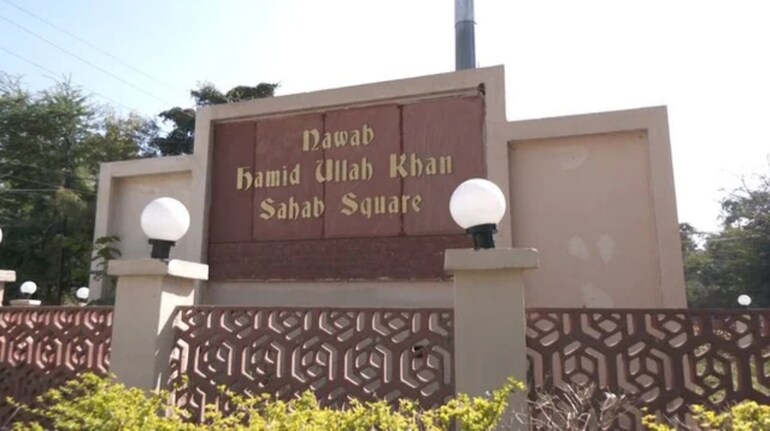
At the heart of this case is a 2000 trial court ruling that recognised Saif and his immediate family as legal heirs to the estate of Nawab Hamidullah Khan, the last ruling Nawab of Bhopal. This decision, however, was challenged by other descendants who claimed that the estate should be divided according to Muslim Personal Law, not royal succession.
In their argument, they had noted that the Nawab’s daughter, Sajida Sultan (Saif’s grandmother), had been incorrectly designated as sole heir. The High Court has now reversed the earlier decision and ordered the trial court to re-examine the case, directing that proceedings be concluded within a year.
What is the ‘Enemy Property’ tag?
This inheritance dispute, meantime, intersects with another legal hurdle -- the properties in question have been designated as "enemy property" by the government.
In 2014, the Custodian of Enemy Property issued a notification applying the Enemy Property Act of 1968 to the estate.
The basis for this move is that Nawab Hamidullah Khan’s eldest daughter, Abida Sultan, migrated to Pakistan after Partition and gave up her Indian citizenship. Since she was the designated heir, the properties she was entitled to were deemed "enemy property" and vested in the Custodian, under a law that bars descendants of such individuals from claiming ownership.
Saif had contested this classification in court and secured a temporary stay in 2015.
However, on December 13, 2024, the MP High Court dismissed his petition and lifted the stay. The family was granted 30 days to approach an appellate tribunal but it is unclear whether or not they did.
With the deadline now past, the properties are legally open to acquisition by the government. The Bhopal district administration is likely to soon begin the takeover process unless an appeal is accepted and upheld.
The disputed assets include prime real estate in and around Bhopal -- properties that hold both financial and emotional value for the Pataudi family.
These include Noor-Us-Sabah Palace, now a luxury hotel; Flag Staff House, where Saif spent much of his childhood, and Dar-Us-Salam, Bungalow of Habibi, Ahmedabad Palace, and the Kohefiza Property.
As per projections, the total value of these properties is around Rs 15,000 crore, making it one of the most significant inheritance disputes in the country.
The Enemy Property Act
Enacted in 1968, the Enemy Property Act was designed to manage assets left behind in India by people who migrated to Pakistan or China during and after the Partition, and later wars. These properties are vested in the Custodian of Enemy Property for India, a government-appointed authority under the Ministry of Home Affairs.
In 2017, a crucial amendment, the Enemy Property (Amendment and Validation) Act, gave the law more teeth.
It explicitly barred Indian legal heirs of such individuals from claiming the properties, regardless of their citizenship. It also expanded the scope to include not just land and buildings but also shares, jewellery, and financial assets. Most importantly, the amendment applied retrospectively, nullifying several past claims and even settled disputes.
Saif Ali Khan inherited the properties through his paternal grandmother, Sajida Sultan, the second daughter of Nawab Hamidullah Khan.
Sajida became the de facto ruler of Bhopal after her elder sister Abida renounced Indian citizenship and moved to Pakistan.
The Central government, in a 1962 order, had recognised Sajida as the sole successor to Nawab Hamidullah’s private properties. These were later inherited by Mansoor Ali Khan Pataudi (Saif’s father) and subsequently passed down to Saif and his family.
Saif, at present, is locked in two legal battles.
The first is the inheritance case now revived by the Madhya Pradesh High Court, and the second is the dispute over the enemy property classification. If the actor and his family do not successfully appeal to the designated tribunal, they might lose ownership of all properties listed under the Custodian's notification.
Early this January, the court had asked Saif to move the appellate authority. It is, however, unclear if the actor, who was recovering from a knife attack at his home at the time, managed to do so before the deadline.
Discover the latest Business News, Sensex, and Nifty updates. Obtain Personal Finance insights, tax queries, and expert opinions on Moneycontrol or download the Moneycontrol App to stay updated!
Find the best of Al News in one place, specially curated for you every weekend.
Stay on top of the latest tech trends and biggest startup news.