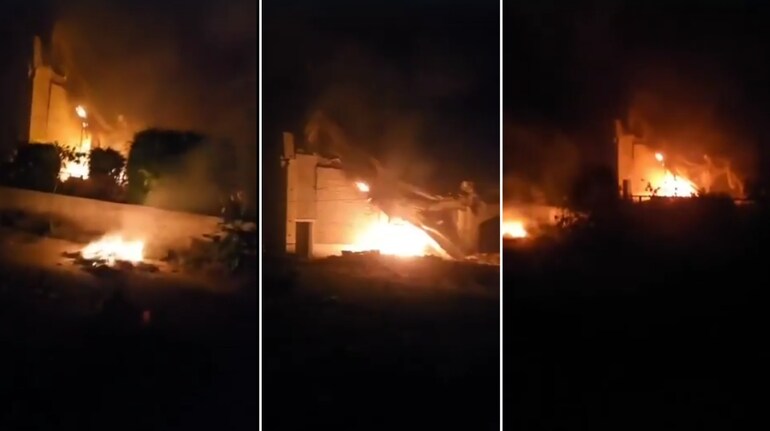
India reportedly shot down at least six Pakistani fighter jets and a military transport aircraft during Operation Sindoor, according to top defence sources, further dismissing opposition allegations that New Delhi succumbed to pressure from the White House to halt cross-border military operations and enforce an immediate ceasefire.
According to sources cited in a News18 report, the day following the attack, Bahawalpur and Muridke, two known terrorist strongholds in Pakistan, were chosen as the main targets during high-level talks on April 23. The three service chiefs, Chief of Defence Staff Gen. Anil Chauhan, National Security Advisor Ajit Doval, and Defence Minister Rajnath Singh, presided over this meeting.
Later that evening, Prime Minister Narendra Modi, who had returned early morning from Saudi Arabia, presided over the Cabinet Committee on Security (CCS) to finalise operational plans.
Despite claims from the Congress and the Leader of Opposition in Lok Sabha, Rahul Gandhi, that the Prime Minister gave in to international pressure, allegedly from U.S. President Donald Trump, defence sources denied that any such communication took place.
“PM Modi did not speak to Trump. Even when JD Vance reached out, the Prime Minister stood firm and did not budge,” a senior source has been cited in the News18 report.
In order to protect pilots and prevent escalation, the strike, which was carried out in the early hours of May 7 between 1:05 and 1:30 am, lasted only 22 minutes and was carried out without going over the International Border or the Line of Control (LoC). According to the insider cited in the report, special equipment ensured that the targets being destroyed were captured on night vision footage in real time.
Indian armed forces destroyed more than 10 terrorist facilities in Pakistan and Pakistan-occupied Kashmir (PoK) during the operation. The sources stressed that all Indian pilots returned safely, despite India acknowledging that it lost some planes early in the mission because of "tactical mistakes."
Meanwhile, the initial fighting losses under probe.
According to sources, more than six Pakistani aircraft, including F-16s, JF-17s, a C-130J military transport plane, and a SAAB-2000 AWACS, were brought down by India's strikes. As per a second source cited in the report, Pakistan de-escalated and avoided open conflict because it was concerned about a likely naval attack that would strike Karachi Port. However, despite being ready and on high alert, the Indian Navy refrained from direct engagement.
Notably, India put up a strong diplomatic front as well.
To send a message of national unity and resolve both domestically and internationally, opposition figures like Salman Khurshid, Shashi Tharoor, Asaduddin Owaisi, and Kanimozhi were purposefully included in multi-party delegations that were sent to important international cities.
Discover the latest Business News, Sensex, and Nifty updates. Obtain Personal Finance insights, tax queries, and expert opinions on Moneycontrol or download the Moneycontrol App to stay updated!





Find the best of Al News in one place, specially curated for you every weekend.
Stay on top of the latest tech trends and biggest startup news.