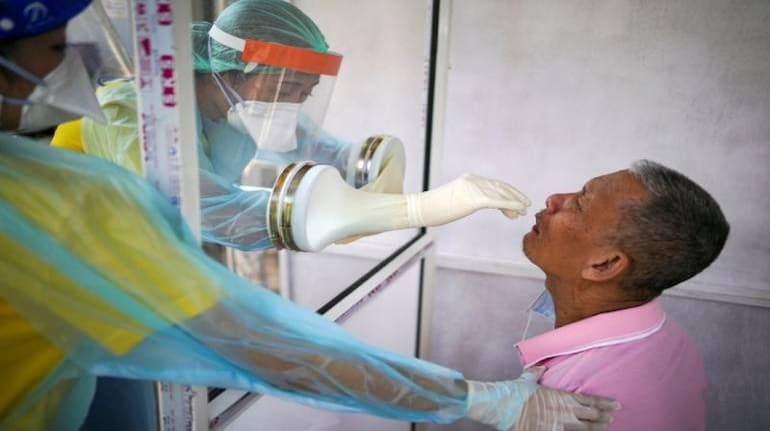
Contacts of persons infected with COVID-19, unless if they are at high-risk, are not required to be tested for the contagious disease, the Indian Council of Medical Research (ICMR) said in its latest guidelines released on January 10.
Individuals undertaking inter-state domestic travel are also not required to be tested, the top medical body said.
The ICMR has also exempted asymptomatic individuals in community settings, along with patients who stand discharged as per home isolation guidelines, from the COVID-19 tests.
"Patients being discharged from a COVID-19 facility as per revised discharge policy" are also included in the list of people who need not be tested.
Track coronavirus-related news and live updates
For in-hospital settings, the ICMR categorically noted that "no emergency procedure (including surgeries and deliveries) should be delayed for lack of a test."
Patients should not be referred to other facilities for lack of a testing facility, it added.
All arrangements should be made to collect and transfer samples to testing facilities, mapped to the health facility, the medical body said.
"Asymptomatic patients undergoing surgical / non-surgical invasive procedures including pregnant women in/near labour who are hospitalized for delivery should not be tested unless warranted or symptoms develop," the guidelines clarified.
The ICMR also noted that admitted patients may not be tested more than once a week.
Among individuals who are to be tested, as per the guidelines, including individuals who are showing symptoms of "cough, fever, sore throat, loss of taste and/or smell, breathlessness and/or other respiratory symptoms"
At-risk contacts of laboratory-confirmed cases may also be tested on a priority basis. The at-risk category includes senior citizens aged above 60 and individuals suffering from co-morbidity such as diabetes,
hypertension, chronic lung or kidney disease, malignancy, and obesity, etc.
Tests are to be conducted on individuals undertaking international travel (as per country-specific requirements) and international travelers arriving at Indian airports/seaports/ports of entries as per laid down
guidelines, it added.
The ICMR directive comes amid increasing pressure on testing labs across the nation. A total of 13.52 lakh tests were conducted across the country on January 9.
The testing capacity is likely to be increased in metropolitan cities where the COVID-19 positivity rate has soared over the past two weeks. In Delhi and Mumbai, the infection rate has surged past 20 percent. Across India, a total of 1.79 lakh infections were reported on January 10 at a positivity rate of 13.29 percent.
Discover the latest Business News, Sensex, and Nifty updates. Obtain Personal Finance insights, tax queries, and expert opinions on Moneycontrol or download the Moneycontrol App to stay updated!

Find the best of Al News in one place, specially curated for you every weekend.
Stay on top of the latest tech trends and biggest startup news.