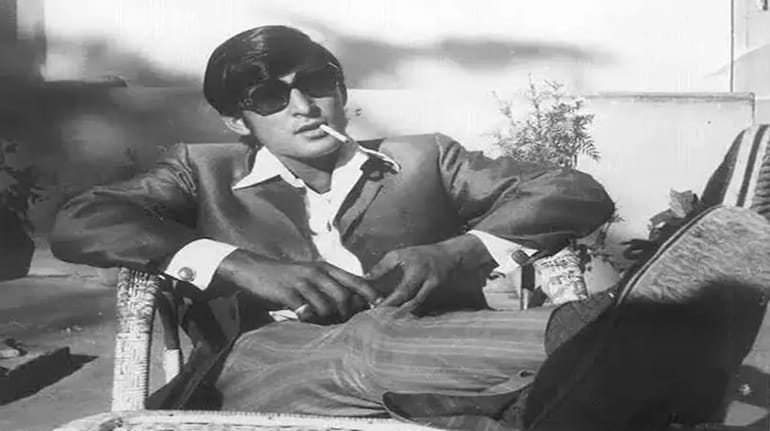

As espionage thrillers like Dhurandhar dominate popular culture with their tales of deep-cover agents and shadow wars, many have begun to draw parallels with one of India’s most extraordinary yet largely unacknowledged intelligence operatives -- Ravindra Kaushik.
Known within intelligence circles as the "Black Tiger", Kaushik’s life is widely seen as the closest real-world embodiment of the fictional "Dhurandhar" archetype -- fearless, invisible, and ultimately expendable.
Born on April 11, 1952, in Sri Ganganagar in Rajasthan, Kaushik grew up in a border district where language and cultural fluidity were part of everyday life. He became naturally fluent in Punjabi and local dialects, an ability that would later prove critical.
According to journalist Praveen Swami, Kaushik’s early passion was theatre. While pursuing a commerce degree at SD Bihani College, he developed a reputation for his powerful stage presence, voice control, and ability to inhabit characters convincingly. It was this unlikely skillset that set him on a path into the world of espionage.
In 1973, during a national-level dramatic competition in Lucknow, Kaushik performed a mono-act portraying an Indian soldier enduring enemy interrogation. The performance was not just compelling, it was transformative.
Recruiters from India’s external intelligence agency, the Research and Analysis Wing (RAW), were in the audience. They saw in him the rare combination of composure, linguistic dexterity, and psychological resilience required for deep-cover operations. Soon after, Kaushik was recruited into one of the most secretive arms of the Indian state.
His transformation over the next two years was total.
As detailed by VK Singh in India’s External Intelligence: Secrets of RAW, Kaushik underwent rigorous training in Delhi designed to erase his past and reconstruct him entirely. He was trained in Urdu and its regional variations, immersed in Islamic theology and Pakistani social customs, and schooled in geography, politics, and behavioural patterns of his target environment.
That new identity was Nabi Ahmed Shakir.
Around 1975, at just 23, Kaushik crossed into Pakistan, entering the most perilous category of espionage: deep-cover infiltration. His integration was meticulous and long-term. He enrolled at Karachi University, completed a law degree, and gradually embedded himself within Pakistani society.
Over time, he secured a position within the Pakistan Army’s Military Accounts Department. While some accounts suggest he rose to the rank of Major, others, including writings by former Intelligence Bureau officer Maloy Krishna Dhar in Open Secrets: India’s Intelligence Unveiled, indicate that even his administrative role granted him access to sensitive military information.
Between 1979 and 1983, Kaushik operated at the peak of his effectiveness.
From within Pakistan’s military ecosystem, he relayed critical intelligence back to India, including details on troop deployments, strategic planning, and information linked to the Kahuta nuclear facility. Intelligence commentators have long suggested that his inputs provided India with a crucial strategic edge and may have helped avert military escalations.
Throughout this period, he sustained a complete double life. He married a local woman named Amanat and fathered a child, further solidifying his cover. By all outward appearances, Nabi Ahmed Shakir was Pakistani. Only a handful within RAW knew the truth.
It was during these years, as cited in multiple intelligence accounts, that then Prime Minister Indira Gandhi reportedly conferred upon him the codename "Black Tiger", a rare and symbolic acknowledgment in a profession where recognition is almost never public.
Yet, like many intelligence operations, Kaushik’s story turned not on his own failure, but on a single compromised link.
In 1983, a RAW operative named Inayat Masih was sent to establish contact with him.
According to reports referenced by The Telegraph, Masih was quickly captured by Pakistani counter-intelligence. Under interrogation, he revealed information that led authorities directly to Kaushik. He was arrested in September 1983, bringing to an abrupt end one of India’s most audacious intelligence penetrations.
What followed was a prolonged ordeal of brutality and isolation.
Kaushik was moved between interrogation centres in Sialkot and high-security prisons, including Kot Lakhpat and Mianwali. Despite severe torture, both physical and psychological, he initially maintained his cover, refusing to disclose his true identity. In 1985, a Pakistani military court sentenced him to death, a punishment later commuted to life imprisonment.
During his years in captivity, Kaushik managed to send letters to his family in India. These rare fragments of communication revealed the depth of his suffering and abandonment. In one letter, cited by The Hindu, he wrote poignantly, “Kya Bharat jaise bade desh ke liye kurbani dene waalon ko yahi milta hai?” -- a question that continues to haunt discussions about the treatment of covert operatives.
After nearly two decades in prison, Ravindra Kaushik died on November 21, 2001, in Mianwali Central Jail. The official causes were pulmonary tuberculosis and heart disease, both exacerbated by years of neglect and harsh conditions. He was buried in an unmarked grave within the prison परिसर, far from the country he had served and the identity he had surrendered.
Despite the scale of his contributions, there has been no formal public recognition from the Indian state. His story survives largely through accounts by former intelligence officers, journalists, and scattered media reports. His family has continued to seek acknowledgment and honour for his service, even as his name remains absent from official rolls of recognition.
Ravindra Kaushik was not just a spy. He was a constructed identity, a long-term deception, and ultimately, a human cost borne silently in the shadows.

Discover the latest Business News, Sensex, and Nifty updates. Obtain Personal Finance insights, tax queries, and expert opinions on Moneycontrol or download the Moneycontrol App to stay updated!
Find the best of Al News in one place, specially curated for you every weekend.
Stay on top of the latest tech trends and biggest startup news.