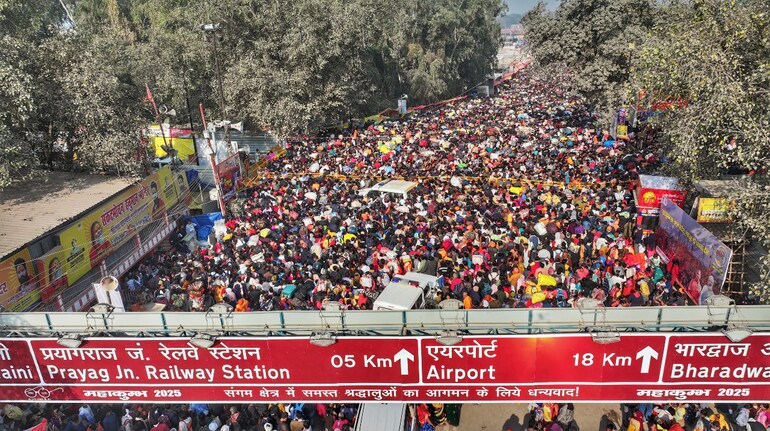
Prayagraj is alive with energy as it gears up for the most auspicious bathing festival of the Maha Kumbh 2025, the Mauni Amavasya Amrit Snan, set to take place on January 29. With over 10 crore devotees expected to take a holy dip at the sacred Triveni Sangam, the city has become a vibrant hub of spirituality, business, and meticulous preparations.
Pilgrims from across the country have already started pouring in. “This is my first time here, and the arrangements are incredible,” said Kavita Devi, a devotee from Odisha, beaming with excitement as she prepared to take a dip. “The ghats are clean, and the volunteers are so helpful. It truly feels divine.”
To accommodate the massive turnout, a 12-kilometer stretch of bathing ghats has been constructed along the riverbanks. District Magistrate Ravindra Kumar Mandhad highlighted the scale of preparations, saying, “We have taken all possible measures to ensure that devotees have a safe and seamless experience. Coordination between various teams has been key.” He also urged locals to avoid using four-wheelers during the festival to prevent traffic congestion.
Special ghats have been allocated for pilgrims from different regions to manage the crowd effectively. The Airavat Sangam Ghat will host devotees from eastern states like Bihar, Odisha, and West Bengal, while ghats in Arail have been reserved for those from southern and western states. Akharas (religious sects) have their own dedicated ghats for rituals, ensuring that traditional practices are observed without interference.
Deputy Commissioner Ashok Tiwari described the management efforts as unprecedented, highlighting the deployment of over 5,000 personnel across the Mela area, including SDMs, tehsildars, and IAS officers, to ensure smooth operations. Evacuation teams, watchtowers, and flying squads are on high alert to handle any emergency. District Magistrate Ravindra Kumar Mandhad appealed to Prayagraj residents to avoid using four-wheelers during the festival to prevent traffic snarls, urging their cooperation to allow lakhs of pilgrims to experience the Sangam without hurdles.
Temporary shelters, overnight accommodations, and holding areas have been set up for pilgrims arriving by train and private vehicles. The Prayagraj Railway Division has created additional holding areas, including a facility at Khusro Bagh that can accommodate over one lakh people.
Business booms
For local traders, the festival spells opportunity. Harjinder Singh, a hotelier in the city, could barely hide his excitement. “We have been waiting for this moment for months. All our rooms are fully booked till February 3,” he shared. “It is not just the hotels; the entire economy gets a boost—from street vendors to transport operators. This festival is a blessing for businesses.”
The roads heading towards Sangam are lined with makeshift stalls selling everything from rudraksha beads and holy books to brass pots for carrying sacred water. “This is the best time of year for us,” said Ramesh Tiwari, a vendor selling religious items near the ghats. “The sheer number of people ensures good sales, and it’s heartening to see people from all walks of life coming together.”
The Mela grounds have transformed into a buzzing community. Rows of tents house Kalpvasis—devotees who commit to spending the entire month meditating and living by the riverbanks. The air is filled with the aroma of khichdi being prepared in massive communal kitchens. Volunteers serve free meals to thousands, embodying the spirit of selfless service. “It is heartwarming to see everyone come together, regardless of caste or creed,” said Manoj Verma, a volunteer. “This is what makes the Kumbh so special.”
Railways and transport services have also ramped up their efforts. A new holding area at Khusro Bagh, capable of accommodating over one lakh people, has been set up to manage the influx. “We have introduced color-coded tickets to streamline passenger movement,” explained Amit Malviya, Senior PRO of Prayagraj Railway Division. “This will ensure smooth boarding and reduce the risk of overcrowding.”
Environmental measures and challenges
Amid the celebrations, the issue of river pollution remains a concern. Despite efforts under the Namami Gange project, the Ganga and Yamuna rivers continue to face significant environmental challenges. Environmentalist Sudhir Gupta pointed out, “Events like these remind us of the need to balance faith with responsibility. The administration must enforce strict pollution controls to preserve the sanctity of our rivers.”
To address these concerns, over 1,000 sanitation workers have been deployed to maintain cleanliness along the ghats. Bio-toilets, waste segregation systems, and plastic-free zones are part of the administration’s efforts to minimise environmental impact.
For devotees, Mauni Amavasya is more than just a ritual—it’s a moment of profound spiritual renewal. The silence observed on this day symbolizes introspection and detachment from worldly distractions. “Taking a dip at Sangam is like washing away all your worries,” said Shanti Prasad, an elderly pilgrim from Jharkhand. “It gives you hope and peace that lasts a lifetime.”
As the festival draws closer, Prayagraj has become a microcosm of India’s cultural and spiritual richness. The chants of “Har Har Gange” resonate through the air, mingling with the laughter of children and the hum of bustling markets. The Mauni Amavasya Amrit Snan promises to be not just a celebration of faith but a testament to the enduring spirit of togetherness that defines India.
Discover the latest Business News, Sensex, and Nifty updates. Obtain Personal Finance insights, tax queries, and expert opinions on Moneycontrol or download the Moneycontrol App to stay updated!
Find the best of Al News in one place, specially curated for you every weekend.
Stay on top of the latest tech trends and biggest startup news.