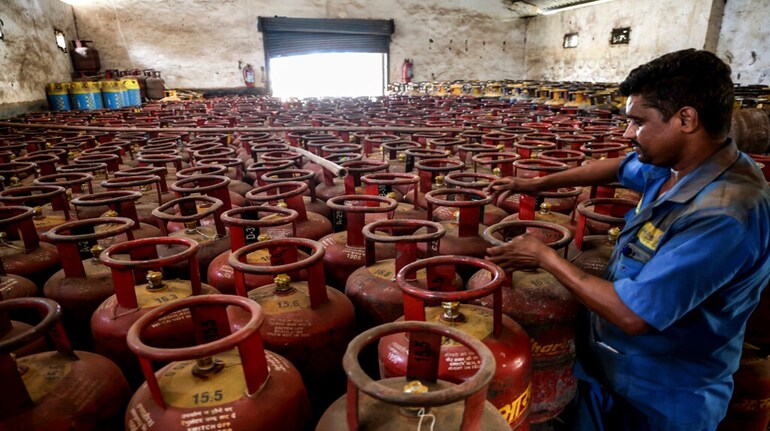

The supplies of liquefied petroleum gas (LPG) is an issue of concern for India as majority of the country’s supply comes from the Strait of Hormuz, petroleum ministry’s joint secretary Sujata Sharma said in a press briefing on March 13. However, no dry out has been observed so far and refineries have “adequate inventory” of crude oil, Sharma said.
“Refineries have adequate inventory of crude oil and supplies are maintained,” she said.
Sharma also pointed out that 60 lakh households in major urban areas have PNG connectivity and requested them to switch to piped gas connections to reduce LPG cylinder demands.
“The government appeals to commercial consumers in major urban cities to connect with city gas distribution (CGD) network of their local area and get a PNG (piped natural gas) connection,” Sharma said, urging people to avoid lose sale of petrol and diesel. Regarding this, the official mentioned that daily meetings are being held with CGD entities and GAIL to increase PNG connectivity to households amid LPG shortage.
The joint secretary said the government has ensured "uninterrupted supply" of LPG to domestic households and, as of today, the cooking gas' domestic production has been increased by 30 percent since the government issued order to refineries to maximise LPG output.
Moreover, to stop hoarding of the cylinders, oil marketing company (OMC) officials have been deployed for surprise inspections.
"Government held meeting with state governments and union territories. The state governments have been advised to take actions against black marketing and hoarding," Sharma said.
The petroleum ministry officer said the chief ministers of Uttar Pradesh and Rajasthan have reviewed their state supplies and other states, including Maharashtra, Kerala and Karnataka have opened control rooms to monitor the situation.
India was previously importing approximately 60 per cent of its LPG requirements from Gulf countries such as Qatar, UAE, Saudi Arabia, and Kuwait and 40 per cent is produced domestically.
Of the country’s total imports, 90% comes via the conflict-hit Strait of Hormuz and which has put India’s energy supplies at risk.
Oil minister Hardeep Singh Puri on March 12 said in Lok Sabha that LPG procurement has now been actively diversified, with cargoes being secured from the United States, Norway, Canada, Algeria, and Russia, in addition to available Gulf sources.
The government on March 12 also announced that 20% of average monthly commercial LPG requirement will be allocated to industrial and commercial users by oil marketing companies in coordination with state governments. State governments will judge and prioritise consumers in their area where commercial cylinders will be supplied, oil ministry said.
Meanwhile, Rajesh Kumar Sinha, Special Secretary, Ministry of Ports Shipping and Waterways said that vessels carrying LPG have been given priority berthing at major ports across the country.
Randhir Jaiswal, Additional secretary, Ministry of External Affairs informed that Prime Minister Narendra Modi in a conversation with Iran’s President Masoud Pezeshkian discussed about the safety of Indian nationals in Iran and India’s energy flows.
“The safety and security of Indian nationals, along with the need for unhindered transit of goods and energy, remain India’s top priorities,” Modi told Iran’s President according to his post on X.
Discover the latest Business News, Sensex, and Nifty updates. Obtain Personal Finance insights, tax queries, and expert opinions on Moneycontrol or download the Moneycontrol App to stay updated!
Find the best of Al News in one place, specially curated for you every weekend.
Stay on top of the latest tech trends and biggest startup news.