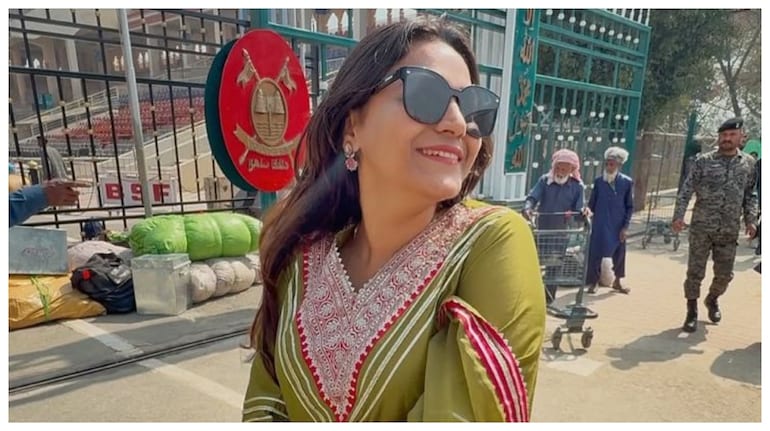
The cases of YouTube influencers such as Hisar-based Jyoti Malhotra and Ropar-based Jasbir Singh, both arrested on espionage charges following the Pahalgam terror attack, are not isolated and are part of a well-planned operation by the ISI to entice Indian YouTube channel operators from a combination of strategic, geopolitical, and tactical motives, investigations into Pakistan's latest modus operandi of espionage have revealed.
A senior official said that the cases reflect Pakistan's well-planned operation to increase its reach through the twin aims of collecting information and spreading propaganda, reports The Indian Express.
"ISI has been using a variety of tools to reach out to social media influencers not only in Punjab but across the country in order to weave an espionage-cum-propaganda network, which works out in favour of Pakistan. The first step is to invite the influencers of various platforms like YouTube, Instagram, X, Snapchat, etc, to the get-togethers of the Pakistan High Commission, and then offer them visas to visit Pakistan," the official said, according to the report.
The next stage of the operation kicks in once the influencer travels to Pakistan, under which they are offered various enticements, including the honeytrap method, to coerce them into doing their bidding.
"It is a slow process, and often multiple visits are encouraged to Pakistan, and the confidence level in ISI operatives who are working under cover is gradually built up. When the target knowingly or unknowingly makes a false step and falls into their clutches, they close the trap, making it difficult for the influencer to back out," IE quoted the official as saying.
Investigators say that the reach and credibility of social media influencers boosts the efforts of Pakistan to leverage their influence for soft power and peddling propaganda. YouTubers like Jasbir Singh and Jyoti Malhotra command large following and were identified as capable of influencing public opinion and projecting pro-Pakistan narratives.
By encouraging influencers to create content like ‘Indian Girl in Pakistan’, as seen in the case of Jyoti Malhotra, Pakistan aims to portray a positive image, potentially softening public opinion in India or globally, the investigators said, according to IE.
This largely aligns with Pakistan's ‘soft power’ strategies to shape narratives while also gathering intelligence. The ISI also views influencers as useful in covert operations as they are less likely to arouse suspicion compared to traditional spies, as their travel vlogs and cultural exchanges appear harmless, providing a cover for espionage activities.
The dependence of these influencers on views, sponsorships and external funding also leaves them vulnerable to financial exploitation. Investigators have found that Pakistani operatives offer financial rewards, sponsored trips (like Malhotra’s visits to Pakistan in 2023), or other incentives to lure influencers for content and revenue.
"Punjab’s proximity to the India-Pakistan border makes it a focal point for espionage. YouTubers travelling in these regions can inadvertently or deliberately gather and share information about troop deployments, infrastructure, or security arrangements, which can be vital to the enemy who wants to collect granular data," the IE report quoted another official as saying.
The revelations come as central intelligence agencies and the Punjab Police unravelling an intricate web of spies which was cultivated by several officials based in the Pakistan High Commission in New Delhi.
Two staff members of the High Commission have already been kicked out of India after the government declared them persona non grata and asked them to leave the country within 24 hours.
Discover the latest Business News, Sensex, and Nifty updates. Obtain Personal Finance insights, tax queries, and expert opinions on Moneycontrol or download the Moneycontrol App to stay updated!





Find the best of Al News in one place, specially curated for you every weekend.
Stay on top of the latest tech trends and biggest startup news.