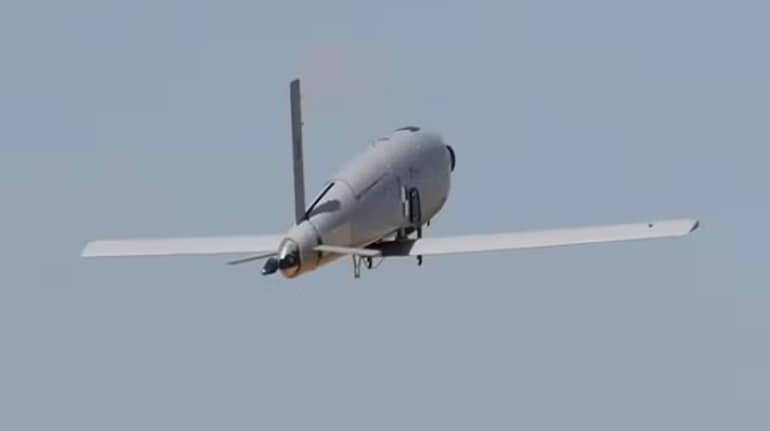
The Indian armed forces are set to expand their fleet of Israeli-made Heron unmanned aerial vehicles (UAVs) after their successful deployment in Operation Sindoor earlier this year. According to a report by ANI, fresh orders are being placed for additional Heron drones following their effective use in intelligence, surveillance and reconnaissance (ISR) missions against Pakistan in May.
Currently, the Army, Navy and Air Force all operate Heron UAVs from their respective bases. Intelligence agencies also deploy the drones for specialised missions, making the Heron one of the most widely used foreign-origin UAVs in India’s arsenal.
From surveillance to strike capability
Defence officials told ANI that efforts are now underway to weaponise the Herons, moving them from purely ISR roles into combat support platforms. One wing of the forces is working on equipping the UAVs with Spike-NLOS (non-line-of-sight) anti-tank guided missiles, which would give them the ability to strike enemy targets from long distances during future conflicts.
This development would represent a significant capability upgrade, as the Herons are currently limited to long-range surveillance along both the China and Pakistan borders.
Parallel projects: Cheetah and Heron Mark 2
The ANI report also noted that India’s long-running Project Cheetah is being pursued by the Air Force and Ministry of Defence to upgrade Herons with better surveillance and combat capabilities.
In addition, India has been acquiring Heron Mark 2 drones, the more advanced variant, in recent years. These upgraded UAVs come fitted with satellite communication systems, allowing longer missions and extended ranges — a major step up from the earlier generation.
Indigenous push for MALE drones
At the same time, India is working on its indigenous Medium Altitude Long Endurance (MALE) drone programme. Under this plan, the government intends to procure 87 UAVs through a competitive bidding process, with domestic defence giants such as HAL, L&T, Solar Industries Defence & Aerospace, and Adani Defence expected to be key contenders.
Some of these UAVs will likely be developed in collaboration with established Israeli defence manufacturers, ANI reported.
The armed forces have projected a long-term requirement of nearly 400 MALE drones over the next 10–15 years, underscoring just how central UAVs will be to India’s future battlefield strategy.
Discover the latest Business News, Sensex, and Nifty updates. Obtain Personal Finance insights, tax queries, and expert opinions on Moneycontrol or download the Moneycontrol App to stay updated!
Find the best of Al News in one place, specially curated for you every weekend.
Stay on top of the latest tech trends and biggest startup news.