







India’s indigenous satellite navigation network has encountered a setback after one of its operational spacecraft stopped functioning following the completion of its planned mission life. Officials from the Indian Space Research Organisation indicated that the failure affects the country’s Navigation with the Indian Constellation system.
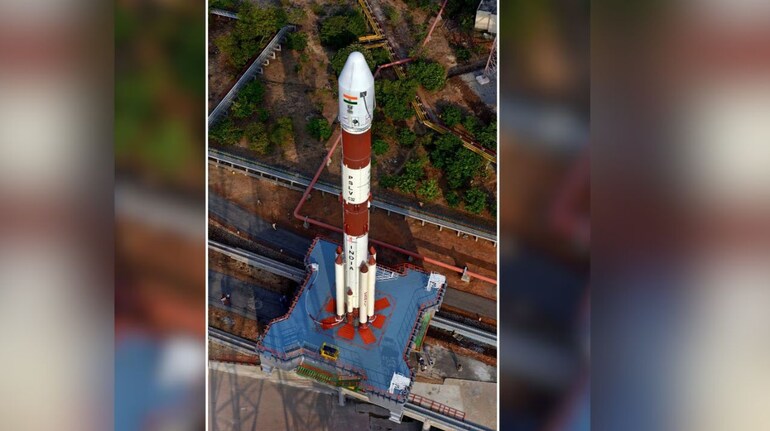
The satellite IRNSS-1F, launched on March 10, 2016, stopped operating after the last working atomic clock onboard malfunctioned. Sources in the space department said the spacecraft had been functioning with only one of its three atomic clocks before the final failure occurred.
According to officials, at least four satellites must remain fully operational for the NavIC system to deliver positioning and navigation services to users including the public, railways and the military.
Senior ISRO officials connected with the programme did not respond to questions regarding the incident. ISRO chairman V. Narayanan also declined to comment directly and instead pointed to a statement released by the agency.
“On 13th March 2026, the procured on-board atomic clock stopped functioning. However, the satellite will continue to function in-orbit for various societal applications to provide one way broadcast messaging services,” ISRO said in an official statement on Friday night.
“IRNSS-1F satellite launched in March 2016 has completed its design mission life of 10 years on 10th March 2026,” the statement posted on the ISRO website said.
Since July 2013, ISRO has placed 11 satellites in orbit for the nearly ₹2,250 crore NavIC programme. However, several spacecraft have experienced technical issues over the years. Six satellites have faced failures largely linked to problems with imported atomic clocks in the early phase of the project, while some others have encountered orbital complications.
In a reply to Parliament last year, the Union government said only four of the 11 satellites launched for the system were providing positioning, navigation and timing services, with others operating in a limited capacity.
“As of now, 11 satellites have been put in orbit. Some of them are not functioning. At present, four satellites are providing Position, Navigation and Timing (PNT) services, four satellites are being used for one way message broadcast, one satellite got decommissioned after its end-of-life service. Two satellites could not reach the intended orbit,” Minister of State in the Prime Minister’s Office Jitendra Singh said in a written reply in the Lok Sabha on July 23, 2025.
With the reported malfunction of IRNSS-1F, only three satellites are now available for positioning and timing services. These include IRNSS-1B, IRNSS-1L and IRNSS-1J (NVS-01).
Sources from the space department said the development could affect location-based services delivered through the NavIC system in India.
Government data earlier indicated that NavIC was being used in railway operations as well. According to the July 2025 parliamentary reply, about 12,000 trains were planned to be tracked in real time through NavIC and other global navigation satellite constellations, with nearly 8,700 trains already equipped with the technology.
Apart from IRNSS-1F, several earlier satellites in the network have experienced similar technical problems. These include IRNSS-1A, IRNSS-1C, IRNSS-1D, IRNSS-1E and IRNSS-1G, all of which reported atomic clock failures.
Accurate timing is critical for satellite navigation systems because position calculations rely on measuring the time taken by signals to travel between satellites and receivers on Earth. Even small discrepancies in atomic clocks can distort location data by hundreds of kilometres.
Work on the NavIC programme began in 1999 after the Kargil War, when Indian forces were unable to access the US controlled Global Positioning System for precise positioning in the conflict zone.
ISRO had earlier acknowledged in July 2016 that IRNSS-1A developed issues due to malfunctioning atomic clocks and said replacement satellites would carry modified versions of the equipment.
Satellites launched after July 2016, including IRNSS-1H and IRNSS-1I, were equipped with updated clocks supplied by a European vendor under a contract valued at about four million euros for 45 units.
Newer generation spacecraft such as IRNSS-1J (NVS-01) and IRNSS-1K (NVS-02) carry a mix of indigenous and foreign-built atomic clocks as part of efforts to strengthen the navigation system.
Discover the latest Business News, Sensex, and Nifty updates. Obtain Personal Finance insights, tax queries, and expert opinions on Moneycontrol or download the Moneycontrol App to stay updated!
Find the best of Al News in one place, specially curated for you every weekend.
Stay on top of the latest tech trends and biggest startup news.










