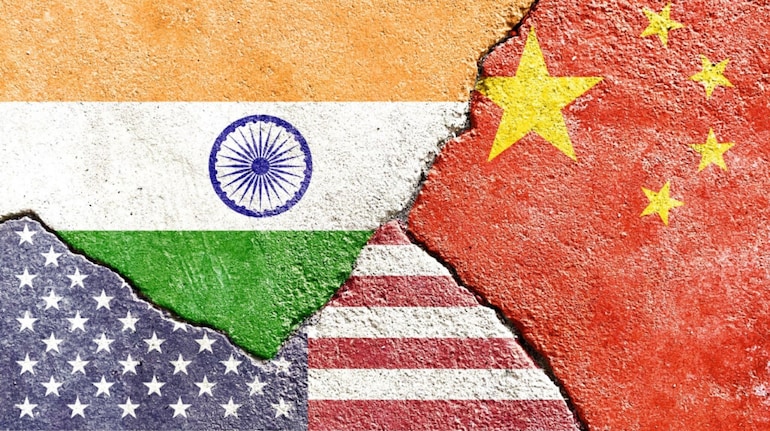
The widely talked about China Plus One strategy may just be the first casualty of Washington’s decision to pursue a trade deal with Beijing, as both sides take a step back from a tit-for-tat tariff war, which threatened global commerce.
On May 11, the US and China agreed to a 90-day pause on reciprocal tariffs, slashing rates by 115 percentage points. The deal between the world’s two economies may reopen $660 billion in trade.
According to Global Trade Research Initiative’s (GTRI) founder Ajay Srivastava, as the tariff gap narrows, companies that shifted production to countries such as India, Vietnam or Mexico may return to China.
“The China Plus One strategy could quietly fade. Ironically, this deal could undo the very diversification the tariff war aimed to spark,” Srivastava added.
The expectation was that US’s 90-day reciprocal tariff pause for all but China would offer a competitive advantage to Indian exports.
But it all changed on May 11. India’s tariff advantage has significantly narrowed with US levies on Chinese imports slashed from a staggering 145 percent to 30 percent in response to China cutting duties on American products from 125 percent to 10 percent.
India was the sixth-largest trade gainer under US President Donald Trump’s previous term (2017-21). Its exports to America grew to $36.8 billion between 2017 and 2023, driven by growth in electronics, pharmaceuticals, and engineering goods.
To be sure, key sectors, steel, aluminium, and automobiles are excluded from US-China tariff pause, with 25 percent duties still in place for all American partners. And the 20 percent fentanyl tax applied on China appears to have been excluded from the deal as well.
India, too, faces sectoral tariffs on steel, aluminium, and automobiles and the 10-percent baseline duty imposed all American trading partners.
EEPC India’s chairman Pankaj Chadha, however, believes that the US may still want an alternative to China, as Trump has taken a step back by agreeing to a deal with Beijing.
“I do not think we should say bye-bye to the China Plus One strategy but it will get tougher as India won’t get the low hanging fruits. Now, we will benefit in only those sectors where we have competitive advantage versus China such as auto components and products of steel,” Chadha told Moneycontrol.
Srivastava said the shift risks undermining the China Plus One strategy. While low-investment assembly operations may linger in India, for now, deeper manufacturing — the kind that builds real industrial ecosystems—may stall or even return to China.
“Investors are watching the US tilt and many will hesitate to commit unless India can lock in a competitive advantage,” he added.
India’s China Plus One gains
The China Plus One Strategy, which especially gained steam during the pandemic years as global supply chains ruptured forcing companies to diversify, is crucial for India given its history.
The strategy refers to a policy direction primarily adopted by Western nations encouraging their companies to minimise supply-chain dependency on China by diversifying the countries they source parts from.
According to an article co-authored by chief economic adviser V Anantha Nageswaran in 2023, India’s chemicals, pharmaceuticals and metal sectors immediately benefitted from tightening of US-China trade, thanks to their competitive advantage. Though electronic exports were not immediate beneficiaries, they have shown tremendous gains over time.
India's electronic goods exports surged by approximately 88 percent, from $ 6,600 million in FY14 to $12,400 million in FY22, with outbound shipments of smartphones being the largest component, the article said.
India’s candidature as the next best option for companies looking to diversify out of China was emboldened by growing assembly units of Apple’s iPhones in the country and talks of global giants, including Tesla, looking to enter India.
India-US trade deal
India, too, is negotiating a trade deal with the US, talks for which are set to resume later this month.
While the first tranche of the proposed Bilateral Trade Agreement (BTA) may be finalised only by September or October, India is said to be aiming to firm up talks in the next 45 days for a scaled-down version.
Experts say the change in the US-China ties brings a sense of urgency for India to negotiate the deal sooner than later.
A smart trade deal could limit the tariffs on India to the baseline rate of 10 percent and prevent any hike to the proposed 26 percent under Trump's country-specific duties, Srivastava said.
Chadha warned that the US’s deal with China could embolden American negotiators, making it difficult for India to wrangle concessions.
“I would be surprised if we are able to broker a trade deal in the next 45 days left of the reciprocal pause. I cannot say it is not possible. But currently we are at a 10 percent baseline tariff. The trade deal between US and China may have a big impact on India’s trade deal with America, since it now gives more strength to the US side to negotiate,” Chadha added.
Apart from that, India’s proposal to impose retaliatory tariffs on American steel and aluminium under the World Trade Organisation's (WTO) norms may also cast a shadow on talks for the trade pact.
Srivastava prescribes a tough stance for Indian negotiators despite the shift in ties between US and China.
As India negotiates future free trade agreements, the country must “resist pressure to open up sensitive sectors like automobiles and pharmaceuticals without meaningful reciprocal gains”, Srivastava added.
Discover the latest Business News, Sensex, and Nifty updates. Obtain Personal Finance insights, tax queries, and expert opinions on Moneycontrol or download the Moneycontrol App to stay updated!
Find the best of Al News in one place, specially curated for you every weekend.
Stay on top of the latest tech trends and biggest startup news.