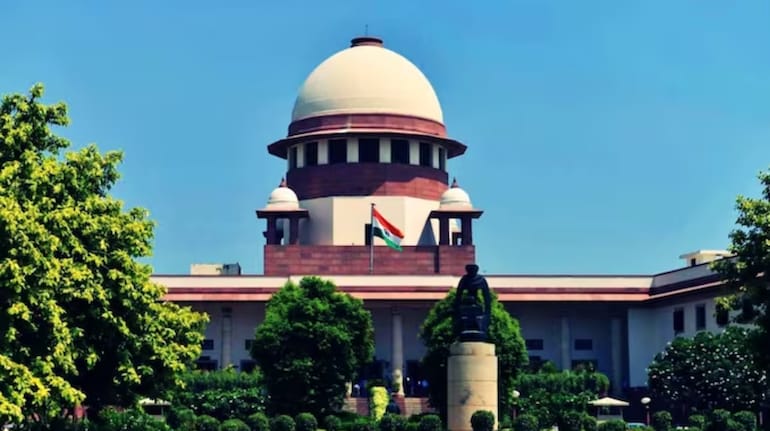
The Supreme Court has observed that beggars’ homes maintained by the state are not matters of charity but institutions of constitutional responsibility, whose functioning must embody the principles of constitutional morality.
A bench of Justices J B Pardiwala and R Mahadevan issued a series of directions aimed at guaranteeing dignified living standards in such state-run facilities, asserting that the rights of the most vulnerable sections of society cannot be compromised.
“This judicial articulation leaves no doubt that the state's responsibility towards indigent persons is affirmative and non-derogable. A beggars' home, maintained by the state, is thus a constitutional trust, not a discretionary charity. Its administration must reflect the values of constitutional morality ensuring liberty, privacy, bodily autonomy, and dignified living conditions,” the bench said.
The court emphasized that failure to maintain humane conditions in these centres does not merely signal poor administration but constitutes a violation of the constitutional right to life with dignity.
The directives came in connection with a case from Lampur in North Delhi district, where contamination of drinking and cooking water with coliform bacteria in a beggars’ home led to a cholera and gastroenteritis outbreak among the inmates.
The bench said every individual admitted to a beggars’ home must mandatorily undergo medical screening by a qualified doctor within 24 hours. “Monthly health check-ups shall be conducted for all inmates by a designated medical team. A disease surveillance and early warning system shall be established at all beggars' homes, with special protocols for prevention, detection, and containment of communicable and waterborne diseases,” it said.
The states and Union Territories have been instructed to frame, notify, and strictly enforce hygiene and sanitation norms. “All the state governments/UTs shall frame, notify, and strictly enforce minimum hygiene and sanitation standards at beggars' homes, which shall mandatorily include continuous access to potable drinking water, functional toilets with proper drainage system, and regular pest control and vector management measures," the court said.
Additionally, the Supreme Court directed that occupancy levels in each beggars’ home must not exceed sanctioned capacity, so as to avoid overcrowding and reduce risks of disease transmission. “Adequate provisions shall be made for safe housing, ventilation, and access to open spaces, consistent with human dignity,” the order added.
The court mandated that every beggars’ home appoint a dietician, either independently or from an associated government hospital, to verify food quality and nutritional standards. “Standardised dietary protocols shall be framed, ensuring nutritional adequacy,” it said.
Beyond health and housing, the court highlighted the importance of rehabilitation and self-reliance. “All beggars' homes shall establish or expand vocational training facilities aimed at skill development and economic self-reliance of inmates. The state governments/UTs shall explore partnerships with government agencies, NGOs, and private institutions to introduce diverse trades and employment-oriented training programmes,” the bench stated.
Periodic evaluations must also be undertaken to measure the success of rehabilitation programs and to help released inmates reintegrate into society.
The court underlined the necessity of legal awareness among inmates. “The inmates shall be informed about their legal rights, including the right to contest detention orders, in a language they understand,” the bench said. State legal services authorities have been directed to send panel lawyers at least once every three months to provide legal aid, including assistance with bail, release, or appeals.
Special safeguards for women and children were also emphasized. “Where women or children are housed in such homes, the states/UTs shall provide separate facilities to ensure privacy, safety, and access to child care, education and counselling. Children found begging shall not be detained in beggars' homes but referred to child welfare institutions under the Juvenile Justice (Care and Protection of Children) Act, 2015,” the apex court clarified.
Furthermore, every state and UT has been ordered to set up monitoring committees comprising social welfare officials, public health experts, and independent civil society members. These committees will be responsible for publishing annual reports on the status of beggars’ homes, as well as maintaining records of illnesses, deaths, and remedial measures.
The court also made accountability explicit. It said states/UTs must compensate families in every case where an inmate’s death is caused by negligence, lack of facilities, or failure to provide medical care. Departmental action, and where required, criminal proceedings against responsible officials, must also follow.
In a broader directive, the bench instructed the Centre, through the Ministry of Social Justice and Empowerment, to draw up model guidelines within three months. These will serve as a framework for uniform implementation of the directions across all states and Union Territories.
“All the states and Union Territories are required to institutionalise reforms in beggars' homes and analogous institutions under their control, so that the constitutional guarantee of life with dignity is meaningfully secured for this most vulnerable section of society,” the bench concluded.
With inputs from PTIDiscover the latest Business News, Sensex, and Nifty updates. Obtain Personal Finance insights, tax queries, and expert opinions on Moneycontrol or download the Moneycontrol App to stay updated!
Find the best of Al News in one place, specially curated for you every weekend.
Stay on top of the latest tech trends and biggest startup news.