Rashmi Kumar, a devotee from Bhatinda, was left in awe when she reached Sangam for the sacred snan last week.
"I had imagined chaotic crowds and heaps of waste, but instead, I saw sanitation workers diligently sweeping the Mela grounds and ensuring cleanliness. It was truly remarkable," she said.
Brototi Chakraborty, a housewife from Lucknow, was initially reluctant to visit the Maha Kumbh, fearing heaps of garbage. "I thought people might have left behind waste, and there would be piles and piles of it. I was amazed to see the Mela ground spick and span. Public toilets were clean, and there were sanitation workers ensuring that the compound remained tidy," she told Moneycontrol.
As the Maha Kumbh enters its final leg, over 56 crore people have already visited the sacred site. With an estimated 400 to 500 metric tonnes (MT) of solid waste produced daily in the Mela area and around 600 MT in Prayagraj city, maintaining cleanliness is a Herculean task.
“To manage this enormous waste load, the administration has deployed 200 vehicles and machines in the Mela zone and an additional 800 in Prayagraj city, making it one of the largest sanitation operations in the region,” Anuj Jha, State Mission Director, Swachh Bharat Mission (Urban) said.
Teams of safai mitras (sanitation workers) work tirelessly to sweep streets, pick up trash, and ensure prompt waste collection. "The religious offerings from the riverbanks are being carefully cleaned, and waste such as flowers, garlands, and other offerings thrown into the river is being collected using modern machines and manual labor," Jha added.
With relentless efforts, over 15,000 tons of garbage have been successfully cleared, ensuring a clean and spiritually uplifting environment for devotees. The collected waste is transported to the Baswar waste treatment plant, where it undergoes processing and environmentally sustainable disposal. This plant plays a crucial role in minimising landfill burden and recycling usable materials.
Officials emphasise that maintaining sanitation is a top priority during the Mahakumbh, given the expected influx of millions of pilgrims. "We have strengthened waste collection and disposal mechanisms to ensure a cleaner, healthier environment for visitors," said a senior municipal officer.
To efficiently manage the vast waste generated daily, authorities have implemented a comprehensive waste management system capable of processing 650 metric tonnes (MT) of garbage per day at the Baswar plant. To streamline garbage collection, 120 hopper tipper trucks and 40 compactors have been deployed, along with 94 suction machines dedicated to liquid waste management. Additionally, 25,000 dustbins have been strategically placed across the Mela grounds to uphold cleanliness.
“In a major step toward enhancing waste disposal efficiency, 37 lakh garbage liner bags have been distributed and utilised throughout the event. For the first time, the Mela Authority has introduced 350 advanced suction machines, along with 1.5-litre capacity toilets and urinals, ensuring zero discharge into the river,” Akanksha Rana, Special Executive Officer, said. “The administration is also encouraging visitors to follow waste segregation practices and avoid littering, reinforcing the message of cleanliness in this spiritual congregation.”
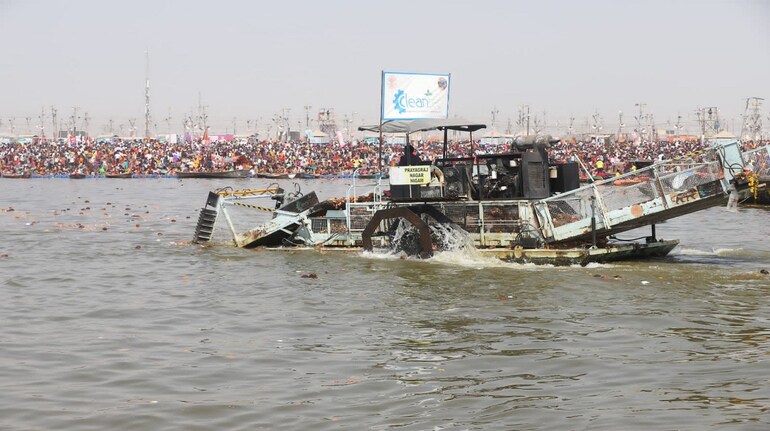
Motorboats and trash recovery systems have been deployed to remove flower garlands and other waste from the Sangam and ghats. Additionally, over 30 heavy vehicles and modern machines have been put to use for immediate waste disposal. Devotees are urged to use dustbins as much as possible, with collected waste transported to the Baswar plant using 30 heavy vehicles for proper disposal.
Anand Kumar Singh, the sanitation in-charge of the fair, stated that under the cleanliness drive, sanitation workers thoroughly swept and cleaned all roads. “Dustbins and liner bags placed throughout the fair area were emptied using tippers and compactors. The administration has been running these cleaning initiatives daily to uphold the vision of a Clean Mahakumbh. However, on major bathing days, the campaign is intensified to ensure that pilgrims arriving the next day experience a holy and hygienic environment,” he explained.
Principal Secretary of Urban Development, Amrit Abhijat, stated that sanitation workers have been assigned in three shifts to ensure that the ghats and Sangam area remain clean 24/7. In addition to human resources, two trash skimmers are being used to remove 500 to 600 metric tonnes of waste daily. Efforts are being made to clear discarded items such as plants, bags, flowers, garlands, coconuts, and clothing from the ghats and riverbanks to maintain the Mahakumbh’s sanctity and grandeur.
The swift action of the fair administration has left both devotees and locals highly impressed. Expressing their appreciation, many acknowledged the efforts of the Yogi government in ensuring a well-organised and spotless Maha Kumbh 2025. One devotee remarked, "The administration's commitment to cleanliness has reaffirmed its dedication to making the Maha Kumbh a model of order and sanitation."
Discover the latest Business News, Sensex, and Nifty updates. Obtain Personal Finance insights, tax queries, and expert opinions on Moneycontrol or download the Moneycontrol App to stay updated!
Find the best of Al News in one place, specially curated for you every weekend.
Stay on top of the latest tech trends and biggest startup news.