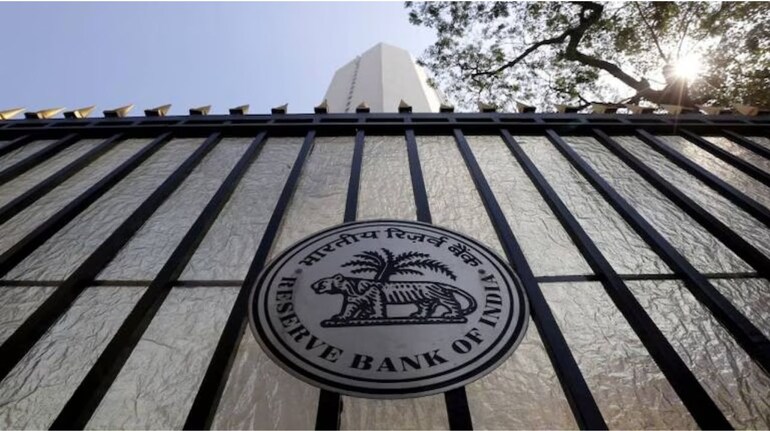
January 14 will be the last working day of RBI deputy governor Michael Patra, and reportedly the interviews to fill his position are scheduled for Jan 13 and Jan 15. Patra’s is a very important position in RBI: he heads the Monetary Policy Department, including Forecasting and Modelling Unit, the Financial Markets Operations Department, Financial Markets Regulation Department including Market Intelligence, International Department, Department of Economic and Policy Research, Department of Statistics & Information Management, Corporate Strategy and Budget Department as well as the Financial Stability Unit.
The departments of monetary policy, financial market operations and regulation and economic policy and research are all crucial to RBI’s role in setting rates and in its overall responsibility as the monetary authority
This role in the past has been held by some marquee economists and three of them went on to become governors. Dr Rangarajan held this position in the eighties, Dr YV Reddy in the nineties - both went on to become governors. In the current century, Dr Rakesh Mohan, Dr Subir Gokarn, Dr Urjit Patel, Dr Viral Acharya and of course Dr Patra have held these positions and of them, Urjit Patel went on to become governor. All of them are economists par excellence and have contributed immensely to shape not just the interest rate policy but the RBI's everyday intervention in and regulation of forex and bond markets in discharging its overall responsibility of setting the value of the rupee and safeguarding it. It is hence a matter of satisfaction that some very high quality Indian economists are in the fray for the job including Poonam Gupta of NCAER, Prachi Mishra of Ashoka University, NR Bhanumurthy, of NIPFP & Madras School of Economics and Chetan Ghate , director of IEG & former MPC member, among others.
TASKS BEFORE THE NEW DG
The new incumbent will come at a challenging time when inflation is still far from the 4% target given to the RBI and its MPC (monetary policy committee) and yet growth has distinctly started slowing. From 8.2% in FY24, GDP growth is estimated to have fallen to 6.4% this year and may probably remain around the same level in Fy26, as per early estimates of some brokerages like Nuvama and Nomura. Inflation, on the other hand has not meaningfully stayed at the 4% mark for the past 5 years.
AVERAGE INFLATION SINCE 2019
(CALENDAR YEARS)
2024 - 4.95*
2023 5.65
2022 6.7
2021 5.13
2020 6.62
2019 3.73
SOURCE : Macrotrends
*Assumes Dec CPi @ 5.3%
The role of monetary and fiscal policy is clear when both growth and inflation are lower, like during Covid or when both are high, as they were during 2011 to 2014. But now when the MPC is faced with slowing growth and stubborn food inflation, its choices become tough. The CEA, Dr Anantha Nageswaran ( who reportedly is also being considered for this post) has argued in several pieces, food inflation cannot be brought down by high interest rates, and hence the perspective of flexible inflation targeting framework needs to be reviewed. So does the RBI need to consider core inflation rather than headline inflation? Or both?
A second and bigger challenge for the current RBI-MPC is the sharp rise in US interest rates and the dollar casting inordinate pressure on the rupee. In keeping with the inflation targeting framework, the RBI has repeatedly argued that interest rates are set by the RBI on domestic considerations only. yet, under current conditions it will be impossible to ignore the narrowing interest rate differential between the US and the Indian bond yields. A further narrowing of the yields due to a rate cut can excerbate dollar outflows since returns from dollar-denominated instruments - both debt and equity - may be perceived to be higher, especially if the Indian currency is perceived as continuing to weaken.
In short the inflation targeting framework is facing two challenges. One, the RBI & the MPC may not be able to control what they are supposed to control via interest rates viz - CPi in general and food inflation in particular, and secondly they may have to consider factors like interest rate differential between India and the US, which the model doesn't account for. So does the RBI need to reconsider inflation targeting framework altogether? That question is not within the ambit of the RBI or its MPC, since the inflation targeting framework is written into the law by Parliament and that supreme body has set RBI & the MPC their mandate to achieve 4% headline CPI inflation.
A third parameter that queers the pitch is liquidity. In August 2023 RBI moved distinctly to tighten liquidity by raising the CRR for two fortnights, partly in response to a rise in deposits due to the withdrawing of 2000 rupee notes, and partly because inflation in July 2023 had risen sharply to 7.8% . The RBI was perceived to be using liquidity to raise short term rates to cool credit growth and hence inflation. The liquidity tool, ie CRR was again used by RBI for opposite reasons in December 2024 when it cut the CRR by 50 basis points to restore the liquidity it had withdrawn by intervening in the forex market to slow the pace of rupee depreciation. The easier liquidity is perceived to have helped improve credit growth. Liquidity is thus a tool that influences growth and inflation but is not part of the flexible inflation targeting framework.
The new RBI DG, who succeeds Dr Patra will have to advise the RBI governor through all these challenging polemics.
"FLEXIBLE" INFLATION TARGETING
So how may she or he approach the flexible inflation targeting framework and the immediate problem of still high food and headline inflation, softer growth and external pressure on the rupee. In the first place the inflation targeting framework, for all its shortcomings, has served the economy well. Even if inflation has not sustainable hit the 4% mark for the past 5 years, it has also been mostly under the 6% outer target given to the RBI-MPC. This is a seminal achievement and may be the single biggest reason why Indian bonds have been included in the JPM global bond index , which has in turn brought in about $30 billion of inflows in the past 15 months. Flexible inflation targeting also reflects the policy makers' preoccupation with inflation control and sound macros and will be a consideration in rating upgrades by rating agencies.
Perhaps one good option for the new DG, will be to find the theoretical arguments to change the narrative of the RBI and the MPC to focus on the "flexible" part of the FIT, much more. Keep the framework more flexible to balance growth and inflation by juggling the multiple instruments of rates and liquidity and not get too wedded to any theoretical position. More immediately, in the upcoming policy, given the pressure of narrowing interest rates with the US, may be cutting the CRR is a better option than cutting rates.
The government also, on its part, needs to realise that the flexible inflation targeting framework has been signed on by the finance ministry and accepted by Parliament. Hence it is the government's responsibility to keep its part of the bargain, namely work to keep food inflation low through adequate supply side measures. May be this is one of the first conversations the new governor and incoming DG need to have with the finance ministry.
Discover the latest Business News, Sensex, and Nifty updates. Obtain Personal Finance insights, tax queries, and expert opinions on Moneycontrol or download the Moneycontrol App to stay updated!





Find the best of Al News in one place, specially curated for you every weekend.
Stay on top of the latest tech trends and biggest startup news.