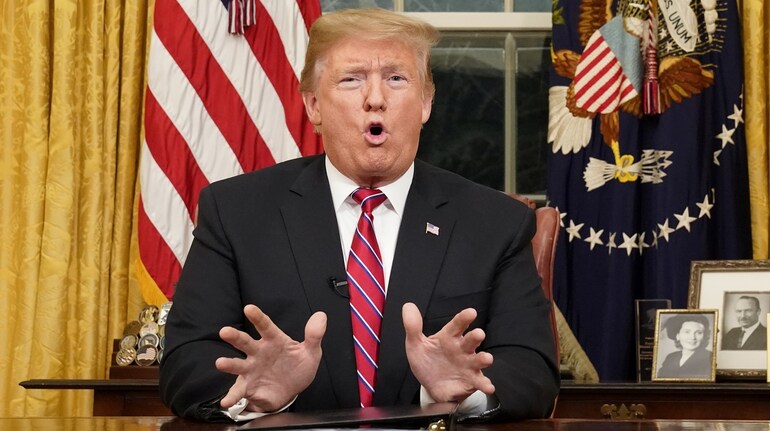
On his first day as the 47th President of the United States, Donald Trump signed an executive order that targets multiple immigration laws, including the long-standing principle of birthright citizenship.
This move has sparked intense debate and is expected to face formidable legal challenges. Within hours of him signing the order, Attorneys general from 22 states sued the Trump administration to block the move.
What is birthright citizenship?
The first sentence of the 14th Amendment to the US constitution establishes the principle of "birthright citizenship". It primarily is a legal principle under which citizenship is automatically granted to individuals upon birth.
The USA now has two forms of birth-related citizenship: ancestry-based citizenship and birthplace-based citizenship. The birthplace-based citizenship grants unrestricted citizenship based on place of birth. The second is restricted ancestry-based citizenship which extends citizenship to children born abroad to US citizens.
Why was the concept introduced?
The 14th Amendment was adopted in 1868 after the Civil War. It essentially aimed at ensuring that America-born children of formerly enslaved people got the US citizenship. According to 2024 data by the Pew Research Center, “The US foreign-born population reached a record 47.8 million in 2023, an increase of 1.6 million from the previous year. This is the largest annual increase in more than 20 years, since 2000.”
What does Trump’s order say?
Trump’s executive order adopts a different reading of the Constitution than commonly held. According to Trump, the order would end birthright citizenship for children of immigrants if neither parent were a US citizen or a permanent resident. The executive order stated that the 14th Amendment has always excluded from birthright citizenship persons who were born in the USA but not “subject to the jurisdiction thereof”.
The order reportedly applies to children born in the US after February 19. He said the heads of federal agencies like the Justice Department have until that date to issue guidance on how the policy will affect their operations. However, Trump’s order doesn’t appear to revoke citizenship from existing citizens.
Can Trump end birthright citizenship?
According to many legal scholars, President Trump cannot end birthright citizenship with an executive order.
"He's doing something that's going to upset a lot of people, but ultimately this will be decided by the courts," Saikrishna Prakash, a constitutional expert and University of Virginia Law School professor, told BBC. "This is not something he can decide on his own."
What challenges can Trump’s order face?
A constitutional amendment could do away with birthright citizenship. However, it would require a two-thirds vote in both the House of Representatives and the Senate and approval by three quarters of US states.
Also, the order can prompt US federal agencies to interpret citizenship using a more strict and narrow definition, but it will run into legal hurdles, which have already been put into motion.
During his first term in 2018, Trump had said he intended to remove the right of citizenship from people born in the US to foreign nationals. However, till the end of his presidency in 2021, no such executive order was passed by Trump.
Discover the latest Business News, Sensex, and Nifty updates. Obtain Personal Finance insights, tax queries, and expert opinions on Moneycontrol or download the Moneycontrol App to stay updated!





Find the best of Al News in one place, specially curated for you every weekend.
Stay on top of the latest tech trends and biggest startup news.