







The United Arab Emirates’ central bank rolled out a resilience package to support the banking sector and boost liquidity and lending capacity as the fallout from the Iran war ripples through regional markets and dents investor sentiment.
The measures allow lenders to access as much as 30% of their cash reserve requirement balances and tap term liquidity facilities in dirhams and US dollars, the central bank said in a statement Tuesday. They also provide temporary relief on liquidity and stable funding ratios, and include the release of key capital buffers, to support the economy.
Banks will also be allowed to delay classifying loans as non-performing for borrowers affected by the “extraordinary circumstances,” according to the central bank.
The UAE has borne the brunt of retaliation from Tehran as the US-Israeli war on Iran enters the 19th day. Energy infrastructure, airports as well as buildings in residential and commercial districts have been damaged by projectiles and debris from interceptions.
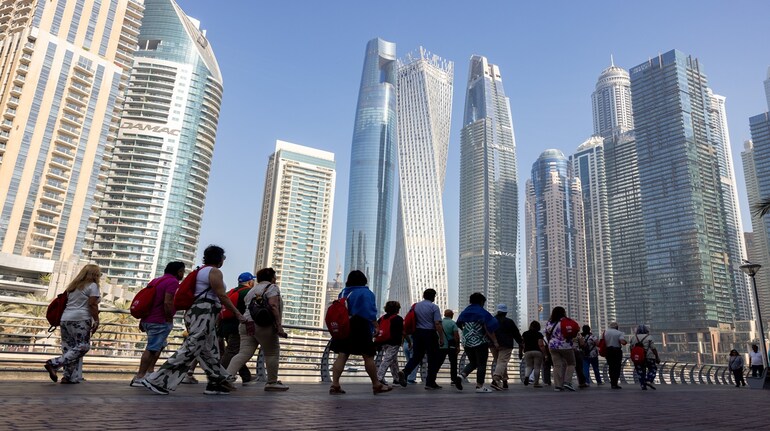
Yet much of the country has remained open, with shops and restaurants operating and many offices shifting to work-from-home arrangements.
Banks in the UAE and Qatar are likely to miss consensus earnings forecasts by 5% to 15% in 2026 as regional conflict weighs on economic activity even under a relatively benign scenario, Bloomberg Intelligence analysts Edmond Christou and Salome Skhirtladze wrote in a note on Tuesday.
Lenders in the UAE are seen facing a greater drag than regional counterparts, reflecting the economy’s reliance on tourism and expatriate flows, as well as possible adjustments in the real estate market, according to Bloomberg Intelligence.
Still, the central bank underscored the financial system’s strength, pointing to foreign exchange reserves of more than 1 trillion dirhams ($270 billion).
Liquidity available, including reserves held at the central bank and eligible assets for its operations, stands at about 920 billion dirhams, with reserve balances alone exceeding 400 billion dirhams, the central bank said.
Dubai’s benchmark stock index has fallen 13% since the war began, while Abu Dhabi’s is down 7%. Both have recovered some ground over the past two days, led by property and banking shares.
Discover the latest Business News, Sensex, and Nifty updates. Obtain Personal Finance insights, tax queries, and expert opinions on Moneycontrol or download the Moneycontrol App to stay updated!
Find the best of Al News in one place, specially curated for you every weekend.
Stay on top of the latest tech trends and biggest startup news.










