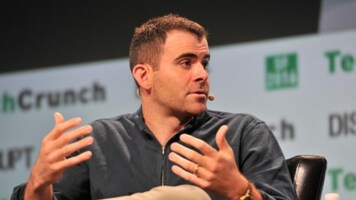
Neelkantha Bhanu grabbed everyone’s attention in 2020 when he won the first gold medal for India in the Mental Calculation World Championship at the Mind Sports Olympiad (MSO). Late last month, his math-learning startup Bhanzu raised $15 million in Series A funding from Eight Road Ventures and B Capital.
Bhanu, who won four world records and holds 50 Limca records as the fastest human calculator in the world, founded Bhanzu in 2020, the first year of the Covid-19 pandemic when the edtech sector got a shot in the arm thanks to stay-at-home restrictions.
Bhanzu raised $2 million in July last year from Lightspeed Venture Partners, QED Innovation Labs and angel investors including Cred’s Kunal Shah, Unacademy’s Roman Saini and Gaurav Munjal, and comedian Biswa Kalyan Rath. After this year’s fundraise, the company’s valuation surged to over $100 million.
In an interview with Moneycontrol, Bhanu, chief executive officer of Bhanzu, talked about his journey from the world’s fastest human calculator to an entrepreneur at the age of 22. He said his goal is to eradicate the ‘global fear’ of mathematics with his startup.
Edited excerpts:
You founded a startup at age 20. What was your life before that? When did you discover your passion for math?
I was a regular school-going kid in Hyderabad. I actually met with an accident when I was five and I was then bedridden for a year. My parents were told by the doctor that since it was a head injury, it was better to stimulate my cognitive abilities by letting me solve puzzles, etc. That’s when I started solving puzzles and brainteasers. But that’s it.
Later, my parents realised that I loved solving questions. So they did the fairly Indian thing and put me in chess classes, etc. Meanwhile, a couple of arithmetic championships happened around the same time and I participated in one of them and actually won the third prize.
I never thought I would be the fastest human calculator. I was just appearing in some competitions and I was winning them. I won the regional championship, the national championship twice, and I became the fastest human calculator in India back then. I then participated in the international championships. I happened to win the speed arithmetic championship at the age of 13.
My childhood was fairly simple. I was winning competitions excessively and at a later stage, became an educator over the next four to five years. I later started out at IIIT Hyderabad, dropped out, went to St. Stephen’s College in Delhi and started teaching and doing stage shows at the age of 17.
When did you think of becoming an entrepreneur and starting a company to teach a specific subject - math?
I won the title (world’s fastest human calculator) five years back. After all that, the existential question is what do you do with it? You go ahead, you do a bunch of stage shows, you are celebrated. Great. But beyond the claps, what is that something that got me into this?
I look at the world through mathematics – may it be politics, economics, business, public speaking, any field out there. And knowing that there’s something that has a lot of trouble was what started me to explore more rather than just doing shows.
We actually did a bootstrapped programme with 30,000 kids in south India, where we were just teaching, understanding what curriculums work, not only here but everywhere in the world. We realised that the right way to help kids do phenomenally well in maths is by humanising the subject. When I say humanise, it’s not the answer (of the math problem) but the context and relevance on top of it.
So finally, in November 2020, we started Bhanzu as a commercial entity as we thought it not only has a national application but also an international application to it, where we can eradicate the phobia of math.
The edtech sector is growing fast with tech and in niche subjects. What is your USP? What differentiates Bhanzu?
Children are not scared of languages – children are scared of maths. This is because the outcomes are expected to be way quicker than the journey. But when you give them confidence and context, they can do phenomenal things.
At Bhanzu, we make children four times quicker at maths in the first five months. That’s how they derive confidence, even in a world that uses calculators. Secondly, we give them context by weaving the right stories and showing mathematical learning as a part of human evolution.
I guess the USPs for Bhanzu are making children confident in mathematics by teaching them organic methods – not shortcuts, not tricks. Other than that, me being the world’s fastest human calculator and having performed on stage in front of crowds brings a slightly different flavour to it and I think that’s our USP or that’s something that sets Bhanzu apart.
Did the tag of being the world’s fastest human calculator help in getting investments faster? Did it help in setting up your business initially?
Between 17 to 20 (age), I spent a lot of time on understanding businesses.
Understanding initiatives and how businesses grow was always a part of the journey. Fortunately, I was exposed to the startup world very early. I addressed more than 30 startup conferences before I was 18. So I had a fair understanding of how the capital world works, how venture capital works, how you build models, how you create scalable businesses, etc.
While I was graduating from college, I was doing multiple initiatives. I also had a very good edge towards helping folks out in building their business models. If you're a mathematician, you are at the helm of, let's say, building AI (artificial intelligence) models, intelligent models for businesses, scale, etc.
Before Bhanzu, I almost started out in McKinsey. So I would say my understanding of mathematics and people sort of helps building the business.
Does the tag of being the fastest human calculator put pressure on you to ensure that your initiative does not fail at any stage?
The onus is definitely on us, on me, to actually make sure that we grow into the world’s largest and most impactful math education company because anything less and I would not be very happy with what we have done.
I think that responsibility also drives us forward because you're in this place, and you would want to build something which is here to last. For me, it's not a demand-supply gap which I'm solving for. It’s more about how, as an individual, I would want to see the education of millions of children pan out in the days to come because I love learning mathematics, and if that can be replicated across a million students, then I think we have done something.
So does the world’s fastest human calculator still teach or has he stepped away from teaching?
As someone who has been teaching at a very vast and large scale at multiple ends, since I head the company along with my cofounding members, it's fairly lesser than before. But I think teaching, experimenting courseware, contextualising the people who are learning from you, is something which I do even now. So, I still teach around four to five hours every week to see what we can do better. I’m actively involved in the research of the curriculum.
How many teachers do you have at Bhanzu and how many learners? Also, can you give us an idea of Bhanzu’s delivery model?
We are around 150 teachers and we have had more than 30,000 students who have gone through a certain part of the courseware as active learners in different capacities.
The delivery model is simple. It's an online, live class where there are five people in a class. There is a teacher associated with us and they learn the Bhanzu curriculum as they progress and the Bhanzu curriculum is divided into multiple offerings.
You said during the fundraising that you would expand to other parts of the world. In which countries do you wish to expand?
We already have extended a little into Southeast Asia and the Middle East. From our user base of students currently with us, almost 30 percent are from Southeast Asia and the Middle East.
In the next few months, we’ll be growing more in these geographies. We will be building a strong forte in terms of the philosophies I mentioned, becoming four times quicker and better at calculations and basic arithmetic.
These are the two geographies that are our focus over the next eight to nine months, and then maybe, we would go to the west, but we don't see that in the very immediate future.
FY22 was the first year of operations for Bhanzu. How much revenue did you clock during the year and how much do you expect this year?
We actually started ramping up only from November and December last year. So it was just five months of proper run in FY22 (2021-22).
We ended FY22 with revenue of Rs 3.5 crore as we just started ramping up and I see us growing at least four to five times this year.
Customer acquisition costs for edtech companies are higher because of advertising and marketing. Do you plan to do that more aggressively?
I think we are away from this, I mean, still a little far away from, let's say, going at a national scale. The levers of growth are fairly organic. A lot of people do know me, and Bhanzu as a company, which is scaling and we have never been short of people who want to subscribe to our courseware.
Since we have that image and the value and a product, which we trust, going up big very soon might not be our answer. But these are questions for us to answer in the next four or five months.
I think sustainable growth, increasing the number of students who you're catering to not only in India but outside, we would want to take incremental steps on it.
What would a medium-term plan for Bhanzu be? Where do you see yourself as an entrepreneur and Bhanzu as a company in three-four years?
In the next three to four years, we would want to be the biggest math-learning entity. The reason we believe in this is because Bhanzu stands for eradicating global math phobia, making it interesting for students, inspiring children into taking up mathematics and related things and contextually speaking on building math confidence. These USPs are global for us.
The long-term goal is to eradicate global math phobia, which in my opinion is way deeper, but the mid-term goal would be to be established as the biggest math learning entity.
Do you plan to add more subject offerings?
The reason we chose math was because we believe that mathematics and the way it is taught have the ability to impact and improve a child's cognitive ability so students have the cognitive abilities that impact their life.
We have always looked at what incremental concepts to add to our offerings in terms of how they will cognitively benefit the students. How are you adding to this person’s thoughts and how the person analyses? That would be the direction in which we would explore any other offerings as we progress.
Mathematics education is a very big TAM (total addressable market). Diversification is still a little far for us.



Discover the latest Business News, Sensex, and Nifty updates. Obtain Personal Finance insights, tax queries, and expert opinions on Moneycontrol or download the Moneycontrol App to stay updated!

Find the best of Al News in one place, specially curated for you every weekend.
Stay on top of the latest tech trends and biggest startup news.