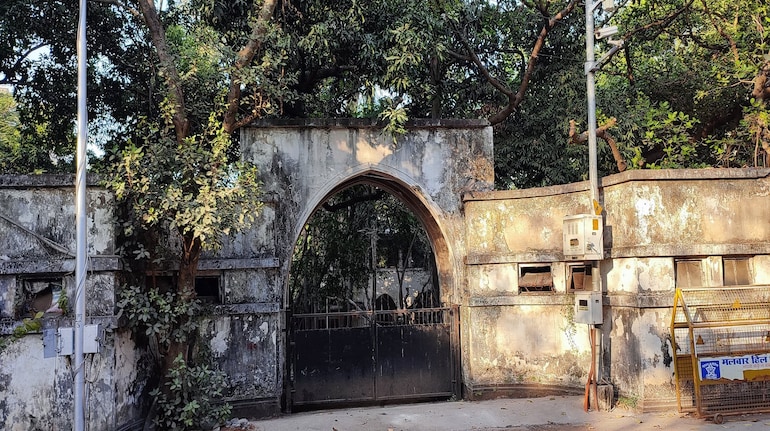
The recent news of Saif Ali Khan’s ancestral properties in Bhopal being at the risk of being designated as "enemy property" has turned the spotlight on the Enemy Property Act and properties such as the sprawling 2.5-acre mansion ‘Jinnah House’ located in the Malabar Hill area of Mumbai.
There are nearly 13,000 immovable "enemy properties" in India across almost every state and union territory, with the lion's share being in Uttar Pradesh and West Bengal, according to the Ministry of Home Affairs, which vests, but does not own, all the properties under the Custodian of Enemy Property for India (CEPI). The Custodian, after an investigation with local authorities, such as the collector or district magistrate, has the power to declare any movable or immovable property as enemy property. It can dispose of the properties through an auction; the next one scheduled to take place on February 13.
The auction includes two properties in Mumbai's Colaba neighbourhood, with a combined starting price of more than Rs 18.24 crore. Other properties in the auction include land parcels in Uttar Pradesh, Tamil Nadu, and West Bengal.
That raises a question: what of South Court, the Claude Batley-designed mansion situated on a 2.5-acre land parcel built in south Mumbai's tiny Malabar Hill neighbourhood for none other than the founder of Pakistan, Muhammad Ali Jinnah? Surprisingly, it is not recognised as an enemy property, which the Union government confirmed in a Lok Sabha reply in 2018.
According to real estate observers in the city, while the land may have a notional value of up to Rs 1,000 crore, the actual value may be lower, due to factors such as the quantum of litigation, coastal zone regulations, and height restrictions owing to security concerns. Jinnah's daughter, Dina Wadia, had laid an ownership claim on the property, and had also argued that Hindu succession law should apply to her as Jinnah was a Khoja Shia. Wadia died in 2017 in the United States.
In 2018, the Bombay High Court allowed Wadia's son, Britannia Industries Chairman Nusli Wadia, to inherit his mother's place as petitioner for the Malabar Hill property. However, the case has seen little movement since.
Even as Jinnah left for Pakistan, he was reluctant to sell the mansion due to his "attachment" to the house, with the area, Mount Pleasant Road, being home to similar palatial bungalows and residences. Some of those now house bigwigs in the state government, such as the Chief Minister of Maharashtra, with the Raj Bhavan also located a short distance away. The post-independence government, legal experts added, would vest the property with themselves, under a law meant for the welfare of displaced persons.
Jinnah, aware of the architectural value of his house, is reported to have requested the Indian government to lease it to a consulate in order to preserve its architecture, which the latter did. The mansion was leased to the Deputy High Commission of the United Kingdom in Mumbai, and served as the Deputy High Commissioner's residence till the early 1980s. Since then, the Union government has vested the ownership of the property.
While Pakistan has repeatedly asked the Indian government to sell the property to them for the purposes of setting up a memorial for Jinnah, the government has not acceded to that request. Others have demanded that it be designated as an enemy property, or to demolish the property altogether. The local member of the legislative assembly, the property magnate Mangal Prabhat Lodha, has repeatedly demanded that the property be converted into a cultural centre, focused on south Asia, and has urged Union home minister Amit Shah to take steps in that regard.
What is the case involving Saif Ali Khan’s ancestral properties?
In a December 2024 judgement, the Madhya Pradesh High Court, while ruling on a set of petitions filed by Saif and his mother Sharmila Tagore regarding the designation of their Bhopal land and houses as "enemy property", said that the competent authority, that is, the Ministry of Home Affairs (MHA), will be the correct appellate authority for the petitioners for removal of the designation. The Khan-Pataudi family filed an appeal with the MHA on January 8, challenging the enemy property designation.
In 2015, the Custodian of Enemy Property for India (CEPI) declared all properties in Bhopal owned by Hamidullah Khan, the Pakistan emigre father of Saif's grandmother Sajida Sultan as enemy property, with his originally designated successor, his eldest daughter Abida, also emigrating to Pakistan. However, the Ministry of Home Affairs had named Sajida as her father's legal heir in 2000. Experts said that a 2017 amendment to the Enemy Property Act, has complicated matters when it comes to legal heirs claiming property rights, which the earlier iteration of the Act had recognised.
"Under the Act, a competent authority declares enemy property after an investigation. There was one instance in the past where the son of a raja in Uttar Pradesh was given the rights to his ancestral property by virtue of succession, despite his father migrating to Pakistan and gaining citizenship over there. But under the 2017 amendment of the Enemy Property Act, legal heirs cannot claim rights to their ancestral property," said Abhilash Pillai, partner at law firm Cyril Amarchand Mangaldas.
Discover the latest Business News, Sensex, and Nifty updates. Obtain Personal Finance insights, tax queries, and expert opinions on Moneycontrol or download the Moneycontrol App to stay updated!
Find the best of Al News in one place, specially curated for you every weekend.
Stay on top of the latest tech trends and biggest startup news.