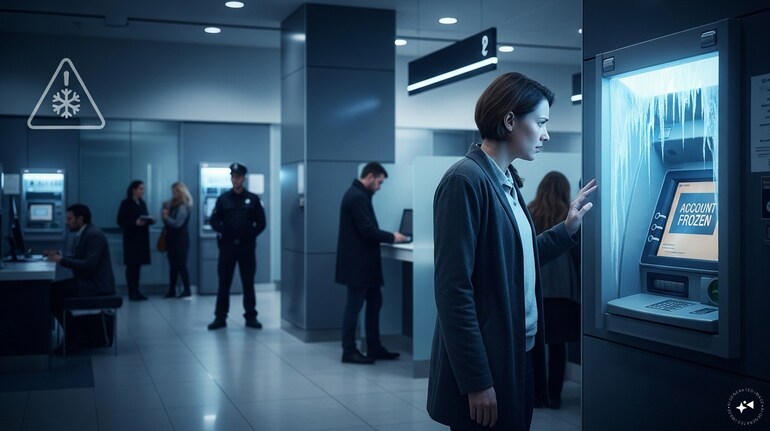

Most people don’t think much about their bank account. It’s just there in the background—salary comes in, bills go out, and everything runs quietly. So when something suddenly stops working, it can be unsettling. You try to transfer money or withdraw cash and the transaction fails. Then you call the bank and hear something like: your account has been frozen.
From the outside it feels abrupt, especially if no one warned you beforehand. But banks usually
freeze accounts for specific reasons. In many cases it’s connected to regulatory checks or documentation issues rather than anything the customer intentionally did wrong.
One of the most frequent causes is outdated KYC information
Incomplete or out-of-date KYC is a very frequent cause. In India, banks must maintain each customer's most recent identity and address information. Financial institutions are required to adhere to the "Know Your Customer" regulations.
The bank will usually send you reminders
If those details haven’t been updated for a long time, the bank may eventually restrict the account until the information is verified again. Often the bank sends reminders beforehand—messages, emails, or notifications in the banking app—but people don’t always notice them.
Once the required documents are submitted, the restriction is usually lifted fairly quickly.
Unusual transactions can also raise flags
Banks constantly monitor accounts for patterns that look unusual. That doesn’t automatically mean something illegal has happened. Sometimes the activity simply looks different from what the account normally shows.
For example, imagine an account that has been mostly inactive for months suddenly receiving a
large deposit. Or an account that typically handles small payments suddenly sending multiple high-value transfers in a short time.
In those cases, the bank may pause certain transactions while it checks what’s happening. These checks are part of anti-money-laundering rules that banks must follow.
Sometimes the freeze comes from outside the bank
Not every account freeze is the bank’s decision. Authorities such as courts, tax departments, or law enforcement agencies can instruct banks to block an account during an investigation or legal process.
The bank typically has very little control over the situation when that occurs. Until the relevant
authority permits the restriction to be lifted, it must abide by the order. In those cases, dealing
with the organization that issued the instruction is frequently necessary to resolve the problem.
Problems can also arise with dormant accounts.
Accounts that are inactive for long stretches of time may also be subject to restrictions. If there are no transactions for a long time—typically a few years—the bank may designate the account as dormant.
Reactivating it usually involves confirming your identity again. This occasionally entails going to
the branch or finishing an online verification procedure. Certain transactions might stay blocked
until that is completed.
What you should do if your account is frozen
The best course of action if your account is suddenly restricted is to get in touch with the bank and request a detailed explanation. Updating KYC documents, verifying a transaction, or finishing a verification step are often simple fixes.
If the restriction comes from a legal order, the bank can usually tell you which authority issued it
so you know where to follow up. Account freezes can feel dramatic when they happen, mostly because people aren’t expecting them. But in practice they are often temporary. Once the bank completes the required checks or receives the missing information, normal access is usually restored.
FAQs
Can a bank freeze my account without telling me first?
Yes, that is possible. Because of certain legal circumstances, the bank may restrict an account and notify the client. However, you will be notified about the reason the account was frozen and what needs to be done to fix it
How long does it take to unfreeze an account?
It can be fixed in a few days if the problem is something straightforward, like updating KYC documents. It might take longer when legal authorities are involved because the bank must wait for directives from the appropriate agency.
Will money still come into the account if it’s frozen?
Sometimes yes. In certain cases deposits are still allowed even though withdrawals or transfers
are blocked. But the exact restrictions depend on why the account was frozen.
Discover the latest Business News, Sensex, and Nifty updates. Obtain Personal Finance insights, tax queries, and expert opinions on Moneycontrol or download the Moneycontrol App to stay updated!
Find the best of Al News in one place, specially curated for you every weekend.
Stay on top of the latest tech trends and biggest startup news.