





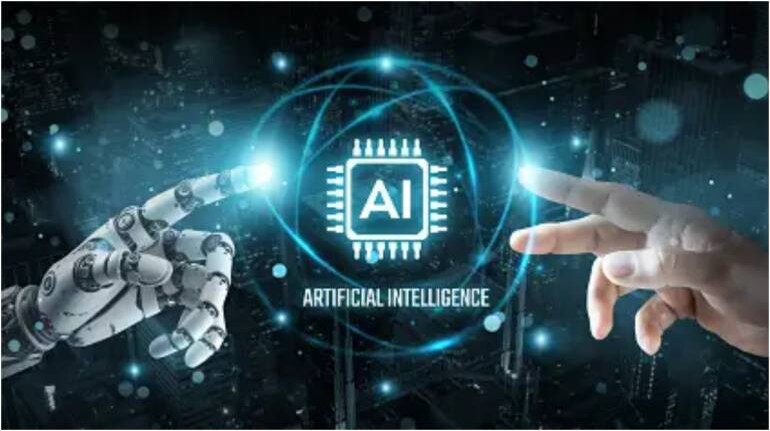
Throughout history, every technological revolution or crisis faced by humanity raised concerns about humans being replaced by tech or jobs becoming obsolete. From the advent of computers and the internet to pandemics like the Spanish Flu or COVID-19, people have feared the worst. However, time and again, humans have proved their ability to evolve and adapt to overcome any challenge thrown their way.
In the context of the investment industry, AI won't replace fund managers, but fund managers with AI will replace fund managers without AI.
What's changing?
Everything is, and AI is at the forefront of this transformative wave. The way we live, work, shop, invest and interact is undergoing a profound shift. From the rise of digital payments and e-commerce to the ubiquity of semiconductors, the world is evolving at an unprecedented pace. The electrification of everything, from transportation to footwear, is gaining momentum, and wearable technology is blurring the lines between the physical and digital realms.
Autonomous vehicles are on the cusp of revolutionising mobility, and renewable energy is powering our future. In this era of rapid transformation, adaptability is not just a competitive advantage; it's a necessity for survival.
Moneycontrol and CNBC TV18 presents Global AI conclave in Pune on March 27
What's not changing?
Amidst the whirlwind of technological advancements and AI-driven changes, one fundamental aspect of finance remains constant: the value of the human connection and emotional intelligence. While AI algorithms can crunch numbers and provide sophisticated advice, they cannot fully grasp the complex emotions and behaviours that drive market dynamics.
"The most important quality for an investor is temperament, not intellect." - Warren Buffett
Investing in the stock market is not just a numbers game; it's a deeply human endeavour that requires trust, intuition and the ability to navigate uncertainty. Customers still seek the personal touch and guidance of human advisors who can relate to their fears, aspirations and unique circumstances.
And when machines break, humans are the fix. As Steve Jobs once said, "Technology is nothing. What's important is that you have faith in people, that they're basically good and smart, and if you give them tools, they'll do wonderful things with them." So, when machines fail, they need humans to fix them.
MC30: Top performing mutual fund schemes
The limitations of AI
Data dependency and quality matters: Data is the new oil, that's true, but you need to refine that oil. Inaccurate interpretation of data and information, whether by machines or humans, will always result in incorrect conclusions, as witnessed in the 2008 global financial crisis.
The 2008 collateralised debt obligations failure: A reminder that AI's effectiveness relies on the quality and accuracy of the data it is trained on. The subprime mortgage crisis of 2007-09 was partly caused by the misinterpretation and misuse of complex financial instruments called collateralised debt obligations (CDOs). CDOs are structured products backed by a diverse pool of loans and assets that serve as collateral in case of defaults. These products are divided into tranches based on their risk levels, with senior tranches considered the safest. However, many CDOs were backed by high-risk subprime mortgages, which were often poorly understood and improperly rated. The failure to accurately assess the risks associated with these underlying assets, combined with a lack of transparency and oversight, led to a cascading effect of defaults and losses when the housing market collapsed.
Misuse and manipulation
The deepfake dilemma: AI can be misused for malicious purposes, such as creating convincing audio or video fakes.
In Hong Kong, a finance employee at a multinational firm was tricked into paying out $35 million to fraudsters who used deepfake technology to pose as the company's CFO in a video conference call, according to police.
The risks of autonomous decision-making
Unsupervised AI decision-making; Driverless versus directionless: Imagine an AI algorithm rebalancing your portfolio based on market volatility without considering your personal circumstances or changing life events. A bot taking decisions on its own can be dangerous, especially in finance.
Embracing AI as an ally, not outrunning It
Use AI as your J.A.R.V.I.S. in the world of finance. Like Tony Stark's Just A Rather Very Intelligent System, AI can be a fund manager's intelligent assistant, enhancing capabilities and providing valuable insights. What J.A.R.V.I.S. was to Iron Man, AI can be for fund managers—a powerful tool to augment their skills and make better decisions.
The way forward: Marrying AI for a lasting partnership
Many industries like finance, law and insurance are already leveraging AI's capabilities. Fund managers currently use quantitative models, but next-gen AI can elevate this for creating alpha and downside protection. To marry AI successfully, financial advisors and fund managers should:
o Understand AI's data prowess—processing, pattern recognition, decision-making
o Identify areas ripe for augmentation—portfolio optimisation, quant research, automated strategies
o Experiment with AI tools, test performance, build trust
o Integrate AI into analysis, risk assessment, trade execution workflows
o Pilot projects to evaluate AI's impact on returns, risk mitigation
o Blend human expertise with AI's computational power

Discover the latest Business News, Sensex, and Nifty updates. Obtain Personal Finance insights, tax queries, and expert opinions on Moneycontrol or download the Moneycontrol App to stay updated!

Find the best of Al News in one place, specially curated for you every weekend.
Stay on top of the latest tech trends and biggest startup news.




