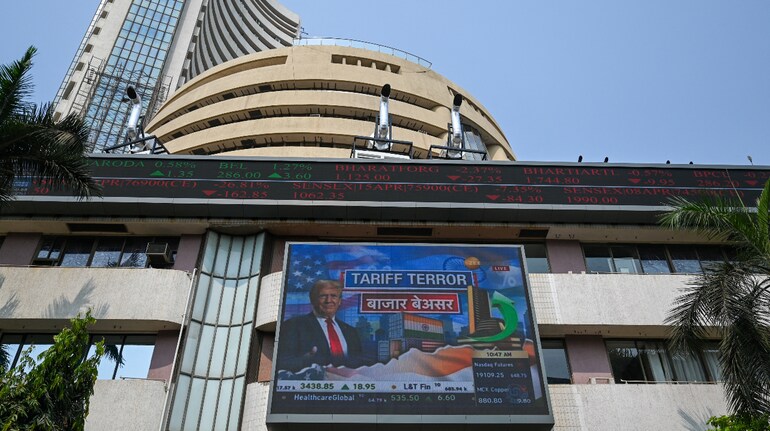
US President Donald Trump unveiled the most aggressive trade policy at a splashy White House ceremony as he announced universal baseline tariff of 10 percent and additional levies on over dozen of nations termed as 'worst offenders.' In his nearly 50-minute speech, Trump said that his plan will help in bringing the 'golden era for US’ with loud cheers from guest holding ‘Make America Wealthy Again’ placards.
But are these ‘reciprocal tariffs’ really reciprocal - dollar for dollar? Initial assessment was that Trump’s reciprocal tariffs will match what other nations charge the US, tit-for-tat, equalling in value to the taxes that other countries have set against the American goods. But as data from those humongous charts went viral on social media, many started wondering what’s the match behind the new set of duties.
Many said that the ‘Liberation Day’ tariffs are little more complicated and bit more worrisome. “Terminate your own tariffs, drop your barriers, don't manipulate your currencies,” said Trump from the Rose Garden as experts started decoding the formula behind the new duties that will come into force from April 5.
James Surowiecki, who was ex-financial columnist for the New Yorker, was among the first people who cracked the code. Even before the White House could issue a statement, Surowiecki’s observation on X went viral. May other economists also weighed in and made almost identical observation – the reciprocal tariff formula being the nation’s trade deficit divided by its exports to the US times 1/2.
Just figured out where these fake tariff rates come from. They didn't actually calculate tariff rates + non-tariff barriers, as they say they did. Instead, for every country, they just took our trade deficit with that country and divided it by the country's exports to us.So we https://t.co/PBjF8xmcuv James Surowiecki (@JamesSurowiecki) April 2, 2025
Surowiecki’s reverse-engineering explanation of tariff pricing was also seconded by a London School of Economics expert. Talking to BBC, Thomas Sampson slammed the Trump administration saying there was “no economic rationale for doing this.” Talking about the calculations, Sampson had said that "the formula is reverse engineered to rationalise charging tariffs on countries with which the US has a trade deficit.”
As the economists kept thrashing the Trump tariffs, the White House took note of the social media chatter and decided to release an official statement. White House Deputy Press Secretary Kush Desai post a USTR release with a caption – “No we literally calculated tariff and non tariff barriers.”
Titled ‘Reciprocal Tariff Calculations,’ the release by the office of United States Tarde Representative, showed a complicated mathematical formula that was used to arrive at the tariff prices.
 Donald Trump, Reciprocal tariffs, Trump tariffs on India, Reciprocal tariffs on India, Liberation day tariffs" width="378" height="103" />
While the formula used by the USTR to calculate the tariffs does take into account the elasticity of import in goods and the passthrough of tariffs on prices, the values assumed by the US authorities for these categories could differ based on the approach one follows. For instance, the import passthrough value of 4 that the model presupposes could be contested as papers show this value to be even lower at 2 or 3.
No we literally calculated tariff and non tariff barriers.https://t.co/GiWRU6gJDvhttps://t.co/TmzN1wcC2bpic.twitter.com/sjV9apMJ4F Kush Desai (@KushDesai47) April 3, 2025
Soon after the USTR explanation, many noted the it simply confirmed the reverse-engineering formula. Politico said that even if the USTR used Greek letters, the formula was still the same. For those who are baffled by the very ‘mathy’ explanation by US officials, here’s what you need to know - They took take the trade deficit for the US in goods with a nation in question and then divided the that trade deficit by the total goods imports from that particular nation and then divided that final result by two.
There is also a lot of discussion around who exactly came up with the tariff formula? While USTR’s explainer does say that “import and export data from the U.S. Census Bureau for 2024,” was used to calculate the tariffs but nobody knows the brains behind it. White House officials said that council of economic advisors headed by Stephen Miran determined the tariff rates. However, several conflicting reports have emerged that have triggered more confusion than clarity.
Discover the latest Business News, Sensex, and Nifty updates. Obtain Personal Finance insights, tax queries, and expert opinions on Moneycontrol or download the Moneycontrol App to stay updated!
Find the best of Al News in one place, specially curated for you every weekend.
Stay on top of the latest tech trends and biggest startup news.