Dear Reader,
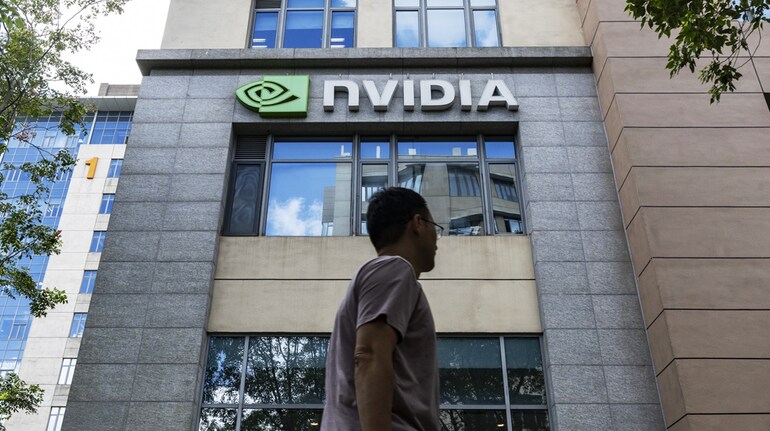
This week, the eyes of investors around the globe were focused on the earnings of just one company—Nvidia. For good reason, because Nvidia has become the gatekeeper to the future, representing the core of a global economy restructuring itself around artificial intelligence.
And Nvidia’s earnings didn’t disappoint. Revenue hit $57 billion, up 62 percent year-on-year. Data-centre revenue alone reached $51.2 billion. Adjusted EPS was $1.30 versus the $1.26 consensus. For Q4, the company guided to around $65 billion in revenue, implying continued acceleration.
But then came the market’s reaction. Initially euphoric, the Nvidia stock surged 5 percent in after-hours trading on Wednesday, only to face a brutal sell-off. It was down 3.15 percent by day’s end on Thursday. The broader US market followed suit.
A classic case of ‘buy the rumour, sell the news’? Everyone who wanted to be in Nvidia was already in, so the earnings report didn't bring in a new wave of buyers, but it did trigger selling from those who were waiting for an exit. There was no new, incremental buyer left to push it higher. This is the very definition of an exhausted trend.
But there were also deeper worries. Social media has been flooded with the growing web of circular investments, or circular financing, among key players like Nvidia, OpenAI, AMD, Microsoft, and Anthropic. These are deals where companies invest in or lend to each other, often with commitments to buy each other's products, creating a self-reinforcing loop. That fanned fears of an AI bubble. As this FT story, free to read for Moneycontrol Pro subscribers, says “the very real demand for what Huang is selling does in no way prove that there isn’t a bubble. After all, Nvidia’s value really depends on what happens years from now, when supply and demand could look very different”.
The problem is that Nvidia's valuation now demands not merely continued success but flawless, perpetual hyper-growth. The higher it flies on this narrative, the harder it falls if reality disappoints. This story points out that “shares in unprofitable US tech companies have been wilting for weeks, suggesting investors, even adventurous retail investors, are starting to lose patience with the hype”.
But to view this as just a stock market story is to miss the big picture. We are witnessing a massive reallocation of global capital—hundreds of billions of dollars—into AI infrastructure. It is a speculative bet on future cognitive capacity. And the entire market rally in the US market is resting on this AI build-up, a very narrow base. If Nvidia's growth story falters, the psychological impact could trigger a disproportionate sell-off across the entire tech sector and the broader indices. That is the nail-biting truth. We pointed out that “for now, markets will continue to swing between fear and FOMO”.
Nvidia and AI are not just about the markets. They power geopolitics. To remain competitive, nations and corporations must accumulate Nvidia's chips, or make do with their own less sophisticated ones. This is not an optional investment. For a country, it's a national strategy. For a company, AI is now an existential necessity. This transforms global capital flows, directing trillions of dollars into an ecosystem that is controlled by Nvidia and the hyperscalers. The accumulation of AI infrastructure is becoming the primary economic imperative. And building and powering these vast AI data centres requires immense resources.
The development and deployment of state-of-the-art AI requires immense amounts of capital (data, computing power, talent). This creates an insurmountable “AI Moat”. Large tech firms (Google, Meta, Microsoft, Amazon) are consolidating unprecedented power. We are moving towards a “winner-takes-all” economy where a few AI-powered platforms dominate entire sectors.
To be sure, the underlying adoption of AI by enterprises is real and accelerating and the fundamental story is intact. This story underlines that behind the AI bubble, another tech revolution could be brewing. What is unhealthy, however, is the polarisation in the market. Healthy markets do not move in bipolar swings like this. Is this late-stage bubble action? Are markets on edge? Or does it indicate that the markets have just gotten ahead of themselves, and a consolidation phase is in order? The signal from Nvidia is a severe warning about the market's underlying fragility and excessive dependence on a single narrative.
Nvidia's earnings are a siren song for the global economy and markets. They are simultaneously a validation of a technological revolution and a dangerous distraction from its consequences and the underlying frailties of the system.
Thankfully, not every market is dancing to the same tune. While the US market is hypersensitive to AI expectations, India sits at the opposite end of the spectrum.
Limited AI exposure positions India as a classic “anti-AI” or “reverse AI” play—a defensive hedge against AI volatility. Analysts are beginning to view it as a contrarian bet: While AI-heavy markets face bubble risks, India's diversified, domestically oriented economy offers stability. As AI enthusiasm cools, funds could flow back to India, which now trades at more reasonable valuations. The anti-AI trade could catalyse a rebound for Indian markets, turning its underperformance into an opportunity. We warned, however, that “while the worst seems to be over, the days of easy money also seem to be behind, and serious investors should have a bottom-up approach to pick winners”. And our columnist and market expert Shyam Sekhar reminded us that “the need to Review, Rotate and set the portfolio for Re-rating is key to success in such markets”.
The song of the week would undoubtedly be Queen’s ‘Don’t Stop Me Now’, which could very well, in the context of the AI frenzy, be Nvidia’s siren song. Here are a few lines:
‘So don't stop me now, don't stop me
'Cause I'm having a good time, having a good time
I'm a shooting star leaping through the sky
Like a tiger defying the laws of gravity
I'm a racing car passing by
Like Lady Godiva
I'm gonna go, go, go
There's no stopping me’.
Cheers,
Manas Chakravarty
In case you missed them, here are some of the other stories and insights we published this week, apart from our technical picks in the equity, commodity, and forex markets:
Stocks
Sudeep Pharma IPO, Tata Motors, Weekly Tactical Pick: This power utility’s core business remains structurally intact, KEC International, Safari Industries, Sky Gold and Diamonds, Excelsoft IPO, Growth levers in place for this financial services player, Concor, Pearl Global, Va Tech Wabag, Repco Home, HEG, Max Healthcare, Tata Motors Passenger Vehicle, RateGain, Hero MotoCorp, Marico, LG Electonics India
Financial Times
Crypto market sheds $1.2 trillion as traders shun speculative assets
In ending the penny, Trump lightens pockets in a good way
Markets
Can the bond market succeed in bringing in RBI as a big buyer?
Street sweet on consumer stocks, while Kotak says valuations are sour
Groww vs Pine Labs – Two fintech IPOs with diverging post-listing fortunes
Decoding Economics: Which days really move global markets?
Why global sentiment stays strong despite record economic uncertainty
The Butterfly Effect is a key risk for investors
FIIs trim stake in defence stocks in Q2: Profit booking or valuation retest?
Companies & Sectors
CarTrade Tech, Small FMCG companies show how it's done, Why is Corporate India cautious on capex, Weak demand suppresses electricity prices in spot market, Mortgages growth to slow for NBFCs as competition, slowing home sales weigh, DCB Bank, Fortis Healthcare, RBI targets export relief with precision, but banks face tougher risk calls, India’s private banks get another shot at wealth as Deutsche Bank queues up to exit, Will compliance of new emission norms turn the tide for construction equipment makers? India’s power picture — Thermal energy weathers climate chill
Economy & Policy
PLFS data show urban unemployment increased during the festive season
India's October trade deficit balloons, but gold rush, base effects tell a deceptive story
India's Trade Shift: More China, less Russia, uncertain America
Credit growth is healing, what next?
Bihar's landslide verdict cements bullish case for India's political economy
India’s export vision — Near sight clear, far sight blurry
CAG audit reveals what's broken in Delhi's bus services – and how to fix it
Pro Economic Tracker
Tech & Startups
India's Data Protection Rules: Long-awaited notification falls short on citizen safeguards
The Eastern Window: The New Tech Cold War -- China answers Trump with a blitz of innovation
New-age tech firms now account for 2.49% of India’s total stock market capitalisation, nearly double from 2021
Paytm recovers its lost UPI base after 2 years
Geopolitics & Geoeconomics
Copper is the next strategic battleground and China has the advantage
COP30 — China charts climate course to enhance global clout
Others
Beyond Freebies: How BJP's social engineering, coalition mastery delivered Bihar's landslide
Personal Finance: Spending wisely helps balance needs and capital allocation



Discover the latest Business News, Sensex, and Nifty updates. Obtain Personal Finance insights, tax queries, and expert opinions on Moneycontrol or download the Moneycontrol App to stay updated!
Find the best of Al News in one place, specially curated for you every weekend.
Stay on top of the latest tech trends and biggest startup news.