






Dear Reader,
The Panorama newsletter is sent to Moneycontrol Pro subscribers on market days. It offers easy access to stories published on Moneycontrol Pro and gives a little extra by setting out a context or an event or trend that investors should keep track of.Quite a day, isn’t it? The Trump-Xi back-and-forth on the tariff issue is beginning to resemble the early stages of a full-blown trade war. It’s no longer about trade—it's about egos. The end result? We may be staring at a US recession and a cascading impact of that elsewhere on the globe.
Add this to the chaos—long term US treasury yields are shooting up. As I write this, US Treasuries are on a fire sale, amid the messy tariff war. There are many possible reasons for this sudden spike in US bond yields. Some think, the equity market showdown is spilling over to the bond market.
Caught in the middle of this chaos are relatively weaker economies like India. While political leaders do their best to pacify the US and get a softer deal, central bankers have a clearer task at hand: hedge against the likely advent of a global recession.
And so, rightly, the Reserve Bank of India (RBI) has continued with its rate cuts. It didn’t have an alternative option anyway.
The latest policy decision may have been widely anticipated by economists, but the nuances in today’s statement make it more than just a mechanical continuation of the rate-cut cycle.
With a 25 basis point reduction in the repo rate to 6 percent, a lowered GDP growth forecast for FY26, and a formal shift in policy stance from neutral to accommodative, the central bank has laid out a clear roadmap for the months ahead—one that leans decisively towards growth support, even as it acknowledges new storm clouds on the global horizon in the form of a fast-evolving tariff war.
The decision comes at a time when macroeconomic signals are increasingly mixed. Domestically, inflation has declined sharply—the RBI now sees average retail inflation at 4 percent in FY26, compared to 4.2 percent earlier. This is a crucial psychological win for the central bank, which has spent the past two years trying to bring price pressures under control without derailing growth. Core inflation, too, has softened, and food price volatility appears to be easing, albeit unevenly across categories.
Yet, it’s not all good news. The GDP growth forecast has been trimmed, albeit marginally—from 6.7 percent to 6.5 percent for the full year—and the reasons behind that revision are what make this policy particularly noteworthy.
For the first time, the central bank has explicitly cited concerns over global trade disruptions stemming from the US’s aggressive tariff measures.
With Trump back at the helm and pushing ahead with steep duties on imports from more than 60 countries, including India, global trade flows face a real and immediate risk of fragmentation.
The RBI, typically cautious in its language, made a clear reference to heightened uncertainties in the external environment, acknowledging that these developments could dent export prospects and weigh on sentiment more broadly.
The shift in policy stance—from ‘neutral’ to ‘accommodative’—marks a definitive pivot. This isn’t just a rate cut to nudge the economy along; it’s a signal that the door is open for more easing if conditions demand it.
With this shift, the MPC is effectively saying it is willing to tolerate inflation near the upper bound of the target range if doing so helps revive domestic demand, investment, and credit growth.
That’s a marked change from the hawkish caution that prevailed through most of 2023 and early 2024.
But the RBI’s challenge now lies in timing and communication. The central bank cannot afford to be seen as indifferent to external risks—especially with rupee volatility and the threat of imported inflation from a renewed tariff war all lurking in the background.
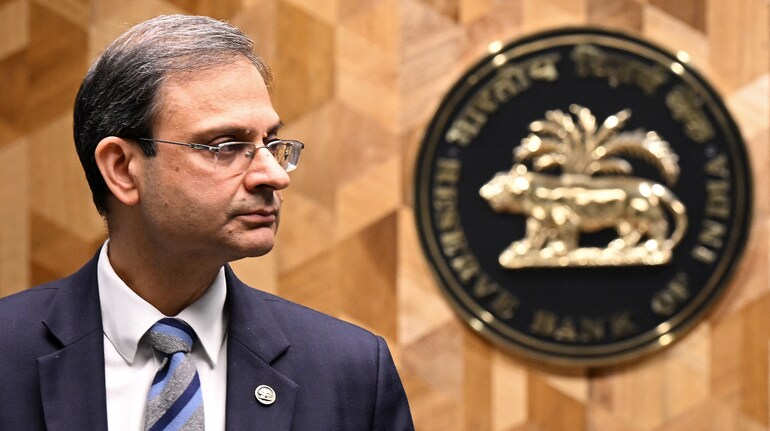
Nor can it appear overly dovish when the US Federal Reserve, faced with its own inflation resurgence, may choose to delay its easing cycle. For Governor Sanjay Malhotra and his team, the coming quarters will be as much about managing expectations as managing rates.
Much will depend on the follow-through—both in terms of liquidity operations and how commercial banks respond to the rate cut. With credit offtake still patchy and capacity utilisation yet to rebound meaningfully, the transmission of policy easing into the real economy remains a work in progress.
In many ways, today’s announcement confirms what most had already sensed: the RBI has moved past the peak of its inflation fight and is now firmly focused on reviving growth. But with the world entering another phase of geopolitical and economic flux, the path ahead won’t be straightforward. The central bank has shown its hand; now it must hold its nerve.
As my colleague Aparna Iyer rightly observes, the RBI has shifted to a growth-supportive mode. And while the net effect of the tariff war is hard to gauge at present, the central bank’s assessment that there is little to worry about on the inflation front may be justified. Growth, on the other hand, needs more love.
Investing insights from our research team
RBI rate cut, stance shift signal dovish intent to counter global uncertainty
Is it time to bottom-fish Tata Motors?
Indian IT stocks – value buy or a value trap?
Senco Gold: Time to shine again, post correction?
What else are we reading?
Have banks cut FD rates pre-empting RBI's move?
Chart of the Day | Where do growth-inflation numbers stand right now?
Can FMCG stocks benefit from this aftereffect of Trump’s tariffs?
A currency war encore? China may already be on it
GuruSpeak | How a life-threatening accident transformed Vamsi Krishna's career
Martin Wolf: Trump’s tariffs will damage the world (republished from the FT)
A reliable safe haven trade is feeling the heat of Trump tariffs (republished from the FT)
Sorry Guv, even you have a deadline
New oil regulatory bill to boost carbon capture in the sector
Back-to-back dry winters threaten Kashmir’s apple harvest
Markets
Why 'safe' consumer stocks may disappoint – and where real value is emerging now
Tech and Startups
A year on, CEO Srinivas Pallia steers Wipro steady but turnaround journey isn’t over
Technical Picks: GODREJCP, POWERGRID.
Dinesh Unnikrishnan Moneycontrol Pro

Discover the latest Business News, Sensex, and Nifty updates. Obtain Personal Finance insights, tax queries, and expert opinions on Moneycontrol or download the Moneycontrol App to stay updated!
Find the best of Al News in one place, specially curated for you every weekend.
Stay on top of the latest tech trends and biggest startup news.









