







For investors seeking safety, a well-balanced portfolio remains the key, says DSP Mutual Fund’s Sahil Kapoor. He suggests maintaining exposure to high-quality equities with some international diversification, while also holding gold as a hedge against inflation and currency risks.
Kapoor further says that a portion of the portfolio should be allocated to debt instruments to provide stability during volatile periods. This combination allows investors to navigate market uncertainties while benefiting from long-term growth opportunities, he says.
Interestingly, the latest DSP Netra report highlights the fact that historical data shows that equities, at their worst, generate returns similar to bonds but with the volatility of common stocks. This occurs because, during bull markets, investors often overpay for stocks based on expectations of high earnings growth or pure speculation.
As a result, stocks become mispriced and may even underperform bonds. However, these downturns often create opportunities for long-term investors as stocks become attractively valued again, it states.
Historical Trends: Equities vs. Bonds
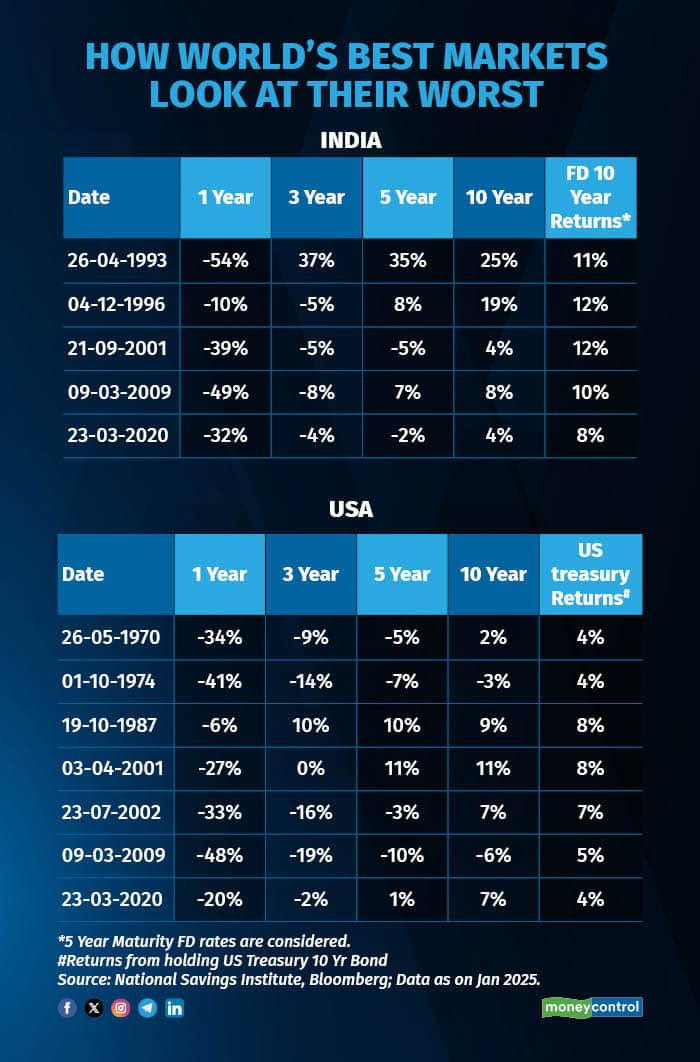
For instance, in India, in September 2001, the 10-year equity returns were around 4%, while fixed deposit (FD) returns stood at approximately 10% (FD returns are used as a proxy for bond returns due to data limitations before August 1993). A similar trend occurred on March 9, 2009, when the 10-year equity return was about 8% compared to 10% for FDs.
The pattern is also evident in the US market. On March 9, 2009, the 10-year equity return was roughly 5%, while US Treasury returns stood at 6%. Going further back, on May 26, 1970, the 10-year equity return was around 2% compared to 4% for Treasuries.
Why Does This Happen?
The report adds that while investors have recently enjoyed the favourable side of the markets, it is crucial to remember that market cycles are inevitable. During euphoric phases, narratives and speculative bets drive valuations higher, fostering complacency. Over time, excess optimism leads to market corrections, as stocks adjust to reflect realistic growth expectations.
Additionally, external shocks, economic downturns, and policy changes can influence how markets behave. For example, high inflation, interest rate hikes, or geopolitical risks can reduce corporate earnings growth, leading to prolonged periods of low equity returns.
But does this make bonds more attractive? “The bond market is currently attractive, but market dynamics constantly shift. If stocks drop another 10-15%, they will become more appealing. It’s all about market positioning at any given time,” says Kapoor.
Disclaimer: The views and investment tips expressed by investment experts on Moneycontrol.com are their own and not those of the website or its management. Moneycontrol.com advises users to check with certified experts before taking any investment decisions.Discover the latest Business News, Sensex, and Nifty updates. Obtain Personal Finance insights, tax queries, and expert opinions on Moneycontrol or download the Moneycontrol App to stay updated!
Find the best of Al News in one place, specially curated for you every weekend.
Stay on top of the latest tech trends and biggest startup news.









