






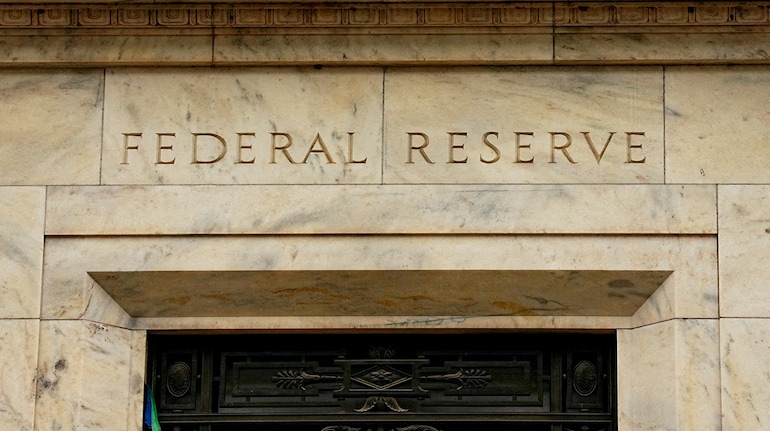

The US Federal Reserve kept interest rates unchanged as expected, despite pressure from US President Donald Trump, as the world’s largest economy grapples with persistent inflation, weakening labour demand and an “uncertain” outlook due to the war in Iran.
The decision came after an 11-1 vote, with the Fed holding rates in the 3.50 per cent to 3.75 per cent range, while signalling one possible rate cut by the end of the year.
“The implications of developments in the Middle East for the US economy are uncertain,” the Fed said in a statement.
Inflation outlook revised higher
The central bank also raised its outlook for its preferred inflation gauge, projecting it to reach 2.7 per cent by the end of 2026, citing expected price pressures linked to the Iran war.
In its Summary of Economic Projections, the Fed increased its forecast for headline personal consumption expenditures (PCE) inflation to 2.7 per cent from 2.4 per cent.
Core inflation, which excludes volatile components like food and fuel, is now also expected to rise to 2.7 per cent, up from an earlier projection of 2.5 per cent.
Growth and jobs outlook
Projections released on Wednesday show policymakers have turned more cautious on inflation in recent months.
Inflation, as measured by the PCE index, which was earlier expected to ease to 2.4 per cent by year-end, is now seen at 2.7 per cent based on median estimates. The Fed’s long-term inflation target remains 2 per cent.
The unemployment rate is projected to stay at 4.4 per cent by year-end, unchanged from earlier forecasts and in line with February’s reading.
Meanwhile, GDP growth is now expected at 2.4 per cent for the year, slightly higher than the 2.3 per cent projected in December.
The central bank cut rates three consecutive times late last year before holding them steady at its January meeting.
It has a dual mandate of maintaining inflation near a long-term target of two percent while ensuring maximum employment.
In their post-meeting statement, policymakers underscored the uncertainty they’re facing in the economy, as did Powell in his press conference.
“It is too soon to know the scope and duration of the potential effects on the economy,” Powell said. “The thing I really want to emphasize is that nobody knows.”
This marks the second straight time officials held rates in place, though the economic backdrop has changed significantly since their last meeting. In January, policymakers signaled growing confidence the unemployment rate was stabilizing. Soon after, several officials sounded intent on holding rates for an extended period to help nudge inflation lower.
Then came a weak February employment report that cast fresh doubt on the steadiness of the labor market. US-Israeli strikes against Iran that began Feb. 28 have also caused global oil prices to surge, threatening to boost inflation and undermine growth and employment.
*With Agency InputsDiscover the latest Business News, Sensex, and Nifty updates. Obtain Personal Finance insights, tax queries, and expert opinions on Moneycontrol or download the Moneycontrol App to stay updated!
Find the best of Al News in one place, specially curated for you every weekend.
Stay on top of the latest tech trends and biggest startup news.










