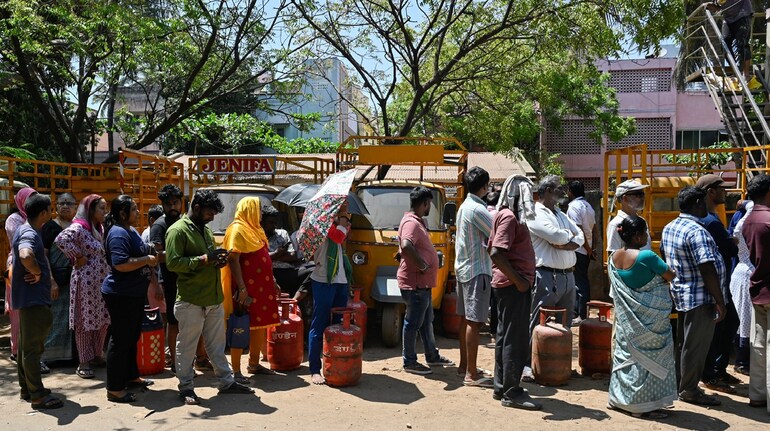

The ministry of petroleum and natural gas on March 11 said that the country has started receiving cargoes for liquified natural gas and liquified petroleum gas with two LNG cargoes on their way to India amid concerns over shortage of gas.
“Crude oil supply remains secure. Volumes secured today exceed what normally would arrive from strait of Hormuz,” Sujata Sharma, Joint Secretary at Petroleum and Natural Gas ministry, adding that state-run oil marketing companies have secured multiple crude cargoes from various countries. The official also said that two more cargoes of crude oil are on their way to India.
She noted that today, almost 75% of crude oil is coming from routes other than the Strait of Hormuz as against 55% earlier.
The country’s overall gas consumption is 189 MMSCMD of which 97.5 MMSCMD is produced domestically and the remaining is imported, as per official data.
Sharma said that as much as 47.4 mmscmd gas supply has been affected due to force majeure conditions. “Our refineries are operating at highest capacity utilisation and some are operating at more than 100% than capacity,” Sharma added.
The anxiety follows Qatar’s decision last week to halt production after Iran launched strikes on Gulf countries following Israeli and US attacks. Qatar is India’s biggest supplier of liquefied natural gas importing as much as 45% of gas to India and the disruption has raised alarms over potential spillover effects on domestic fuel availability.
Meanwhile, India's oil minister Hardeep Singh Puri said on Tuesday that there was no shortage of LPG for household use, seeking to calm consumers after reports of panic buying.
To mitigate the crisis, India invoked emergency powers and directed refiners to maximise LPG production to prevent a shortage of the essential cooking fuel.
Order on natural gas
Amid disruptions to gas supplies transiting the Strait of Hormuz --through which the bulk of India’s imports pass -- the government has also issued the Natural Gas (Supply Regulation) Order, 2026, invoking the Essential Commodities Act, 1955.
According to the order, the central government took the step after assessing that the ongoing conflict in the Middle East that has resulted in the disruption of liquefied natural gas (LNG) shipments and that several suppliers have invoked force majeure clause.
The order states that the supply of natural gas to certain sectors shall be treated as priority allocation and shall be maintained subject to operational availability to hundred per cent of their average past six-month average gas consumption.
These sectors include domestic piped natural gas supply; compressed natural gas for transport; LPG production including LPG shrinkage requirements; pipeline compressor fuel and other essential pipeline operational requirements.
Government sources said that there was a shortage of gas amid Gulf tensions due to which gas supplies had to be balanced among key other sectors.
"Procurement through alternative routes is underway to secure supplies. We import 60% of our requirement. 90% is through Strait of Hormuz. Domestic LPG production has increased by 25% and is being directed to household consumers after government took steps to increase output," said an official.
Domestic LPG price today in Delhi is Rs 913. Without government intervention, the prices would have been much higher, the official said.
Besides, a panel of senior executives from three PSU oil companies will review complaints of shortage of commercial LPG cylinders across the country and make fuel available to meet the genuine requirements of non-essential sectors like hotels and restaurants.
"Fuel stock adequate"
While maintaining that the country has adequate fuel stocks, the Union Ministry of Petroleum and Natural Gas on March 9 directed refineries to maximise LPG output by curtailing petrochemical streams and extended the LPG refill booking cycle to 25 days from 21 days.
"In light of current geopolitical disruptions to fuel supply and constraints on supply of LPG, the ministry has issued orders to oil refineries for higher LPG production and using such extra production for domestic LPG use," the ministry said in the post on X.
At present, 28 vessels with Indian flags are operating in the Persian Gulf. 24 of them are at the Western region of Strait of Hormuz, and 4 in the Eastern region of the Strait, Rajesh Kumar Sinha, Special Secretary, Ministry of Shipping and Waterways said.
Discover the latest Business News, Sensex, and Nifty updates. Obtain Personal Finance insights, tax queries, and expert opinions on Moneycontrol or download the Moneycontrol App to stay updated!





Find the best of Al News in one place, specially curated for you every weekend.
Stay on top of the latest tech trends and biggest startup news.