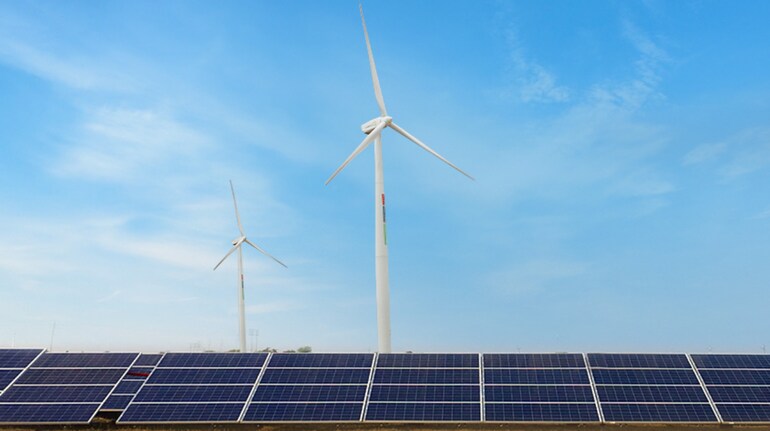

Renewable energy player Clean Max Enviro Energy Solutions is set to open for public subscription soon. In a conversation, Kuldeep Jain, Chairman and Managing Director said the decision to go public was less about timing the market and more about the company reaching a certain scale. Despite falling tariffs in the renewable space, Jain remained confident that the important metric to consider is unit economics that ensure the returns on capital employed stay intact.
Here are edited excerpts from the conversation.
Why come to the market now?
As we become a larger company, it's clear this is a business at scale that belongs in the public domain rather than staying private. There's never a perfect answer to when you do an IPO - it could have been a year ago, could be two years from now. We didn't try to time anything.
How do you feel about the valuation?
Very good, because I was always clear that we need a valuation where we've fulfilled our responsibility to ensure incoming shareholders have the best possible chance of making money. That's a fiduciary responsibility of any issuer.
There was temptation from bankers to price at the upper end or above comparables because we're higher growth with superior returns. But my view was that we need to ensure investors make good returns over one to three years.
The fresh issue of Rs 1,200 crore is being used largely to repay debt. What's the ROE argument for public investors?
We already have a relatively lower net debt to EBITDA than the industry average, which is around 4.6x versus 5.5x for the sector. When you have a one-shot infusion of funds in a public market issuance, it's prudent to use 75 percent to bring down debt. You save interest costs from day one. Over the longer term, you keep funding through a mix of internal accruals and borrowing to add more capacity.
FY23 and FY24 weren't profitable, but FY25 is. How do you address concerns that companies turn profitable just before IPOs?
We have a cash PAT of about Rs 400 crore, and cash PAT has been very high for several years. Our cash ROE has been around 18 percent for FY24-25 and roughly 19 percent for FY23-24. On a cash-on-cash basis, we're extremely profitable.
This is structural to the renewable energy business. Once you build a plant, the gross margin on renewable energy sales is 93-94 percent. I used to be a consultant, and I can't think of another business with those margins.
Your average weighted tariff compressed from Rs 4.93 to Rs 4.25 between FY23 and FY25. Will this continue?
Whenever you sign a PPA, you price it based on that year's capital cost per megawatt. Renewable energy has had declining capital costs. Ten years ago, a PPA might be at Rs 6 per unit for 23 years. The same customer signing a new deal today, based on today's lower capital costs, might get Rs 3.6.
So tariffs will keep declining, but not for the same capital investment. Each asset has a 23-year PPA locked in at the tariff based on when it was built. The key metric isn't rupees per unit, it's unit economics on the investment.
We look at equity payback: on a 23-year contract, how soon do we get our equity capital back? For assets built in the last three financial years, that's 2.5 years. For all assets ever built, it's 3.4 years.
You do both onsite additions and offsite plants. Which is more profitable?
Similar. Our return profiles, which are ROI, ROE, equity payback, are similar for both. We want similar returns on capital deployed.
Your top 10 clients account for roughly 35 percent of revenue. How do you mitigate concentration risk?
Ten clients, 35 percent amounts to 3.5 percent per client. We have 555 clients overall. Not that concentrated.
About the pledged shares, around 10.1 percent were pledged, and are set to be re-pledged after the issue. What's your timeline to reduce this?
I borrowed prior to the IPO to buy shares. I'm selling some in the IPO and pre-IPO to repay debt, I think Rs 382 crore. After tax liability, every penny goes to loan repayment. The majority of the loan gets repaid.
The shares to be re-pledged are loan covenants based on loan value versus security pledged. As a promoter, I can't sell any shares for one year by law. After that, we'll see.
Also Read | Brookfield's overlapping renewable investments not a concern for CleanMax: Founder Kuldeep Jain
Disclaimer: The views and investment tips expressed by investment experts on Moneycontrol.com are their own and not those of the website or its management. Moneycontrol.com advises users to check with certified experts before taking any investment decisions.

Discover the latest Business News, Sensex, and Nifty updates. Obtain Personal Finance insights, tax queries, and expert opinions on Moneycontrol or download the Moneycontrol App to stay updated!
Find the best of Al News in one place, specially curated for you every weekend.
Stay on top of the latest tech trends and biggest startup news.