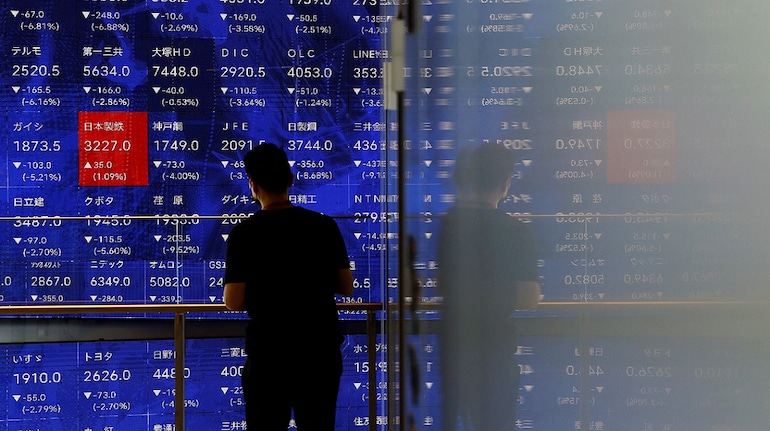
As of mid-session trading on July 14, 2025, US stock markets are experiencing a cautious downturn, primarily driven by renewed trade tensions following President Donald Trump's announcement of a 30 percent tariff on imports from the European Union and Mexico, set to take effect on August 1, 2025.
The S&P 500 is down 0.19 percent at 6,268.55, the Dow Jones Industrial Average has slipped 0.11 percent to 44,344.92, and the Nasdaq Composite is marginally lower by 0.16 percent at 20,573.56. The CBOE Volatility Index (VIX) has risen to 16.40, up 3.93 percent from Friday, reflecting heightened investor uncertainty.
The SPDR S&P 500 ETF Trust (SPY) is currently trading at $624.145, slightly below its previous close of $623.62, with intraday trading showing a high of $624.363 and a low of $621.103. The market's reaction to the tariff news has been tempered by hopes that negotiations, particularly with the EU, may mitigate the impact before the August deadline. However, sectors sensitive to trade policies, such as financials, materials, technology, and communication services, are among the hardest hit, dragging major indices lower.
Investor sentiment is also shaped by anticipation of the second-quarter earnings season, which kicks off this week with major banks like JPMorgan Chase and Goldman Sachs reporting. Despite the tariff overhang, some optimism persists due to expectations that lower earnings forecasts may allow companies to exceed estimates, potentially stabilizing markets. The technology sector shows mixed performance, with Tesla gaining 1.35 percent while chipmakers like AMD (-0.91 percent) and Intel (-0.81 percent) struggle. Chinese EV stocks listed in the U.S., such as NIO (+5.38 percent) and Li Auto (+2.68 percent), are seeing a mini-rally, bucking the broader market trend.
The U.S. dollar has strengthened, with the Dollar Index slightly down at 97.82 but up 0.27 percent against the Mexican peso to 18.67. Bitcoin continues its upward trajectory, surpassing $120,000, driven by speculative enthusiasm. Meanwhile, bond yields are edging higher, with the 10-year U.S. Treasury yield at 4.42 percent, adding pressure to equities.
European Markets
Across the Atlantic, European markets are also reacting to the U.S. tariff threats. Germany’s DAX index fell 1 percent, and France’s CAC 40 dropped 0.5%, reflecting concerns over potential trade disruptions. However, Britain’s FTSE 100 gained 0.4%, supported by its separate post-Brexit trade deal with the U.S., which offers some insulation from the proposed tariffs.
The European Union is pursuing negotiations to avoid retaliatory tariffs, with a deadline extended to August 1, fostering cautious optimism but keeping markets on edge.
Discover the latest Business News, Sensex, and Nifty updates. Obtain Personal Finance insights, tax queries, and expert opinions on Moneycontrol or download the Moneycontrol App to stay updated!
Find the best of Al News in one place, specially curated for you every weekend.
Stay on top of the latest tech trends and biggest startup news.