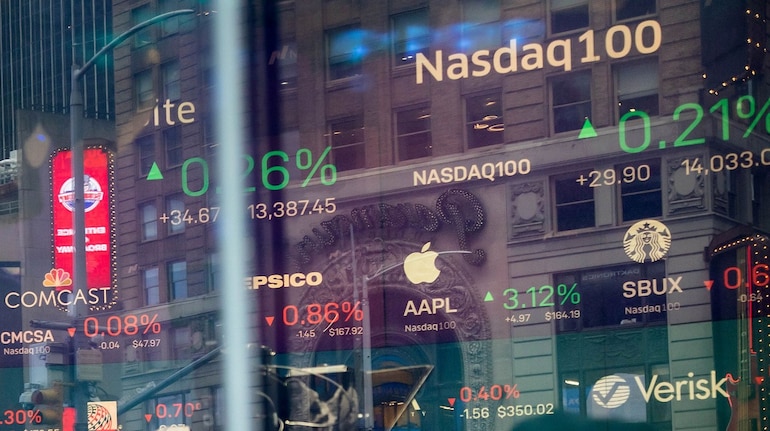
The tech-heavy Nasdaq sank almost two percent in trade on July 11 as investors rushed to book profits on the record-breaking gains following the cooler-than-expected U.S. CPI report.
Apple, Microsoft, Alphabet, Amazon, Nvidia, Tesla and Meta, also known as the "magnificent seven", ended the session with losses of up to eight percent.
The latest CPI report showed that U.S. inflation came in softer-than-expected. The core inflation data for slipped 0.1 percent from 3.4 percent to 3.3 percent, falling for the first time in more than four years in the month of June.
Also Read | Heat wave, elections in India create unlikely earnings winners and losers
"With the information we have received to date, which includes data on employment, inflation, GDP growth, and the outlook for the economy, I see it as likely that some policy adjustment will be warranted," said San Francisco Fed President Daly.
The inflation figures - along with Fed Chair Powell's latest commentary - spurred bets that U.S. Federal Reserve would start cutting interest rates as early as September.
As a result, some profits were booked in the Magnificent 7 stocks that have rallied sharply over the last year, causing a sharp fall in the "tech heavy" Nasdaq index.
As the technology stocks fell, the Russell 2000 index jumped 3.6 percent. Traders are now betting that an easing monetary policy cycle and lower interest rates would boost small-caps stocks.
"What I think investors now believe is that the Fed is ready to start to cut interest rates. And so they are saying, 'That's good enough for me. I don't have to wait for them to actually do it'," said Sam Stovall, chief investment strategist at CFRA Research, to Reuters.
The dollar index fell to a one-month low on the weaker-than-expected inflation, while the Treasury 10-year yields fell seven bps to 4.21 percent.
A lower interest rate is seen as less attractive for foreign investors, who are looking for higher returns and better yields, causing a fall in demand.
On the other hand, bonds and interest rates share an inverse relationship: when the interest rate falls, the price of a bond rises. However, when the price of bond rise, the bond yields fall. Therefore, when interest rates are predicted to come down, bond yields fall as investors rush to lock-in the current coupon rates, driving the demand for bonds up.
Disclaimer: The views and investment tips expressed by investment experts on Moneycontrol.com are their own and not those of the website or its management. Moneycontrol.com advises users to check with certified experts before taking any investment decisions.
Discover the latest Business News, Sensex, and Nifty updates. Obtain Personal Finance insights, tax queries, and expert opinions on Moneycontrol or download the Moneycontrol App to stay updated!
Find the best of Al News in one place, specially curated for you every weekend.
Stay on top of the latest tech trends and biggest startup news.