






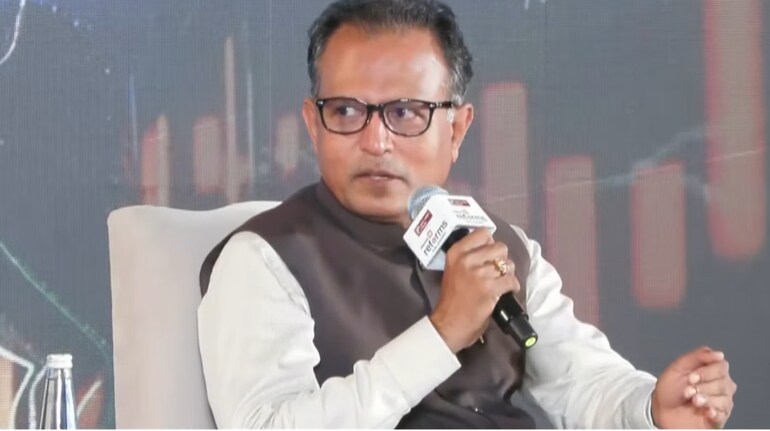
While Indian economy is in an overall strong position and will remain so going ahead, Kotak AMC’s Nilesh Shah noted that India's economic landscape is being reshaped by a combination of currency movements, rapid technological change, and persistent underinvestment in research and development (R&D). Together, these factors are creating both significant opportunities and pressing challenges for one of the fastest-growing major economy, he said while speaking at Kotak AMC’s Market Outlook 2026.
Shah explained that the Indian rupee has sharply depreciated against major global currencies, including the Euro, Yen etc. —creating a potential tailwind for exporters. India, he believes, could capitalise on this window.
“We have depreciated significantly against currencies. Can we take advantage of this currency depreciation to push our exports? If that happens, growth could get supported overall,” he noted highlighting that the weaker currency conditions make Indian goods more competitive abroad, but stressed that policy support and improved infrastructure will be critical to translate this advantage into sustained market gains.
The rise of artificial intelligence is poised to transform the backbone of India’s services economy—IT services, business process outsourcing (BPO), and global capability centers, which together contribute nearly 10% of national GDP.
Shah noted that a shift is already underway. “Companies are talking about how they will be able to leverage AI to deliver cheaper, better, faster solutions to customers,” he said. Narrating a conversation with a CEO of a major IT company, he explained.
“Typewriters were replaced by computers. Jobs of typists disappeared, but there were more jobs created on the computer side, from coding to operations to maintenance. The same thing will happen with AI.”
India, he said, could capture global market share as enterprises worldwide adopt AI-driven services. “Let’s hope and pray India is able to ride the wave of AI to gain market share from global peers,” he said.
Even as India aspires to lead in next-generation technologies, its R&D spending remains among the lowest of major economies. Private-sector participation is particularly inadequate.
“One thing where India is lacking in investment in R&D. We really put a very small amount of our GDP into research and development, primarily led by the government. Private R&D is significantly behind.”
He stressed on the strategic importance of research. “Why is R&D important? Not only for Atmanirbhar Bharat, but also for keeping our growth rate at a higher level.”
As global supply chains become increasingly geopolitically exposed, concerns about technological dependence are growing. “We all know how China is leveraging its rare earth monopoly today,” he noted.
Still, innovation is emerging in pockets. “In Pune, a startup is making an electric motor, which will be without heavy rare earth,” he said. “Unless and until we invest in R&D, how are we going to create such solutions? Otherwise, we will remain hostage to the global situation,” he added.
Discover the latest Business News, Sensex, and Nifty updates. Obtain Personal Finance insights, tax queries, and expert opinions on Moneycontrol or download the Moneycontrol App to stay updated!
Find the best of Al News in one place, specially curated for you every weekend.
Stay on top of the latest tech trends and biggest startup news.









