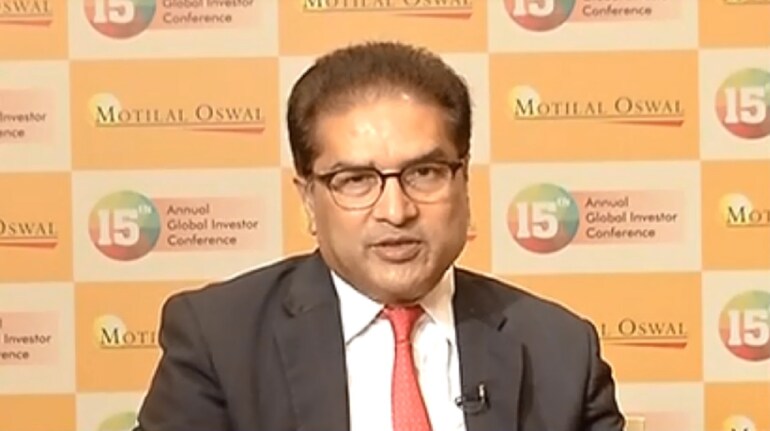

Financial markets may have already absorbed the worst of the fear stemming from the escalating conflict involving Iran, according to Motilal Oswal Group Chairman Raamdeo Agrawal, even as investors continue to navigate an unusually complex global environment.
Speaking to CNBC-TV18, Agrawal said financial markets typically move faster than geopolitical events and tend to price in risks well before the real-world impact fully unfolds.
“My sense is the peak of the fear has already been priced in unless some completely untoward incident happens in Iran,” Agrawal said. “I think we have seen the worst of the Iran war, and hence it will be in the price.”
Markets, he noted, often react within days, while conflicts play out over much longer periods.
“Markets in two, three, four days can price more than what Iran could damage. The war will move at a particular pace, but the market can move much faster,” he said.
Global uncertainty making investing more complex
Agrawal said the current investment environment has become more complicated due to multiple global developments occurring simultaneously.
“You have to be sensible. You have to be careful about the markets because multiple things are happening and it’s very chaotic,” he said.
“How do you find order in this disorderly world? So investing is becoming very complex because multiple forces are hitting you.”
He added that geopolitical tensions in West Asia are one of several factors affecting markets.
At the same time, Agrawal said India currently stands out as a relatively stable economic environment compared with other regions.
“India is one place which is very large, very self-sufficient and very peaceful,” he said. “At some point of time, India will start getting recognised as a place of stability and peace and prosperity.”
Corporate earnings remain central to market outlook
Agrawal said corporate earnings trends remain the key driver for the domestic market.
Referring to the latest quarterly results, he said company performance has shown improvement across sectors.
“If you see Q3, across the board what we covered, about 300, 350 companies, the performance is very good,” he said.
“If you go and visit the companies, I think you are finding more bullish companies than bearish companies.”
He also pointed to broader economic indicators.
“The real economy is on pick-up stage. You might have seen the Q3 numbers also, 7.8 percent of GDP growth rate. And that is now visible in a more widespread way,” he said.
Nifty valuations near fair levels after correction
Agrawal said recent market volatility has reduced valuation levels in the Indian market.
“Now Nifty is trading at less than 22 times, or 21 and a half times current year earnings,” he said.
According to him, those levels place the market in a more investable range.
“It’s not grossly overpriced, it’s a fairly priced market,” he said.
However, he noted that the market cannot be considered cheap at current valuations.
“It’s not cheap. It’s a much more investable market, sensible, but it’s not a throwaway market,” he said.
Investors should be selective amid global risks
Agrawal said investors should focus on businesses with limited exposure to global disruptions.
“You have to be extremely selective,” he said.
He cited sectors such as banking and certain consumption businesses as examples of companies with largely domestic exposure.
“If you look at banking, banking is basically domestic stuff. Or consumption which is very domestic. Those companies are not impacted that much by what's happening globally,” he said.
He also said many new investors may not have the expertise required for individual stock selection.
“There are millions and millions of new investors. Everybody is not competent to select the stocks,” he said.
Agrawal said such investors may consider professional fund managers or index investing.
“Index is always there. And today index is doing better than most of the managers,” he said. “If you buy S&P 500, you buy Nifty, you buy top 250… index investing would have been best performing kind of a segment.”
Moderate returns aligned with earnings growth
Agrawal said investors should moderate expectations for returns in the current market environment.
“I would go about having a moderate expectation of about 12 percent to 15 percent kind of return, because that is what the earnings alignment is,” he said.
He said he does not expect a major re-rating of market valuation multiples.
“I’m not too hopeful on the P getting re-rated again,” he said.
Energy disruptions remain a key global risk
Agrawal said geopolitical tensions affecting energy supply chains remain a factor that investors are monitoring.
He noted that a prolonged disruption in the Strait of Hormuz could create broader economic challenges.
“If the Gulf of Hormuz actually gets blocked and nothing comes out, gas doesn’t come out, petrochemical doesn’t come out, crude doesn’t come out, obviously we’ll have far more intense issues,” he said.
He added that some sectors have already experienced supply disruptions.
“You must have read about Morbi, they stopped the tile production because there's not enough gas available,” he said.
Temporary disruption expected to normalise
Agrawal said he expects global supply systems to eventually stabilise.
“There is clearly some kind of a headache right now,” he said. “But the world will find enough energy sources, enough oil supply.”
He said the probability of stabilisation in the coming weeks remains high.
“I’m hoping that 90, 95, 97 percent chance that it will get normalised in the weeks ahead,” he said.
Market corrections can create stock-specific opportunities
Agrawal said investors should look at individual stocks rather than only the broader index when evaluating opportunities.
“One is the index to go down by 5 percent, 7 percent. And other is that there are stocks which have gone down by 25 percent, 30 percent,” he said.
“That’s where the opportunity is.”
He said corrections in strong companies could create entry points for investors.
“The stock is worth Rs 1,000, the stock is trading at Rs 700 or Rs 600. This is a time when you are getting actually sensible price of those stocks,” he said.
“Can it go to Rs 500? Of course it can go to Rs 500. But this is a time when you are getting sensible price of those stocks.”
Discover the latest Business News, Sensex, and Nifty updates. Obtain Personal Finance insights, tax queries, and expert opinions on Moneycontrol or download the Moneycontrol App to stay updated!
Find the best of Al News in one place, specially curated for you every weekend.
Stay on top of the latest tech trends and biggest startup news.