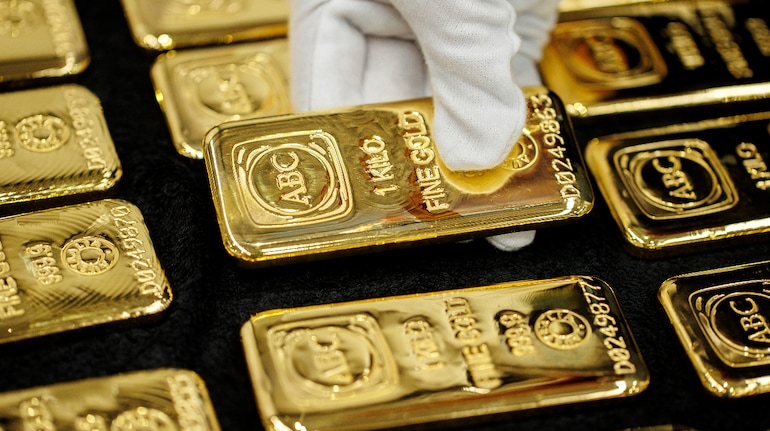
India’s digital gold market recorded year-to-date (YTD) trading volumes of 940.56 million, with cumulative value exceeding Rs 12,471 crore up to November, according to NPCI data. While volumes continued to rise, the traded value fell from Rs 2,290.36 crore in October to Rs 1,215.36 crore in November.
Digital gold, purchased via UPI and fintech platforms, in simple terms, is purchasing gold without taking physical delivery. It saw steady growth through the year. Monthly data shows 50.93 million traded in January for Rs 761.6 crore, rising to 115.95 million in October, before increasing further to 123.42 million in November, even as the traded value fell 46.9% month-on-month.
Commenting on the trend, Bhavik Patel, Sr Commodity Research Analyst. TradeBulls Securities said that rising gold prices have played a key role in driving volumes, even as regulatory concerns weigh on value. “Digital gold volumes have remained strong because investors can buy in very small amounts, especially as rising gold prices have made physical coins and bars expensive. However, digital gold offered through wallets remains unregulated, and pricing can vary across platforms since it is set at their discretion. This is why value growth has not always moved in line with gold prices. For long-term and safer exposure, investors are increasingly looking at regulated options like gold ETFs or buying digital gold directly from jewellers who assure delivery,” he said.
Similarly, Naveen Mathur, Director, Commodities and Currencies, Anand Rathi Share and Stock Brokers noted that the value of digital gold purchased through the unified payments interface (UPI) slowed down for the first time this year in November after the Securities and Exchange Board of India issued an advisory, cautioning investors about the regulatory issues involved with such purchases. "On November 8, Sebi said digital gold products were outside its purview. This meant regulators could not inspect fintech player’s physical vaults to verify the presence and purity of the gold, as these entities operated outside regulatory oversight. Also Soon after the advisory, SEBI chairman Tuhin Kanta Pandey clarified that the regulator does not plan to introduce any regulatory framework for digital gold at present, as the product does not fall under its purview. Hence investors hesitated to purchase digital gold in November also switching to ETF mode. led to decline in value of digital gold as increase in volumes still persisted," he explained.
Meanwhile October month spikes coincided with the festive season, when gold buying typically accelerated across the country, and this seasonal demand appeared to have pushed up both transaction volume and value in digital gold.
Over the last year, international gold prices have remained elevated, according to Reuters, trading near $4,500 per ounce in late December 2025, supported by safe-haven demand and expectations of monetary easing. Domestic gold prices also remained high, influenced by global trends and local market conditions. The high prices, combined with regulatory caution, coincide with the drop in digital gold traded value in November.
Data reporting challenges and SEBI Advisory
The NPCI data tracks UPI-based digital gold transactions, but not all platforms report consistently, and some trades occur outside UPI flows. This means the figures represent only a partial view of the market.
This reporting gap has been highlighted in SEBI’s November advisory, which stated that digital gold products fall outside its regulatory supervision. Without standardized reporting or formal oversight, investors do not benefit from safeguards such as audited gold backing, custody assurance, or formal grievance redressal mechanisms. Moneycontrol had previously reported that industry bodies, including the India Bullion & Jewellers Association (IBJA), are reportedly working on self-regulatory frameworks to improve transparency, set minimum operational standards, and strengthen reporting.
By comparison, Gold Exchange-Traded Funds (ETFs), which are SEBI-regulated, continue to attract investor flows through 2025. According to AMFI data, year-to-date inflows up to November stood at Rs 37,542 crore, with October inflows of Rs 7,743 crore moderating to Rs 3,742 crore in November.
Experts suggest that the decline in inflows in November was due to portfolio adjustments and profit-booking. While experts note it may be too early to gauge a definitive shift from digital gold to ETFs, demand for gold is expected to remain strong even in 2026.
Discover the latest Business News, Sensex, and Nifty updates. Obtain Personal Finance insights, tax queries, and expert opinions on Moneycontrol or download the Moneycontrol App to stay updated!
Find the best of Al News in one place, specially curated for you every weekend.
Stay on top of the latest tech trends and biggest startup news.