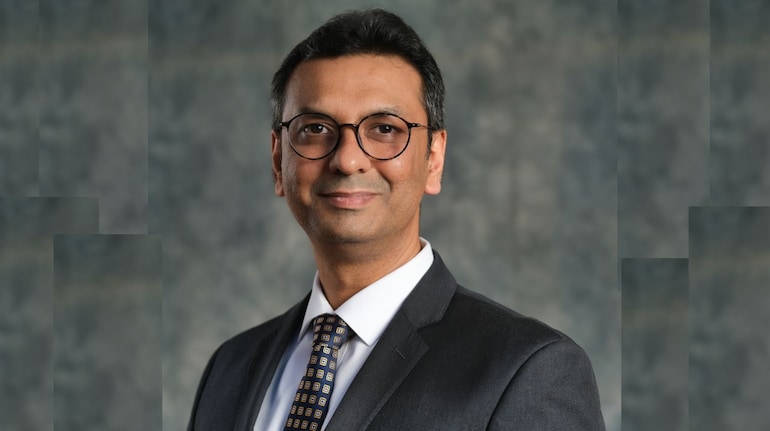

According to Nimesh Chandan, the CIO of Bajaj Finserv AMC, elevated oil prices can create short-term pressure on markets and India’s balance sheet. However, such effects tend to ease if the spike proves temporary and geopolitical tensions subside.
Prior to the latest escalation, markets had already priced in most known risks, and the recent correction largely reflects this new development, he said in an interview with Moneycontrol.
Therefore, he believes that once tensions ease and oil prices stabilise, markets are likely to rebound, supported by improving earnings and reasonable valuations across the large-cap, mid-cap, and small-cap segments.
He also believes the IPO pipeline looks strong, with both large and mid-sized companies preparing to list. “Market volatility may not delay most large IPOs because these offerings take months of preparation, and they are rarely postponed unless the company has specific internal issues or a change in its business model,” he said.
Do you think the worst of the US-Israel-Iran tensions is over, considering the current behaviour of equity markets and oil prices?
Geopolitical developments are inherently difficult to predict, and the trajectory of the current situation remains uncertain. Historically, such events tend to trigger sharp market reactions because they are largely unanticipated and therefore not factored into asset prices. As a result, the initial market response is often driven by sentiment and behavioural biases rather than underlying fundamentals.
Over time, once the immediate shock subsides, markets typically recalibrate and refocus on economic fundamentals. That said, the duration of such situations is hard to estimate. Past conflicts, including the Russia–Ukraine war, persisted far longer than initially anticipated. What we can say is that markets eventually adjust to evolving realities, and we would hope the situation resolves sooner rather than later.
Do you think the market will stage a strong rebound once oil prices stabilise?
Yes, markets are driven by both fundamentals and investor sentiment. From a fundamental perspective, India’s earnings trajectory, particularly in the broader market, has been steadily improving over the past several quarters. At the same time, corporate balance sheets and the overall macroeconomic environment remain robust.
While elevated oil prices can create short term pressure on markets and India’s balance sheets, such effects tend to ease if the spike proves temporary and geopolitical tensions subside. Prior to the latest escalation, markets had already priced in most known risks, and the recent correction largely reflects this new development.
Therefore, once tensions ease and oil prices stabilise, markets are likely to rebound, supported by improving earnings and reasonable valuations across large cap, mid cap, and small cap segments.
Do you think, logically, Iran will have to come to the negotiating table and resolve the issues instead of continuing to face military action from the US and Israel?
It is difficult to anticipate how a country may act. But from a logical perspective, finding a negotiated solution seems more likely than continuing a prolonged conflict. Recent reports show both sides may be more willing to discuss.
As we have seen in cases like the US - Venezuela situation, some geopolitical issues get resolved faster than expected. Since this is not a full-scale war over territory, we can hope that both sides reach a mutually acceptable resolution.
How do you see the Middle East conflict impacting businesses and capital flows?
The impact will vary based on how much a company relies on the Middle East. In short term, companies that have significant business in the Middle East like certain construction firms or airlines operating through Middle Eastern hubs may experience temporary pressure on their earnings and the market has already reacted to some of this.
Also, companies that use crude linked raw materials such as paints or energy intensive companies, stand to suffer if crude or natural gas prices continue to remain at elevated levels. In the near future, if tensions ease and oil prices settle at levels that support economic growth in the Middle East, many of those companies could recover and benefit when that happens.
As for our portfolio, we are primarily invested in domestic economy-oriented companies and not heavily dependent on the Middle East. Consequently, the overall direct impact on our portfolio is limited. There are some portfolio companies that have energy intensive operations and there could be some impact on them.
In terms of capital flow, a strong US dollar and high oil prices usually make investors more cautious about emerging markets, and these markets have already seen some money flowing out. But these outflows can reverse quickly once the situation becomes clearer.
Do you see any impact on private capex? Have you observed a pickup in private capital expenditure?
India’s investment (capex) cycle is strengthening across public, private, as well as household segments. Public capex has remained robust with the combined government investment went up by around 8% in the first 10 months of FY26, the Central government’s spending grew by around 11%, and state government’s spending grew by around 18%.
Private capex is also seeing early signs of revival. In the first 11 months, companies announced projects worth over Rs 32 trillion in areas like data centres, renewable energy, chemicals, metals, and electronics.
Additionally, imports of capital goods used for high-end private investments, rose by 16.5%, the highest since FY23. This is an early indicator of rise in investment activity. Household capex usually picks up after public and private spending rises. As jobs and incomes improve because of ongoing investments, household capex is also expected to increase. Overall, we are positive about all three segments.
Are you highly bullish on the defence sector for FY27, given the geopolitical tensions?
While we are positive about the defence sector, we are also selective. Geopolitical developments prompt the governments including India’s, to strengthen defence capabilities, and both higher budgets and local manufacturing plans support this trend. However, not all defence companies benefit equally.
Some have long project execution cycles, which implies back-ended returns. Shipyards and certain aerospace companies fall into this group. Hence, we follow a bottom-up approach and invest only in companies with strong balance sheet, efficient cashflow cycles, and reasonable valuations. We prefer businesses with shorter execution cycles and clearer visibility on results.
Amid the current market correction, which sectors would you prefer to pick, given your belief in the India growth story?
We remain positive on domestic-oriented sectors, as they are better insulated from global uncertainties.
Preferred sectors include banking and financial services including insurance, consumption, healthcare, with a focus on CRAMS i.e., contract research and manufacturing services and India focused segments rather than US generics, and some cyclical sectors particularly metals, power transmission, cement, capital good. We are currently avoiding sectors with high dependence on global demand, such as IT, owing to demand uncertainties globally.
Do you expect any disruption to the IPO pipeline in FY27?
The IPO pipeline looks strong, with both large and mid-sized companies preparing to list. Market volatility may not delay most large IPOs because these offerings take months of preparation, and they are rarely postponed unless the company has specific internal issues or change in business model. What may change, however, is valuation expectations.
We are already seeing promoters and shareholders becoming more realistic, unlike 18 months ago when IPOs were priced on the higher side. If the market remains under pressure, IPOs in FY27 may be priced more reasonably. Demand from institutional investors for good quality companies should stay strong.
Disclaimer: The views and investment tips expressed by experts on Moneycontrol are their own and not those of the website or its management. Moneycontrol advises users to check with certified experts before taking any investment decisions.Discover the latest Business News, Sensex, and Nifty updates. Obtain Personal Finance insights, tax queries, and expert opinions on Moneycontrol or download the Moneycontrol App to stay updated!





Find the best of Al News in one place, specially curated for you every weekend.
Stay on top of the latest tech trends and biggest startup news.