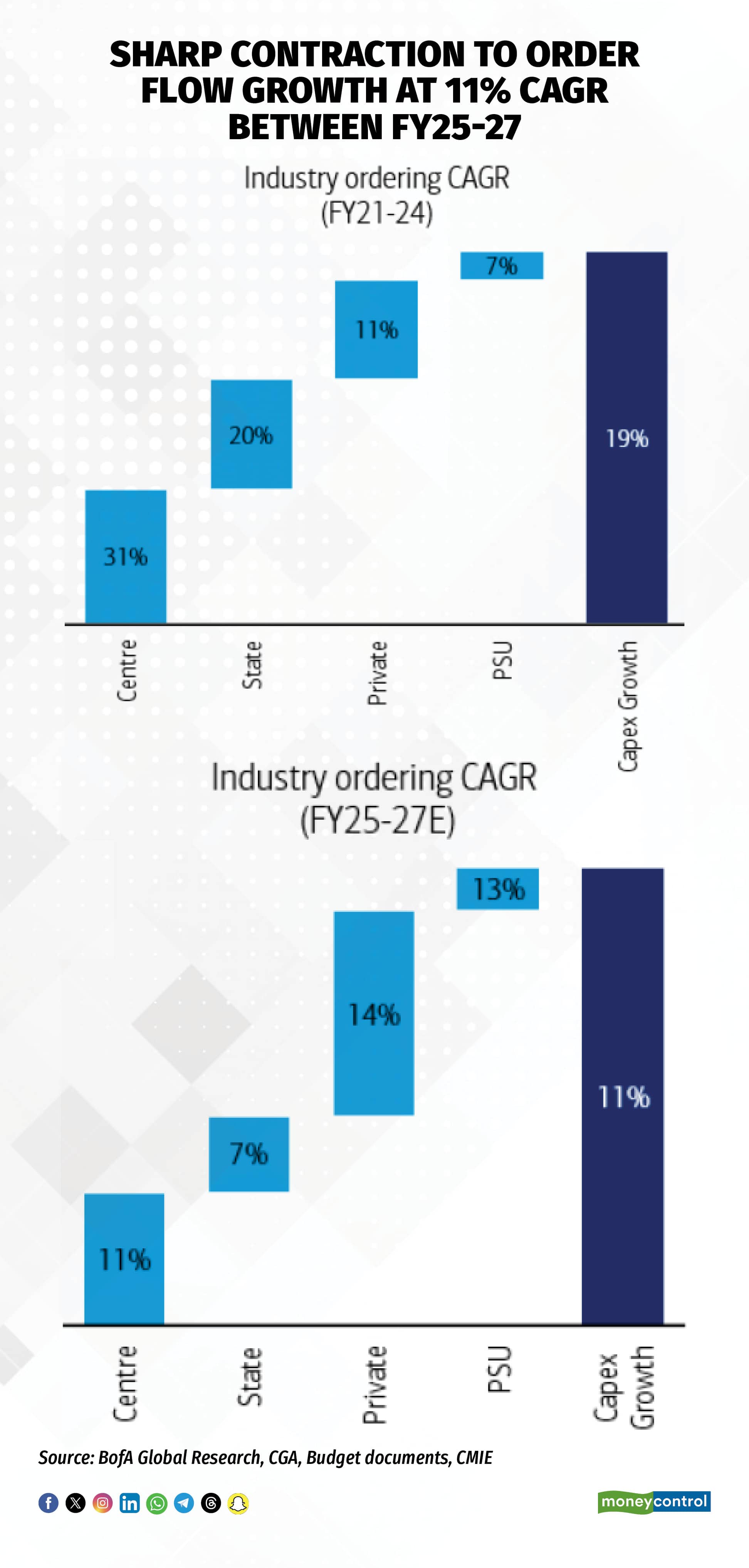
Industrial stocks may see some pressure as state governments pull back on capital expenditure, offsetting central government capex and rising private sector outlays, according to multiple brokerages.
According to global broking house BofA Securities, overall capex growth is likely to slow to about 13 percent in FY26 and 10 percent in FY27. The brokerage added that it expects state capex growth at 7 percent YoY vs budgeted estimate of 29 percent YoY in FY26.
While the Centre continues to prioritise defence, shipbuilding and energy transition, states are expected to remain more cautious on their spending as higher subsidies and welfare schemes eat into their budgets. With five states/union territories heading into elections next year (West Bengal, Kerala, Puducherry, Tamil Nadu, Assam), the brokerage expects subsidiaries to rise.
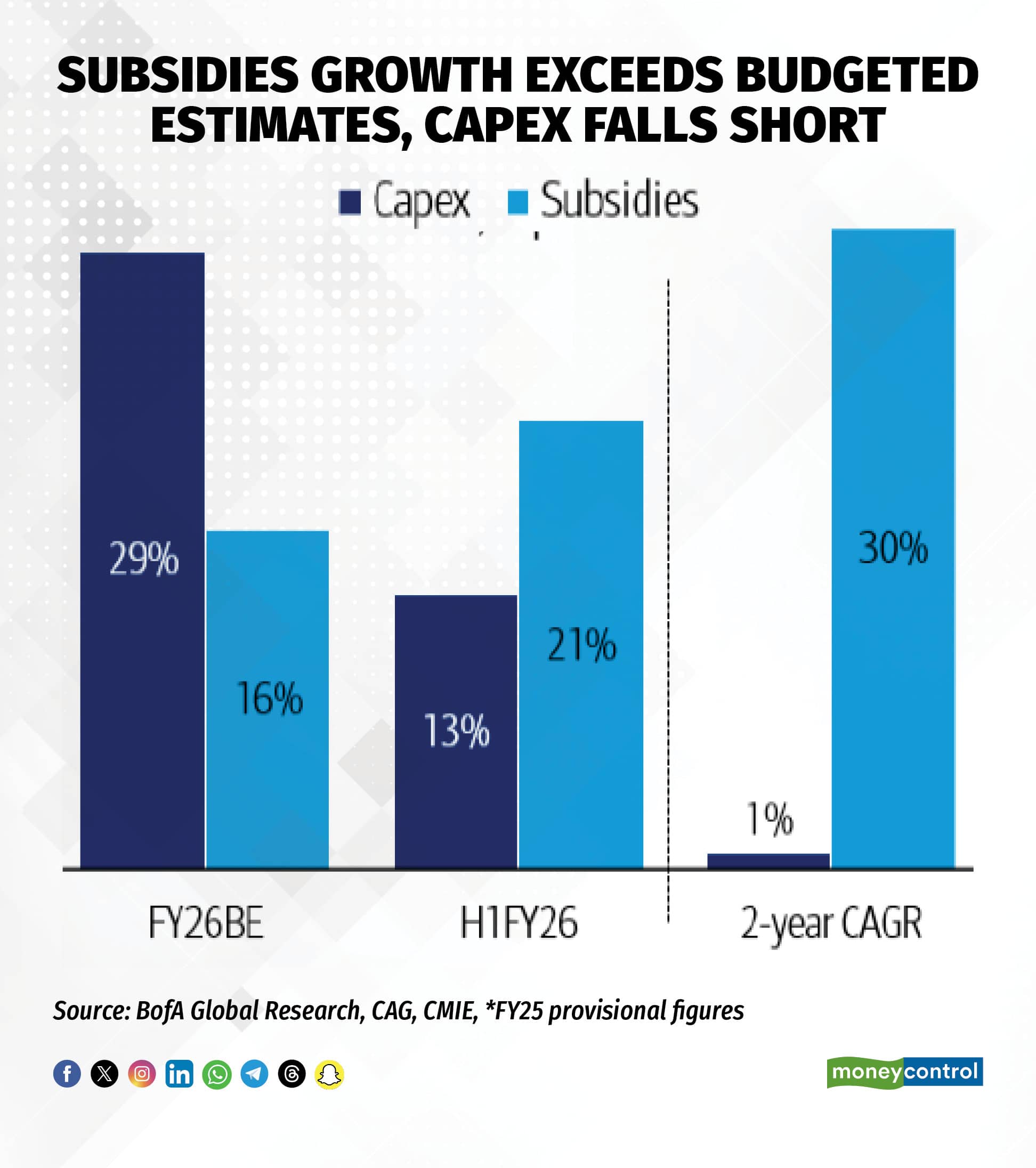
"We see capex growth being dragged down by weaker state government capex on the back of likely continuation of higher subsidies. Besides, amidst slowing tax revenue growth and rising welfare spends, the government's ability to stimulate capex could remain limited," added the brokerage.
In a report, Japan-based brokerage Nomura concurred. The brokerage agreed that state capex will see moderating growth, but the central government's focus on certain subsections of industrial stocks such as defense, shipbuilding and power transmission shall drive some capex growth. However, Nomura too, sees state capex growing only at 6 percent, against the FY26BE expectation of 29 percent.
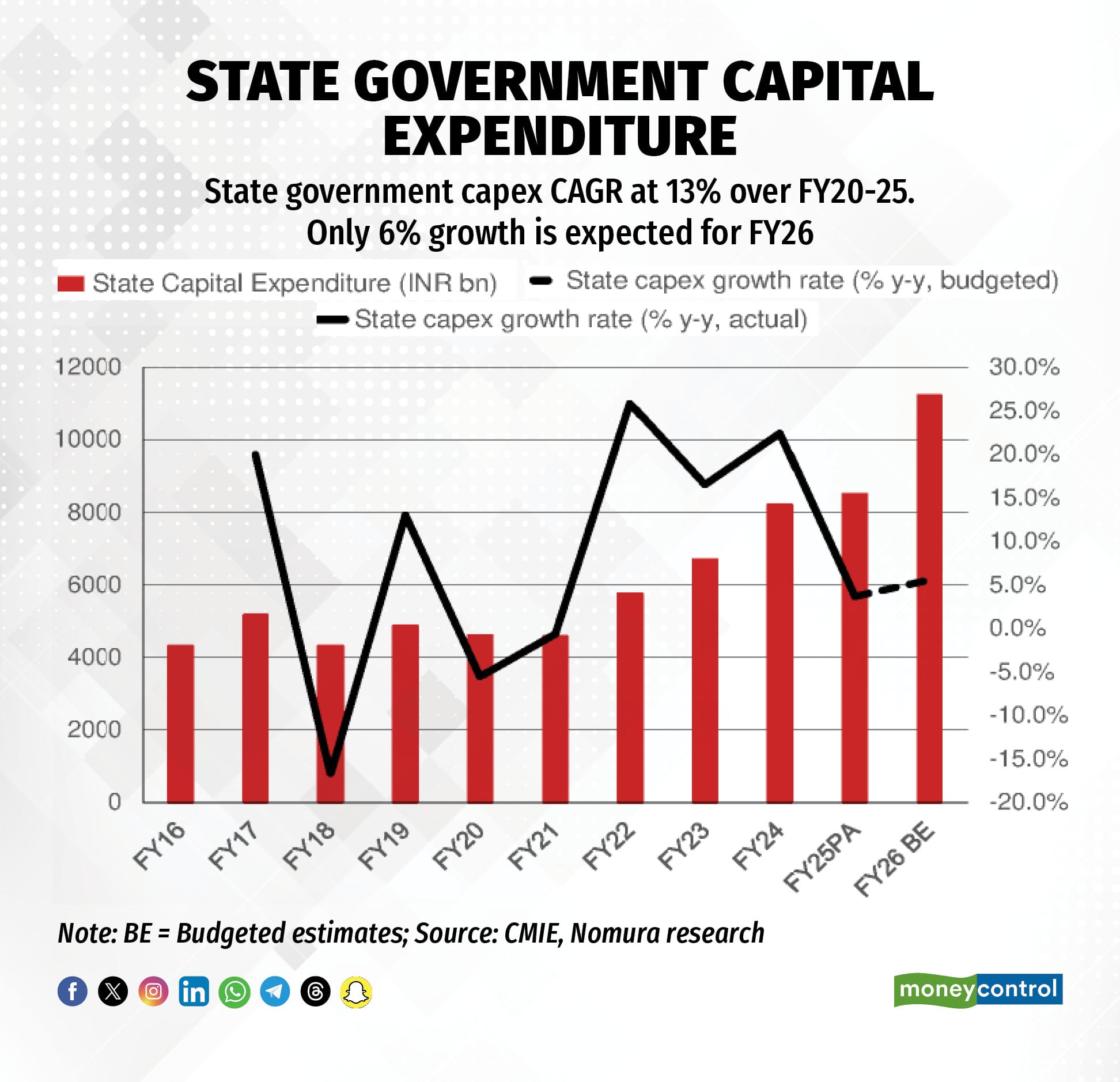
The industrials sector provides some earnings visibility due to order backlog and prospects of margin improvement on account of execution of fresh orders and completion of legacy projects, said Nomura. However, Nomura's view on the industrial sector remained decidedly bearish.
"There is limited visibility on corporate and government capex at the moment, and we expect government savings to rise as it moves on the path of fiscal consolidation. These factors present headwinds to corporate earnings growth, in our assessment," it added.
BofA Securities, too, said it remains underweight on the industrial space, except for those stocks that are exposed to the Defense, Shipbuilding and Power T&D capex themes.
State governments spend a large sum on capital expenditure, especially in sectors like roads, water, irrigation, urban development and local transport. These projects form a large share of the order books for construction firms, engineering companies, cement players, capital goods makers and power equipment suppliers. When state capex slows, the flow of new orders into the industrial sector becomes weaker even if the Centre or private sector continue to invest.
Antu Eapen Thomas, Research Analyst, Geojit Investments said, "The outlook for state government capex in FY26 remains modest, constrained by rising revenue expenditure, welfare commitments, and subdued revenue growth. This slowdown in state-led infrastructure spending is expected to weigh on industrial sector performance."
In fact, while a slew of analysts and experts celebrated the revival in private capex, Nomura added that private capex may not recover in 1HCY26F but is likely to pick up gradually. BofA Securities added that procurement for capex, which is a strong indicator for capacity expansion, is also likely to slow.
Private capex typically follows consumption trends with a lag, as businesses generally commit to new investments only after witnessing a clear and sustained pickup in demand. "Assuming domestic consumption demand strengthens meaningfully from the second half of FY26, we expect private capex to respond with a lag of about two quarters," added the Japan-based broking house.
There is a lack of meaningful greenfield investments in core industries such as metals, mining, cement, and oil and gas. The growth runway is still not particularly visible to the majority of the players from these industries; therefore, they are being hesitant in capex expansion as the industries continue to operate at a 75 percent capacity utilization level.
Disclaimer: The views and investment tips expressed by investment experts on Moneycontrol.com are their own and not those of the website or its management. Moneycontrol.com advises users to check with certified experts before taking any investment decisions.

Discover the latest Business News, Sensex, and Nifty updates. Obtain Personal Finance insights, tax queries, and expert opinions on Moneycontrol or download the Moneycontrol App to stay updated!
Find the best of Al News in one place, specially curated for you every weekend.
Stay on top of the latest tech trends and biggest startup news.