






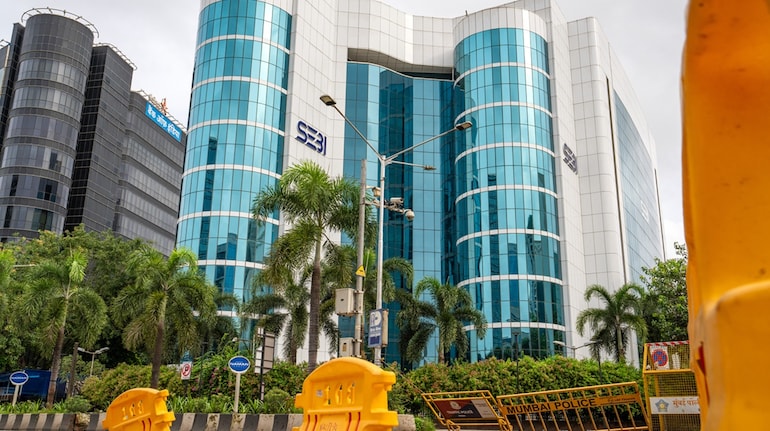

The Central government has amended the rules governing minimum public shareholding for mega companies planning to list on stock exchanges, introducing a graded framework that allows large companies to offer a smaller portion of shares to the public at the time of their initial public offering (IPO).
The changes were notified on Friday, through the Securities Contracts (Regulation) Amendment Rules, 2026, issued by the Ministry of Finance under the Securities Contracts (Regulation) Act, 1956. The amendment modifies Rule 19(2)(b) of the Securities Contracts (Regulation) Rules (SCRR), 1957, which prescribes the minimum shares that companies must offer to the public while listing on recognised stock exchanges.
The revised framework introduces a tiered structure based on the size of the company’s post-issue capital calculated at the offer price. The aim is to make it easier for large companies to go public while ensuring that public shareholding eventually increases to the standard 25 per cent level.
Under the amended rules, companies with post-issue capital of up to Rs 1,600 crore will continue to follow the existing requirement of offering at least 25 per cent of each class or kind of equity shares, or debentures convertible into equity shares, to the public. This rule remains unchanged for relatively smaller companies planning to list.
For companies with post-issue capital above Rs 1,600 crore but up to Rs 4,000 crore, the public offer will now be linked to a minimum value rather than a fixed percentage. These companies will have to offer shares equivalent to a value of at least Rs 400 crore to the public.
Companies with post-issue capital above Rs 4,000 crore but up to Rs 50,000 crore will be required to offer at least 10 per cent of their shares to the public at the time of listing. However, such companies must increase their public shareholding to at least 25 per cent within three years from the date of listing, in a manner specified by the Securities and Exchange Board of India (SEBI).
For larger companies with post-issue capital above Rs 50,000 crore but up to Rs 1 lakh crore, the rules require a minimum public offer equivalent to Rs 1,000 crore in value and at least 8 per cent of each class of shares. These companies will have up to five years from the date of listing to increase their public shareholding to 25 per cent.
The rules provide even more flexibility for very large companies. Firms with post-issue capital above Rs 1 lakh crore but up to Rs 5 lakh crore will have to offer shares equivalent to at least Rs 6,250 crore and maintain a minimum public shareholding of 2.75 per cent at the time of listing.
Meanwhile, companies with post-issue capital exceeding Rs 5 lakh crore will need to offer shares equivalent to at least Rs 15,000 crore and maintain a minimum public shareholding of 1 per cent at the time of listing.
The amendment also sets out timelines for such companies to gradually increase their public shareholding. If the public shareholding at the time of listing is below 15 per cent, the company will have to raise it to at least 15 per cent within five years and further increase it to 25 per cent within ten years of listing. If the public shareholding at the time of listing is already 15 per cent or higher, the company must increase it to 25 per cent within five years.
The rules also specify that, irrespective of the size of the company, at least 2.5 per cent of each class or kind of equity shares or convertible securities must be offered to the public.
Another provision relates to companies that have issued equity shares with superior voting rights (SVR) to promoters or founders. The amendment states that such companies must list those shares on the same recognised stock exchange along with the ordinary shares being offered to the public during the IPO.
The government has also clarified that the timelines to achieve the prescribed public shareholding will be available to companies that were listed before the commencement of the amendment. At the same time, recognised stock exchanges may impose fines or penalties for any past non-compliance with public shareholding norms.
Moneycontrol had reported in July last year that SEBI may come up with such a proposal. In September board meeting last year, the proposal was cleared and recommended to government to tweak the rules. Now the same has been notified.
Discover the latest Business News, Sensex, and Nifty updates. Obtain Personal Finance insights, tax queries, and expert opinions on Moneycontrol or download the Moneycontrol App to stay updated!
Find the best of Al News in one place, specially curated for you every weekend.
Stay on top of the latest tech trends and biggest startup news.










