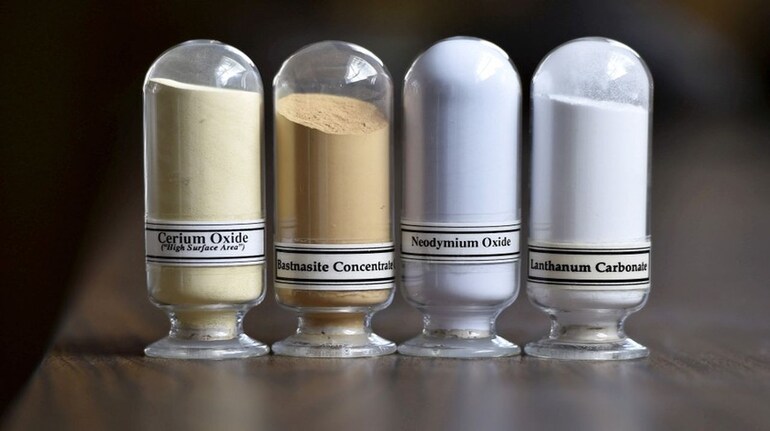
India is set to scale up its neodymium production ninefold to 500 tonnes by the end of FY27, as part of an aggressive push to boost self-reliance in rare earth elements, Business Standard reported. The expansion is being led by Indian Rare Earths Limited (IREL), a state-run enterprise under the Department of Atomic Energy (DAE), which currently oversees the mining and processing of these strategic minerals.
Neodymium, a key component in the global rare-earth magnet industry, is vital for electric vehicles, clean energy technologies, and defence systems. India produced just 40 tonnes of neodymium last year, when the rare-earth crisis was at its peak. IREL now plans to close the current fiscal year at 200 tonnes and hit 500 tonnes by FY27.
“We are working overnight to ramp up production of neodymium and praseodymium, which are in high demand across industries. We will double our output within a year,” said V Chandrasekar, general manager and head of IREL’s rare-earth division. He added, “We are soon ramping up to produce 200 tonnes by the end of this fiscal year, and by the end of the next fiscal, it will touch 500 tonnes with our own engineering.”
According to Business Standard report, IREL operates a rare-earth extraction plant in Odisha and a refining facility in Kerala. Out of 17 rare earth elements, eight, including lanthanum, cerium, neodymium, praseodymium, gadolinium, samarium, europium, and dysprosium, are already produced at the Kerala unit. Pilot plants for terbium and europium have also been established.
“China accounts for about 44% of the global rare-earth business and nearly 90% of total production, while India controls only 5-6% but ranks third in output and sixth in reserves,” Chandrasekar noted.
IREL has also commissioned a rare-earth permanent magnet (REPM) plant for the indigenous production of samarium-cobalt magnets used in defence and atomic energy applications, the report further said.
The production ramp-up aligns with the central government’s National Critical Mineral Mission (NCMM), launched earlier this year, which proposes an expenditure of Rs 16,300 crore and an expected investment of Rs 18,000 crore by PSUs and private stakeholders from FY25 to FY31. The NCMM aims to secure a sustainable supply chain for critical minerals—from exploration and mining to processing and recycling.
Hans Raj Verma, director general of COSIDICI, said India can no longer depend on external supply chains. “We are targeting to strengthen our domestic supply chain and localise technology, with southern states playing a key role,” he said, noting that Tamil Nadu, Kerala, Odisha, and Andhra Pradesh hold the bulk of India’s rare-earth reserves, mostly in beach sands.
Discover the latest Business News, Sensex, and Nifty updates. Obtain Personal Finance insights, tax queries, and expert opinions on Moneycontrol or download the Moneycontrol App to stay updated!
Find the best of Al News in one place, specially curated for you every weekend.
Stay on top of the latest tech trends and biggest startup news.