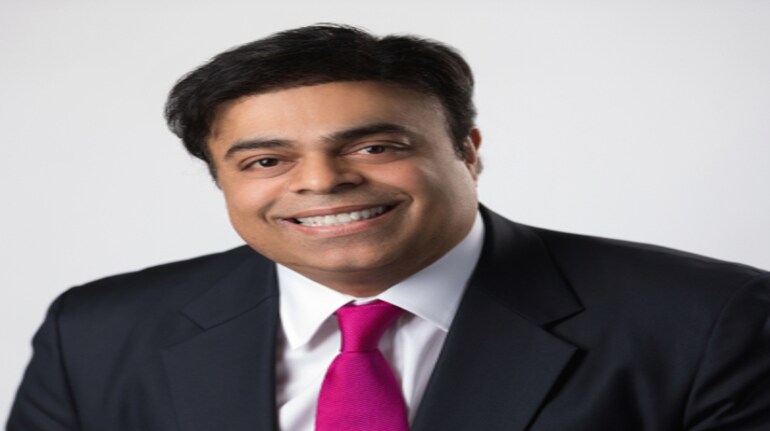
India should explore free trade agreements (FTAs) but not be defensive in negotiations, as the world trade moves away from a multilateral system, Pravin Krishna, professor of international economics at Johns Hopkins University (JHU), told Moneycontrol.
New Delhi should also consider joining the Comprehensive and Progressive Agreement for Trans-Pacific Partnership (CPTPP), a major trading bloc, for greater market access, he said, as Trump tariffs upend global commerce.
"India should seriously think about becoming a member of the CPTPP. We already have agreements with some countries within it, so it may be easier to join now," Krishna said.
Why CPTPP?
CPTPP is a major multilateral free trade agreement between 12 countries across the Asia-Pacific and the Americas. It aims to liberalise trade and investment by reducing or eliminating tariffs on most goods and lowering non-tariff barriers.
"China is not a member of CPTPP, so it may be the right choice to join it. Joining the Regional Comprehensive Economic Partnership (RCEP), meanwhile, poses a challenge because of China," Krishna said.
Australia, New Zealand, Singapore, Vietnam, Brunei, Japan, Malaysia, Mexico, Peru, Canada, Chile and the United Kingdom are the CPTPP member countries.
Krishna said India needs to ensure that all FTAs negotiated bilaterally are meaningful and the benefits start reflecting as soon as they are in place, he said.
"During 2007-2017, India did a dozen FTAs, but that resulted in no change. The agreements were not meaningful enough," said Krishna. The three major FTAs signed during that period were with Japan, Korea, and Malaysia.
In some FTAs, for instance, tariffs were lowered or eliminated on goods that were not really a major part of trade.
"Often, those sectors that were exempted were the ones where trade happens. So, what’s the point of an FTA then?" Krishna said, adding that the agreements have to be struck more boldly.
"India’s approach (to FTA) now can’t be entirely defensive, as in, let’s protect ourselves completely…now allow imports, and focus only on exports," he said. "Additionally, make the FTA effective immediately; why allow some provisions to come in effect after five years?"
India-US trade logjam
On trade negotiations with the US, Krishna acknowledged that India has a vulnerable agriculture sector but the government has to be open to striking a balance in terms of being willing to open up other sectors. "It’s not clear, if India is willing to do that too," he said.
"India’s attitude to FTAs has been somewhat defensive. How much can we maintain status quo, and somehow increase exports? That defeats the purpose of an FTA. Why to get into that in the first place?" Krishna said.
When asked about the additional 25 percent Russian penalty slapped on India, Krishna said it was arbitrary. "Thus, the removal could also be arbitrary and immediate. The logic for the imposition in first place was weak, so it’s impossible to estimate when it will be removed," he said.
Most Indian goods being exported to the US attract a 50 percent tariff, among the highest in the world. Initially, the Trump administration had levied a 25 percent duty on the Indian products, but later an additional 25 percent duty was imposed for buying Russian oil.
"The purchases of Russian oil were, in a sense coordinated with the US government. They told India to purchase this oil and keep the oil prices stable. If all of Russian oil is taken off the global markets, oil prices will spike to very high and uncomfortable levels. So, India has been doing this in full knowledge of Americans," Krishna said.
In May 2024, US ambassador to India Eric Garcetti admitted that India bought Russian oil because the US wanted somebody to buy it. "The US allowed the purchase to take place to ensure the prices did not go up globally," Garcetti said.
Discover the latest Business News, Sensex, and Nifty updates. Obtain Personal Finance insights, tax queries, and expert opinions on Moneycontrol or download the Moneycontrol App to stay updated!
Find the best of Al News in one place, specially curated for you every weekend.
Stay on top of the latest tech trends and biggest startup news.