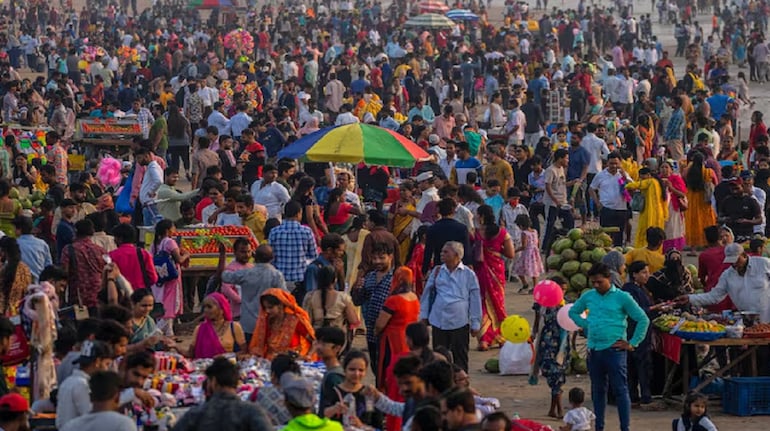
India’s population is likely to stabilise by around 2080 at 1.8-1.9 billion as the country’s total fertility rate (TFR) continues to fall below replacement level, a senior demographer has said.
India is in the midst of a sharp demographic transition, with the TFR dropping from 3.5 in 2000 to 1.9 today, said Indian Association for the Study of Population (IASP) general secretary Anil Chandran. “This is a drastic decline,” he told PTI, adding that current projections show India’s population peaking at under two billion before plateauing.
Chandran attributed the fall in fertility to rising development indicators, particularly higher female literacy, delayed marriage and expanded economic opportunities for women, which have reshaped family-size preferences. Greater access to contraception and better awareness of reproductive choices have further accelerated the drop, he said.
Kerala, which achieved replacement-level fertility in the late 1980s, now has a TFR of about 1.5. West Bengal has seen an equally steep decline: its TFR fell from 1.7 in 2013 to 1.3 in 2023, according to the latest Sample Registration System report. The state is now among those with the lowest fertility rates in India, alongside Tamil Nadu and just above Delhi.
While births decline, life expectancy continues to rise, creating fresh pressures around elderly care, Chandran noted. With more people living beyond 60 and younger populations migrating for work, he said, solutions such as community day-care centres for seniors are gaining attention.
The IASP, founded in 1971 and comprising around 1,100 demographers and population scientists, engages with bodies including UNFPA, Population Council and the Population Foundation of India on such trends and emerging policy challenges.
(With inputs from PTI)Discover the latest Business News, Sensex, and Nifty updates. Obtain Personal Finance insights, tax queries, and expert opinions on Moneycontrol or download the Moneycontrol App to stay updated!





Find the best of Al News in one place, specially curated for you every weekend.
Stay on top of the latest tech trends and biggest startup news.