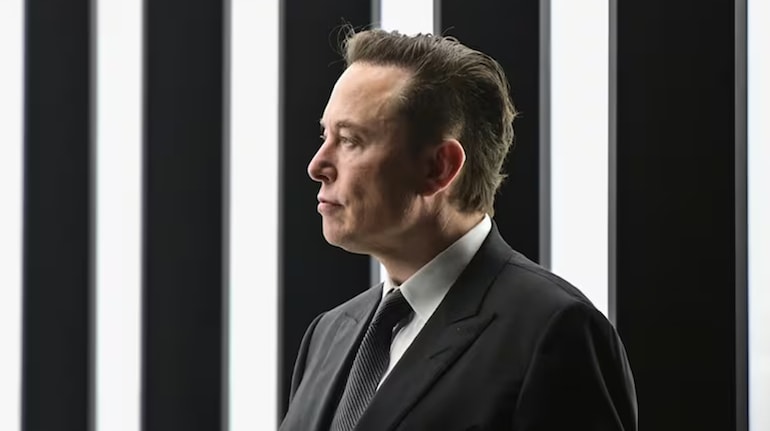

Elon Musk, founder and owner of AI firm xAI, over the weekend, officially launched Terafab, an ambitious semiconductor project aimed at producing advanced chips for artificial intelligence, robotics, autonomous vehicles, and space-based computing.
Announced on March 21, the facility will be located near Austin, Texas, and jointly run by Tesla and SpaceX.
The Terafab is designed to produce one terawatt of computing power annually, equivalent to one trillion watts, slightly less than the total electricity generation capacity of the U.S.
Musk said the move is necessary because the demand for high-performance chips at Tesla and SpaceX is projected to far exceed global supply. "We’re very grateful to our existing supply chain, to Samsung, TSMC, Micron, and others… but there’s a maximum rate at which they’re comfortable expanding," Musk said. "That rate is much less than we would like… and we need the chips, so we’re going to build the Terafab", he noted.
Why Terafab is necessary
Musk has long warned that Tesla risks hitting a "chip wall" if production does not keep pace with AI and robotics needs.
In January, he had told investors, "In order to remove the probable constraint in three or four years, we are going to have to build a Tesla TeraFab. A very big fab that includes logic, memory and packaging, domestically".
He had stressed that existing suppliers, including TSMC, Samsung, and Micron, cannot meet the scale of demand, adding that domestic production is critical to mitigate geopolitical risks. “I think people may be are underweighting some of the geopolitical risks that are going to be a major factor in a few years,” Musk had stated said, highlighting dependence on Taiwan-based chip production.
What Terafab will do
The facility will start as an "advanced technology fab" capable of designing, manufacturing, testing, and improving chips entirely in-house. Terafab is expected to produce cutting-edge 2-nanometer chips and will eventually scale to produce chips that support 100–200 gigawatts of computing power on Earth and a terawatt in space.
Two chip types will be manufactured: one optimised for edge and inference computing for Tesla vehicles, robotaxis, and Optimus humanoid robots, and another high-performance chip for SpaceX and Musk’s AI venture xAI, which acquired SpaceX in February as a wholly owned subsidiary.
Musk expects xAI to use the majority of these chips.
"We either build the Terafab or we don’t have the chips, and we need the chips, so we build the Terafab," Musk said during the Austin announcement.
Space-based computing and AI satellites
A key part of Terafab is enabling space-based computing.
Musk unveiled a speculative “mini” AI data center satellite capable of 100 kilowatts of power, noting that future satellites could reach megawatt-scale capacity. SpaceX has applied to the Federal Communications Commission to deploy up to one million data center satellites in orbit, potentially creating a vast space-based AI network.
Musk also outlined a futuristic vision involving launching satellites from the Moon.
“The future I want to see: I want us to live long enough to see the mass driver on the moon… because that’s going to be incredibly epic,” he said.
Costs and challenges
The project is expected to cost $20–25 billion, reflecting the capital-intensive nature of semiconductor fabrication. Chip factories require years to become operational and rely on complex equipment from multiple global suppliers, including Europe’s ASML, which dominates critical lithography technology.
Musk has no prior experience in semiconductor manufacturing, raising skepticism about timelines and execution.
Despite these hurdles, Terafab follows Musk’s philosophy of vertical integration, bringing key technology in-house to accelerate innovation. Tesla, SpaceX, xAI, Neuralink, and the Boring Company increasingly share resources, including AI development, energy storage, and robotics.
Terafab represents more than just a chip factory; it is central to Musk’s ambition to scale AI computing from Earth to space. For Tesla, it ensures supply for AI-driven vehicles and robotics. For SpaceX and xAI, it enables large-scale orbital computing.
Discover the latest Business News, Sensex, and Nifty updates. Obtain Personal Finance insights, tax queries, and expert opinions on Moneycontrol or download the Moneycontrol App to stay updated!





Find the best of Al News in one place, specially curated for you every weekend.
Stay on top of the latest tech trends and biggest startup news.