






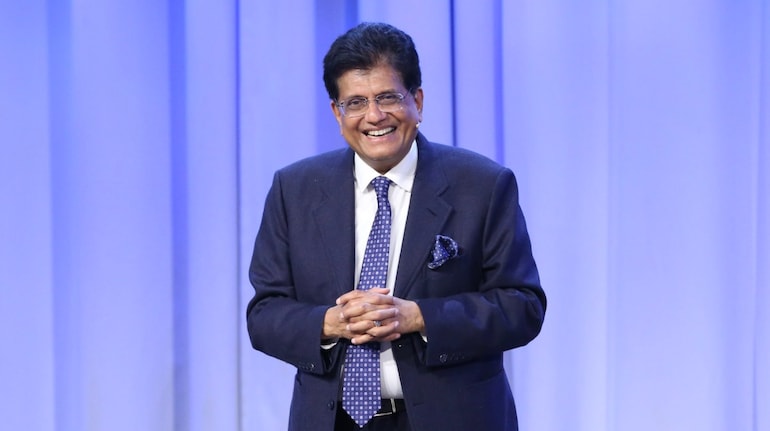

Ethanol and tobacco have been kept completely out of India’s interim trade agreement with the United States, Commerce Minister Piyush Goyal said on Saturday, underlining that New Delhi has drawn firm red lines even as it offered major tariff concessions to boost exports.
“Ethanol and tobacco have not been given any concessions under the trade deal with the US. There are no relaxations on groundnut, honey, malt, non-alcoholic beverages, essential oils and ethanol and tobacco,” Goyal said.
Less than a week after announcing a trade deal in principle, India and the US issued a joint statement outlining the details of the interim framework, which is positioned as the first tranche of a broader Bilateral Trade Agreement (BTA).
Goyal said reciprocal tariffs under the interim deal will fall sharply.
“Reciprocal tariffs will go down from 50 percent to 18 percent. This is a better rate than our direct competitors,” he said.
He compared India’s tariff position with peers, noting that China faces tariffs of nearly 35 percent, Vietnam and Bangladesh around 20 percent, and Indonesia about 19 percent.
Several Indian exports will move to zero-duty access once the agreement is formally signed.
“Many Indian exports will get zero duty when our trade agreement gets signed. Gems and diamonds will enjoy zero duty, generic pharma will enjoy zero duty,” Goyal said.
Aircraft parts, machinery components, pharmaceuticals, elementary auto parts, paper, plastic and natural rubber will also attract 0% reciprocal tariffs, while bakery products, cocoa and cocoa products, processed fruits, jams and juices will shift to zero duty from 50 percent earlier.
The minister repeatedly stressed that agriculture remains insulated.
“Our farmers’ rights have been protected completely. Dairy has also been protected,” Goyal said.
There are no relaxations on meat, poultry, dairy, soybean, maize, rice, wheat, millets, fruits, pulses and other sensitive crops.
“We have not given any relaxation on GM goods,” he added.
Responding to criticism, Goyal said, “People who are misleading India are now stunned by how the US-India agreement will not lead to any agri import which will hurt Indian farmers’ interest.”
India has agreed to a phased and calibrated reduction of tariffs on select US goods where domestic supply is limited.
“India will reduce tariffs in a calibrated manner on US goods keeping our sensitivities in mind,” Goyal said.
These include tariff rate quota (TRQ) concessions on items such as extra-long staple cotton, soyabean oil and distillers dried grains with solubles (DDGS). Minimum import prices have been set for wines and spirits, with duty reductions linked to thresholds.
“Animal husbandry shared their requirements. Only that much quantity will be imported from the US,” he said.
Technology, healthcare and industry
Goyal said technology imports, including aircraft, chips, semiconductors and advanced machinery, would help Indian industry and national security.
“For our national security, we will need Nvidia chips, data centres,” he said.
Duties on select medical devices, including pacemakers and cancer-treatment drugs, will be reduced gradually to ease costs.
The interim deal is part of a larger push to expand India–US trade.
“We see $500 billion worth of bilateral trade including goods and services with the US going ahead. Our goal is to increase bilateral trade to $500 billion,” Goyal said, adding that “India supplies top quality product to the world.”
Calling the framework “fair, equitable and balanced,” Goyal said it protects India’s sensitivities while boosting exporters.
“We have shielded farmers from imports, and given a boost to our exporters. This is the first tranche; discussions will continue,” he said.
Discover the latest Business News, Sensex, and Nifty updates. Obtain Personal Finance insights, tax queries, and expert opinions on Moneycontrol or download the Moneycontrol App to stay updated!
Find the best of Al News in one place, specially curated for you every weekend.
Stay on top of the latest tech trends and biggest startup news.










